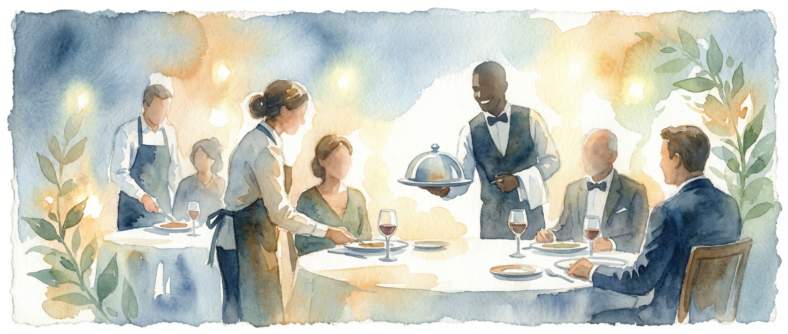
The Death of Genuine Hospitality
Walk into most restaurants today and you’ll encounter what I call “scripted warmth.” Servers recite their lines about daily specials with the enthusiasm of a DMV clerk. They check back exactly once, asking “How is everything?” while already backing away from your table. This isn’t hospitality. This is customer service theater.
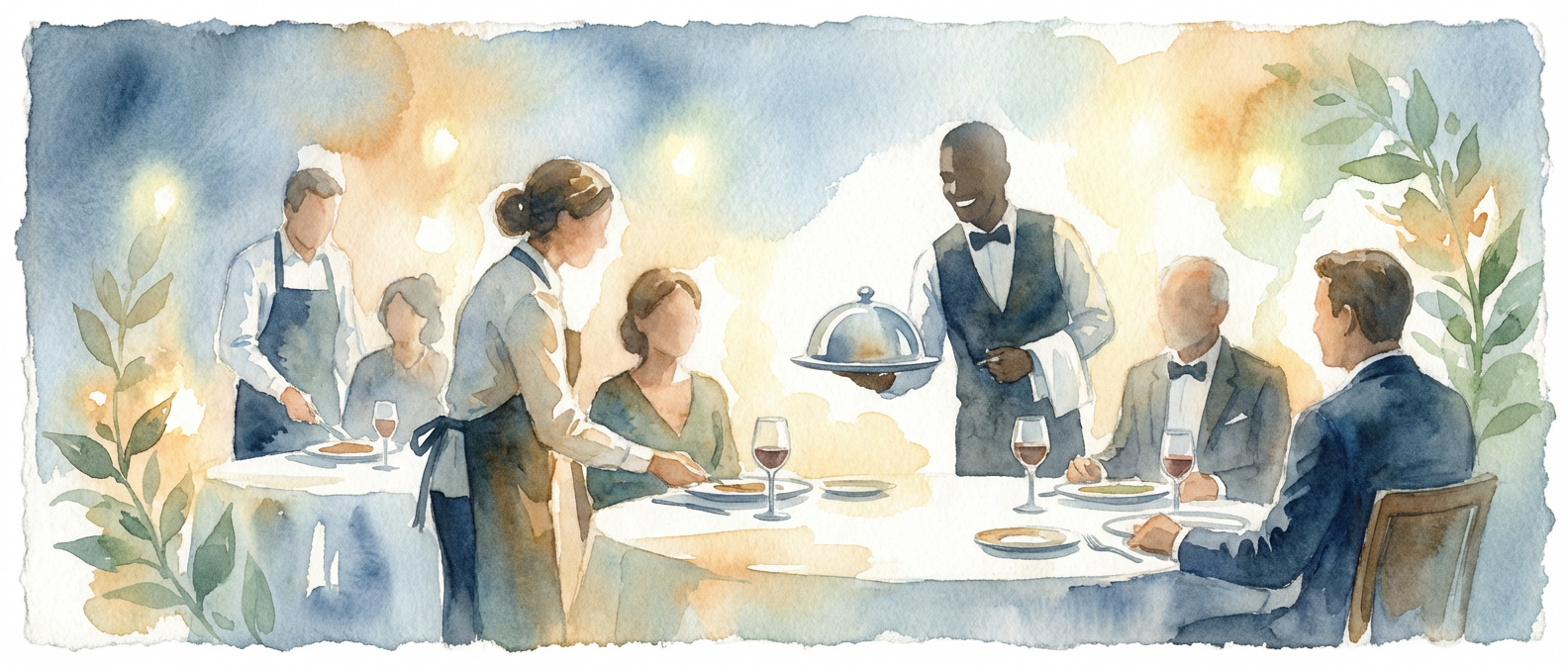
Real hospitality requires emotional intelligence that corporate training manuals can’t teach. It means reading your table’s energy. Are they on a first date? Give them space. Business lunch? Efficient service without hovering. Family celebration? Engage with the kids, remember it’s grandma’s birthday. The best servers I’ve worked with understood this instinctively.
The problem starts with how restaurants hire and train staff. Most focus on upselling techniques and complaint resolution instead of teaching servers to actually observe and respond to guest needs. When I see a server notice you’re left-handed and quietly move your water glass, or remember you ordered your steak medium-rare without checking their notes, that’s when you know you’re in the hands of a professional.

The Technical Skills That Separate Professionals from Pretenders
Carrying three plates on one arm isn’t just showing off. It’s efficiency that translates directly to better service. When your server can deliver an entire table’s entrees in one trip, your food arrives at the proper temperature instead of sitting under heat lamps while they make multiple trips. These physical skills matter more than most diners realize.
Wine service reveals competence instantly. A professional opens a bottle with two clean cuts on the foil, pulls the cork without showboating, and pours a proper tasting portion. They don’t fill wine glasses to the brim like they’re pouring beer. They understand that a Burgundy needs a different glass than a Bordeaux, and they can explain why without sounding condescending.
Watch how servers handle special requests. The amateur immediately says “I’ll have to check with the kitchen.” The professional knows their menu inside out, understands basic cooking techniques, and can tell you immediately if the chef can modify that sauce or prepare your fish differently. They’re translators between kitchen and dining room, not just order-takers.
When Management Gets in the Way
The worst restaurant experiences often stem from management decisions that prioritize metrics over hospitality. Table turn times, check averages, and upselling targets create an environment where servers rush guests instead of serving them. I’ve watched talented servers reduced to anxiety because managers pressure them to flip tables faster.
Understaffing is the cancer killing restaurant service. When servers handle six or seven tables instead of four, everyone suffers. Food sits longer in the pass, drinks go empty, and servers become reactive instead of anticipatory. The math seems simple to owners: fewer servers means higher profit margins. The reality is more complex: stressed servers provide worse service, leading to lower tips, higher turnover, and ultimately, lost customers.
The best restaurant managers I’ve encountered understand that their job is enabling great service, not micromanaging it. They trust their staff, handle problem situations personally, and create an environment where hospitality can flourish. They know that a server who feels supported will provide better service than one who feels scrutinized.
The Little Things That Reveal Everything
Water glasses tell the whole story. In poorly run restaurants, they sit empty while servers chat at the service station. In well-run establishments, water appears before you ask, refilled by whoever notices first, whether that’s your server, a busser, or a manager walking by. This isn’t about water. This is about a culture where everyone takes ownership of the guest experience.
Timing separates good restaurants from great ones. Your appetizer shouldn’t arrive with your entree. Your main course shouldn’t languish in the kitchen while you finish your salad at a leisurely pace. This requires communication between front and back of house that goes beyond order tickets. The best restaurants orchestrate meal pacing like a conductor leading a symphony.
Noise levels matter more than most restaurateurs realize. If I have to shout across the table to have a conversation, your restaurant has failed as a social space. This isn’t just about acoustic treatment, though that helps. It’s about music volume, staff behavior, and understanding that dining out is fundamentally a social experience.
What Excellence Actually Looks Like
Exceptional service feels effortless but requires tremendous skill and coordination. Servers anticipate needs without being intrusive. They time their approaches perfectly, appearing when you need something but invisible when you don’t. They remember preferences, dietary restrictions, and special occasions without making a show of their memory.
The kitchen’s role in service often goes unnoticed by diners, but it’s crucial. Dishes that arrive properly heated, garnished consistently, and timed correctly reflect kitchen discipline that supports front-of-house efforts. When a kitchen sends out food that looks as good as it tastes, they’re partnering with servers to create memorable experiences.
Great restaurants create emotional connections that transcend the transaction. You leave feeling genuinely welcomed and valued, not just fed. This happens when every team member, from the host to the dishwasher, understands their role in creating hospitality. It’s rare, which makes it precious when you find it.
Finding restaurants that prioritize genuine hospitality over profit margins takes effort, but they exist. Next time you experience truly excellent service, take note of what made it special. Was it anticipation? Technical skill? Emotional intelligence? These observations will help you identify the places worth returning to, and more importantly, help you avoid the ones that aren’t. What’s the best restaurant service you’ve experienced recently? I’d love to hear what made it memorable.