Author: Caleb Perry

The Rise of Natural Wine in Germany: A Quiet Ferment

Natural wine is not a style so much as a stance: a decision to let grapes, cellar air, and time speak before technology does. In Germany, where the word Reinheit—purity—has long been attached to winemaking law and habit, the rise of natural wine feels less like a rupture than a return. The movement sits alongside other low-intervention practices: spontaneous fermentation, extended lees contact, minimal sulfur, no fining or filtration, and often organic or biodynamic farming. For readers of this journal, it matters because natural wine changes what is on the table, what is in the glass, and how a pewter beaker or a thin porcelain cup receives a wine that is alive, cloudy, and sometimes unruly.

This is not a guide to the “best” natural wines. It is a sensory and cultural map of a quiet ferment in German cellars, from the Mosel to the Nahe, from young growers in Rheinhessen to stubborn traditionalists in Franken. It is also a reflection on how natural wine asks us to reconsider the material culture of drinking: the linen cloth, the copper tastevin, the wooden table, the unfiltered wine that leaves a fine sediment like silt at the bottom of a Baltic harbor.

What Natural Wine Means in a German Context

In France, natural wine has a recognizable face: the vin naturel of the Loire, Beaujolais, and Jura, often associated with names like Jules Chauvet and Marcel Lapierre. In Germany, the lineage is less codified but no less real. The German term Naturwein is used, but many growers prefer Low Intervention, Puristisch, or simply Wein ohne Zusätze—wine without additions. The absence of a legal definition is both a freedom and a burden. A wine labeled “natural” in Berlin may be made by a 25-year-old in a former cowshed, while a similar wine from the Pfalz may come from a family estate with three centuries of oak casks.

What unites them is a set of practices rather than a certificate. Grapes are hand-harvested, often from old vines. Fermentation begins with ambient yeasts from the vineyard and cellar. Sulfur is used sparingly, if at all, and usually only at bottling. The wine is not filtered or fined, so it may be cloudy or throw a deposit. Aging happens in old wood, clay amphora, or stainless steel, but rarely in new barriques that would mask the fruit. The result is a wine that tastes of a place and a year, not of a recipe.

The Sensory Shift: From Clean to Alive

Conventional German wine culture has long prized clarity, both literal and figurative. A bright, filtered Riesling with a precise acid line and a clean finish is a beautiful thing. Natural wine asks for a different kind of attention. It may smell of bruised apple, wet stone, chamomile, or bread dough. It may be slightly hazy in the glass, with a texture that is more like pressed fruit than polished liquid. The first sip can be disorienting, even for experienced drinkers. The second sip often reveals a wine that is not faulty but simply less masked.

For the table, this has consequences. A natural Riesling with a touch of residual cloudiness pairs differently with a plate of smoked eel, dark rye, and horseradish cream than a sterile-filtered Kabinett would. The wine’s slight grip and phenolic edge cut through fat, while its lower sulfur levels let the food’s own aromas rise. In a pewter beaker, the wine’s texture is more present; in a thin porcelain cup, its aromatics open more slowly. The vessel is not neutral. It is part of the sensory field.

Hands holding a glass of cloudy natural wine over a wooden table with bread and linen
A cloudy natural wine asks for a different kind of attention at the table.

Regions and Growers: A Working Map

Natural wine in Germany is not evenly distributed. It clusters where land is affordable, where young growers can rent small parcels, and where a local market—Berlin, Hamburg, Copenhagen—is close enough to buy directly. The following regions are not exhaustive, but they form a working map for anyone who wants to taste the movement rather than read about it.

Rheinhessen: The Laboratory

Rheinhessen has become the most visible home of German natural wine, partly because of the Jungwinzer movement and partly because of the region’s sheer size and variety of soils. Growers here work with Riesling, Silvaner, Scheurebe, and a growing number of Piwi varieties—fungus-resistant grapes that allow farming without synthetic sprays. The wines are often bottled as Landwein or Deutscher Wein because they fall outside the stricter rules of the Prädikat system. This is not a rejection of tradition; it is a practical choice. A wine fermented dry, unfiltered, and with minimal sulfur may not fit the legal profile of a Kabinett or Spätlese, but it can still be a serious expression of a limestone slope.

Mosel: The Slow Conversion

The Mosel is a more conservative place. Steep slate slopes, tiny parcels, and a deep attachment to the Prädikat system make natural winemaking harder and riskier. Yet a handful of growers are working with spontaneous fermentation and low sulfur, often on old ungrafted vines. Their wines are not always labeled as natural, but they share the same ethic: hand work, old casks, and a refusal to rush. A natural Mosel Riesling can be shockingly pure, with a saline, herbal edge that filtered versions often lose.

Franken: The Quiet Holdouts

Franken’s Silvaner tradition is a natural fit for low-intervention methods. The grape’s earthy, quince-like character does not need new oak or added yeast to be expressive. Some growers in the Steigerwald and Maindreieck have been working without fining or filtration for decades, long before the term “natural wine” arrived. Their wines are often sold in the traditional Bocksbeutel, a flattened bottle that looks archaic next to a sleek Burgundy bottle. The vessel is a reminder that natural wine is not a fashion; it is a continuation of older habits.

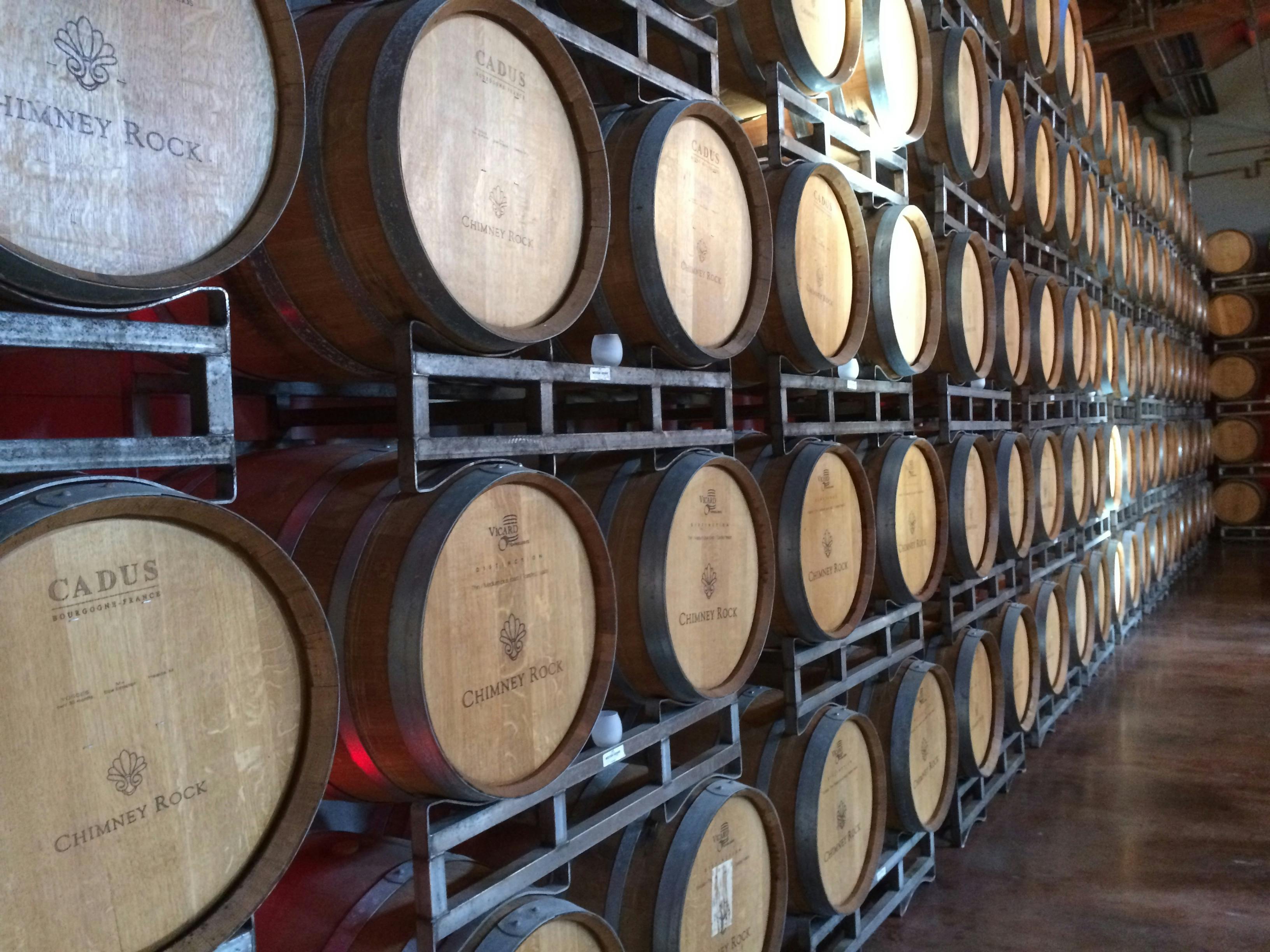
Old wooden barrels in a dim cellar with a single glass of white wine
Old casks and patience are the quiet tools of low-intervention cellars.

The Material Culture of Natural Wine

Natural wine changes the objects around it. A wine that is unfiltered and alive does not behave the same way in every glass. In a thin, polished crystal glass, its cloudiness can look like a flaw. In a handmade ceramic cup or a simple bistro glass, the same wine looks intentional, even beautiful. The choice of vessel is not merely aesthetic; it shapes how the wine’s aromatics reach the nose and how its texture lands on the tongue.

On the table, natural wine pairs well with the kind of food this journal cares about: dark breads, smoked fish, aged cheeses, root vegetables, pickled herring, and dishes that have a slight edge of bitterness or brine. The wine’s lower sulfur levels mean it does not fight with fermented foods the way a heavily sulfured wine can. A glass of unfiltered Müller-Thurgau from a Rheinhessen grower can sit comfortably next to a plate of Matjes with onions and apples, where a polished commercial wine might taste thin or metallic.

There is also a question of temperature. Natural wines often show best a few degrees warmer than conventional whites. A cold cellar temperature of 8–10°C can mute their aromatics; 12–14°C lets the wine’s lees character and herbal notes emerge. This is a small adjustment, but it changes the rhythm of a meal. The wine is not a cold, crisp interruption; it is a slower, warmer presence, more like a broth than a beverage.

Tradeoffs and Honest Cautions

Natural wine is not a guarantee of quality. Some bottles are alive in the best sense; others are simply unstable, reductive, or marred by volatile acidity. The absence of sulfur is not a virtue in itself. Sulfur has been used in winemaking for centuries because it protects wine from oxidation and spoilage. A well-made natural wine with a small sulfur addition at bottling can be more stable and more expressive than a zero-sulfur wine that falls apart after a day open. The goal is not purity as an ideology; it is transparency as a practice.

There is also a risk of romanticizing the past. Natural winemaking is not a return to some pre-industrial golden age. It is a modern choice, made with modern knowledge of microbiology, soil science, and cellar hygiene. The best growers are not careless; they are careful in a different way. They monitor fermentations closely, taste constantly, and make small, precise decisions. The romance of “nothing added, nothing taken away” can obscure the fact that natural wine requires more attention, not less.

How to Taste Natural German Wine Without Prejudice

If you are new to natural wine, start with a grape you already know. A natural Riesling from the Mosel or Nahe is a gentler introduction than a skin-contact Müller-Thurgau or a cloudy Silvaner. Pour a small amount into a simple glass, let it sit for a few minutes, and smell it before you taste. Do not expect the wine to smell like a conventional Riesling. It may smell more like cider, hay, or wet stone. That is not a flaw; it is the wine’s own voice.

Then taste with food. Natural wines are often at their best at the table, where their texture and slight rusticity make sense. Try a glass with a slice of dark rye bread, a piece of aged Gouda, or a few pickled onions. Notice how the wine’s acidity behaves, how its finish lingers, and whether it makes the food taste more like itself. This is the test that matters.

A table set with dark bread, cheese, pickles, and a glass of unfiltered white wine
Natural wine makes the most sense at the table, with food that has its own edge.

Frequently Asked Questions

Is natural wine the same as organic or biodynamic wine?

No. Organic and biodynamic certifications refer primarily to how grapes are farmed. Natural wine refers to what happens in the cellar: spontaneous fermentation, minimal or no sulfur, no fining or filtration, and little or no other manipulation. A wine can be organic but heavily manipulated in the cellar, and a natural wine can be made from grapes that are not certified organic, though most serious natural growers farm organically or biodynamically.

Why is natural wine often cloudy?

Cloudiness comes from suspended particles—yeast cells, grape solids, and tartrates—that are normally removed by fining and filtration. In natural winemaking, these particles are left in the wine. They can add texture and flavor, and they are harmless to drink. The wine may also throw a fine sediment over time, which is why many natural wines benefit from being poured gently or decanted.

Does natural wine age well?

Some does, some does not. Wines made with very low sulfur and no filtration are more fragile than conventional wines. They can oxidize or develop off-flavors if stored poorly. However, well-made natural wines from good vineyards can age beautifully, developing complex aromas of dried herbs, honey, and nuts. The key is to buy from growers who have a track record of stable wines, and to store bottles in a cool, dark place.

Where can I buy natural German wine?

Natural German wines are increasingly available through small importers, specialty wine shops, and direct from growers. In Germany, cities like Berlin, Hamburg, and Munich have dedicated natural wine bars and shops. Outside Germany, look for importers who specialize in low-intervention wines from German-speaking regions. Many growers also sell directly through their websites and ship within the EU.

A Next Step for This Journal

This article is a beginning, not a conclusion. A natural next step for this journal would be a closer look at the vessels and tools of low-intervention drinking: the ceramic cup, the pewter beaker, the linen cloth, and the wooden tray. Another path would be a regional profile of a single grower, told through a visit to the cellar and a meal at the kitchen table. If you have a favorite natural German wine, or a question about how to serve one, write to me. The conversation continues over the next glass.

On the Names We Give Our Dishes: Handwriting, Inheritance, and the Private Taxonomy of a Hamburg Kitchen

The Notebook

The spine of my mother’s recipe notebook is held together with packing tape that has yellowed to the color of weak tea. I do not know when she applied it. The tape was already there when I took possession of the book, three weeks after the funeral, in a kitchen that still smelled of the cloves she had pushed into an onion for the last luncheon she hosted. The notebook itself is a simple thing—a college-ruled exercise book with a marbled cover in blue and grey, the kind sold at German stationers for two marks in the 1970s. Inside, the pages have softened to the texture of cloth. The ink is blue-black, Pelikan 4001, and it has bled through in places so that certain recipes carry a ghostly palimpsest on the verso.

My mother’s handwriting slants to the right at an angle of perhaps fifteen degrees, which I only know because I once measured it against a protractor I found in a kitchen drawer, a remnant of my brother’s school days. The slant is consistent across forty years of entries. Either her hand never altered its posture, or the body’s memory of writing is as fixed as a potter’s memory of clay. The letters are small, economical, and they sit close together, as though she were conscious of the finite space of the page and the infinite number of things worth recording. She used abbreviations that no one outside the family could decode: gl. for gehäufter Löffel, a heaped spoonful; Fl. for a specific flame setting on our gas burner that sat between medium and low; 1 Ei (kl.) for a small egg, which in her taxonomy meant an egg from the bantam hens kept by our neighbor Frau Timm, not a medium egg from the shop. These abbreviations are a private language. They assume a body that already knows what a heaped spoonful looks like, what that particular flame sounds like when it licks the bottom of a copper pot.

I open the notebook now and the pages release a scent that is difficult to name. Not the scent of food. The scent of paper that has absorbed forty years of kitchen air—steam, onion vapor, the volatile oils of citrus peel, the faint acetic note of vinegar bottles opened nearby. The book smells like the memory of a kitchen, which is to say it smells like time held in cellulose.

The Private Taxonomy of Kinship

The recipes in my mother’s notebook are not organized by category. There is no section for soups, no chapter for desserts. They are organized by name. Tante Helga’s Heringssalat appears on page seven, between a remedy for sore throats and a sketch of a table arrangement for Advent Sunday. Omas Rote Grütze is on page twenty-three, written in a hand slightly larger than the others, as though my mother were channeling her own grandmother’s authority through the pen. Ursula vom Isemarkt—Grünkohl is on page forty-one, attributed to the woman at the Isemarkt stall who sold kale and blood sausage and who once told my mother that the secret was to pick the kale after the first frost, because frost converts the starches to sugars and the leaves go tender with cold. Christines Hochzeitssuppe is on page fifty-eight, and beside it my mother has written, in smaller letters, August 1986, es hat geregnet—it rained.

This is a taxonomy of kinship. The dishes are not categorized by method or ingredient but by the woman who made them, the place where they were encountered, the season or occasion to which they belonged. The name carries provenance. When my mother wrote Tante Helga’s Heringssalat, she was not merely recording a recipe for pickled herring with apples and cream. She was archiving a relationship. Tante Helga was my father’s eldest sister, a woman who lived in Altona and who kept a china cabinet filled with Meissen plates she never used and who made her herring salad every Christmas Eve in a cut-glass bowl that had belonged to her mother-in-law. The recipe is inseparable from the woman, the bowl, the street, the season. To cook it without acknowledging this is to prepare a different dish entirely.

Northern European food culture has always relied on this kind of naming. In Schleswig-Holstein, where I grew up and where I return each autumn to walk the weekly markets of small towns like Husum and Friedrichstadt, dishes carry the names of women who are long dead but whose authority persists in the grammar of the table. Leberkäse nach Tante Margarethe. Fliederbeersuppe wie bei der alten Frau Petersen. The construction is always the same: the dish, followed by the preposition nach or wie—after, or like—and then the name. The preposition is crucial. It acknowledges that the recipe is not owned but inherited, that the cook who writes it down is making an approximation, a translation of something that lived in another woman’s hands. The name is a citation. Academic in its honesty.

In the Netherlands, the same practice appears in the op het recept van construction. In Denmark, I have seen recipe cards in private collections marked efter Bedstemor—after grandmother—with the grandmother’s first name in parentheses, as though the surname were insufficient, as though the dish belonged to the person, not the family. These naming conventions constitute a private taxonomy that maps a family’s culinary lineage more accurately than any published cookbook. The names are coordinates. They locate a dish in time, in place, in a specific woman’s kitchen, on a specific afternoon, with a specific copper pot that had a specific dent in its rim.

The Resistance of Ink

I write my own recipes by hand, in a Leuchtturm1917 notebook with a cover the color of wet slate, using a Pelikan M200 fountain pen filled with the same blue-black ink my mother used. I am aware of the sentimentality in this. I am also aware that the sentimentality is the point. The fountain pen resists the hand in a way that a keyboard does not. The nib catches on the paper’s grain. The ink flows unevenly when the cartridge is low. The hand must pause when the pen runs dry, and in that pause, something happens—a reconsideration, a glance at the pot on the stove, a sensory check that is older than language. The body measures proportion through the pressure of the nib, the width of the stroke, the space between words. A recipe written by hand is a record of the body’s attention. It carries the tremor of uncertainty and the firmness of conviction in the same line.

Digital templates flatten this. A recipe entered into a database or a phone app becomes uniform—the same font, the same spacing, the same sterile architecture of fields and checkboxes. The abbreviations vanish because the system does not recognize them. The marginalia—the note about the rain, the sketch of the Advent table, the pressed sprig of thyme that fell from between the pages of my mother’s notebook—are stripped away. What remains is instruction without memory. The dish survives, but the woman who made it disappears.

The Authors Guild, in its guidelines on AI best practices for writers, argues that a writer’s original voice, thinking, and creativity are what make their work uniquely theirs, and that preserving human voices and the thinking that goes into writing is essential to maintaining professional standards. I share this conviction, though I arrive at it through the kitchen rather than the study. A handwritten recipe is a form of authorship as particular and irreplaceable as any literary voice. The slant of the handwriting, the pressure of the pen, the abbreviations that only a daughter can read—these are the voice of the cook, and they cannot be separated from the recipe without loss. The Guild’s emphasis on preserving human voice and the thinking behind writing speaks directly to what I hold in my mother’s notebook: a document whose value lies not merely in its content but in the bodily act of its making.

The Craft of Naming

There is a craft to naming a dish, and it is older than the cookbook. In the monastic kitchens of medieval Northern Europe, recipes were titled by their primary ingredient and their method: in pisce salsamento, de modo condiendae carnis. The names were functional, Latin, impersonal. But in the domestic sphere—the kitchen of the housewife, the farmstead, the fisherman’s cottage—the naming was intimate. A dish was called by the name of the woman who perfected it, or the village where it was first made, or the feast day on which it was traditionally served. Labskaus derives from the English lobscouse, a sailor’s stew, but in Hamburg it became Labskaus nach Mutter, and the nach Mutter was not a brand but a citation of lived experience.

The name carries sensory memory. When I read Tante Helga’s Heringssalat, I taste the brine of the herring, the sweetness of the apple, the richness of the cream, and I also taste the cold of the china cabinet in Tante Helga’s dining room, the smell of her perfume, the sound of her voice correcting my mother’s technique. The name is a sensory archive. It compresses taste, smell, sound, temperature, and emotion into a possessive construction: Helga’s herring salad. The apostrophe is a door.

This is why I resist the erasure of names in modern food writing. The trend toward generic titles—Pickled Herring with Apple and Cream—strips the dish of its lineage. It presents the recipe as though it were invented in the moment of its writing, rather than inherited, adapted, and shaped by generations of hands. The generic title is a kind of orphanage. It places the dish in a category but gives it no family.

There is a parallel in the world of natural wine. A bottle from a grower like Clemens Busch in the Mosel valley carries the name of the vineyard—Pommerner Kupp, Goldtröpfchen—and the name of the village, and the name of the grower, and the vintage, which is to say the weather of that specific year. The label is a coordinate system. It tells you where the grapes grew, who tended them, what the sky was like. A wine labeled simply Riesling tells you almost nothing. A name without provenance. A dish without a cook.

The Supper Club as Fiction

Two winters ago, I hosted a supper club in my apartment in Hamburg, on the third floor of an Altbau on Schauenburgerstraße, with a view of the rooftops of the Schanzenviertel and the Elbphilharmonie in the distance, lit against the low sky. I decided to write the menu as a short story. Each course belonged to a fictional Northern European household, and the menu itself was structured as a narrative—a progression through a single imagined day, from morning to late evening, across a series of kitchens that did not exist but that I wanted to feel as though they could.

The first course was a smoked eel tartine on pumpernickel, and it belonged to a fictional Frisian widow named Adelheid who kept a smokehouse on the Eider. The second was a clear broth with a single dumpling, belonging to a fictional household in Lübeck, the mother of which I named Gesche. The third was a plate of pickled mackerel with celeriac remoulade, attributed to a fictional Copenhagen apartment occupied by a woman I called Ingrid. The dessert was Rote Grütze, served in a shallow ceramic bowl, and it belonged to a fictional grandmother in Flensburg whose name I wanted to carry the specific fricative texture of the North Frisian coast.

I found that I could not generate the names I needed from memory alone. I wanted names that carried the right linguistic density—the consonant clusters of Low German, the vowel length of Danish, the particular weight of Frisian patronymics. Names that sounded as though they belonged to kitchens I had almost visited. I spent an afternoon experimenting with a tool that could generate character names with regional and cultural specificity, setting the parameters toward Northern European linguistic traditions and filtering for the period and place I needed. The results were surprisingly useful. The tool produced names with the correct phonetic texture—names that carried the right weight of consonants, the right cadence of syllables, the right sense of a person who might have stood at a stove in a specific decade. I adapted several of them for the menu, adjusting the surnames to fit the specific regions I was evoking, and the resulting characters felt grounded in a way that my unaided inventions had not.

The supper club guests read the menu as a story. They moved through the courses as though moving through a day in the lives of women they had never met but whose kitchens they could almost smell. The names did the work. Adelheid’s smokehouse, Gesche’s Lübeck kitchen, Ingrid’s Copenhagen apartment—these were not real places, but the names gave them the gravity of real places. The fiction was persuasive because the names were precise.

This exercise taught me something about the craft of naming that I had not fully understood from my mother’s notebook. A name is not merely a label. It is a structural element. It does for a dish what a character name does for a story: it anchors the thing in a specific imagined or remembered reality, and it gives the reader or the eater a coordinate by which to navigate. The Reedsy character name generator, which I examined while working on the supper club menu, describes how setting, cultural origin, and period should inform naming choices, and how a name that fits its world can make a character feel inevitable, while a name that clashes with its context breaks the spell. The same is true of dishes. Tante Helga’s Heringssalat works because every element of the name—the familiar Tante, the regional Helga, the specific Heringssalat—belongs to the same world. Remove any element and the coordinate system collapses.

The principle that setting and cultural context should inform naming choices, as described in Reedsy’s character name generator, applies with equal force to the naming of dishes. A recipe called Helga’s Herring Salad in an English translation loses the Tante, and with it the kinship. A recipe called Pickled Herring Salad loses Helga entirely, and with her the kitchen, the china cabinet, the cut-glass bowl, the rain on the wedding day. The name is the thinnest part of the recipe, but it is the part that holds the most.

What the Hand Remembers

I keep my mother’s notebook in a drawer in my kitchen, beside my own notebook and a small tin of replacement ink cartridges. I do not cook from it often. Most of the recipes live in my hands already—the weight of a dumpling between my palms, the sound of oil when it reaches the temperature for frying, the specific amber that caramelized sugar reaches just before it burns. These are things I learned by standing beside my mother at the stove, not by reading her words. But I open the notebook regularly, and I read the names, and I let the handwriting do its work.

The handwriting is a record of the body. My mother’s hand moved across these pages with a pressure and a speed that were hers alone. When I trace the letters of Omas Rote Grütze with my finger, I am tracing a motion that my mother’s hand made, and that motion is connected to the motion her hand made when she stirred the grütze in a copper pot on a burner set to Fl., and that motion is connected to the motion her grandmother’s hand made in a kitchen I never saw. The chain of motion is the chain of inheritance. The fountain pen is the link.

I do not believe that digital tools are without value. I used one to name the characters in my supper club fiction, and it served a purpose that my own linguistic inventory could not. But I believe that the handwritten recipe preserves something that no digital template can replicate: the bodily memory of proportion, the slant of a hand that no longer writes, the abbreviations that only a daughter can read. The notebook is a still life. A composition of paper, ink, pressure, and time, and it holds, in its yellowed tape and softened pages, the portrait of a woman who cooked by the sense of her hands and who named what she made after the women who taught her.

When I die, my own notebook will pass to someone—perhaps a niece, perhaps a stranger who buys my apartment and finds it in a drawer. They will open it and see the blue-black ink, the slant of my hand, the abbreviations I have borrowed from my mother and the new ones I have invented. They will read the names: Margots Labskaus, Frau Timms Eier, Adelheids Räucheraal. And if they cook from it, they will cook in the company of women they never met, in kitchens they never entered, on streets they never walked. The names will be the door.

The Rise of Natural Wine in Germany: A Quiet Revolution in the Glass

Natural wine has drifted from the fringes of Berlin wine bars to the tables of thoughtful drinkers across Germany. It isn’t a style so much as a set of commitments: farming without synthetic herbicides or pesticides, fermenting with native yeasts, adding little or nothing in the cellar, and bottling without aggressive filtration or heavy sulfur. The German term Naturwein sits alongside Low-Intervention, Orange Wine, and Piwi in a vocabulary that winegrowers, sommeliers, and importers now use with care. For readers of this journal, the subject matters because natural wine is also a material culture question. It changes what appears on the table, how a bottle feels in the hand, what the label says, and what the wine tastes like beside a plate of smoked eel, dark rye, or a simple bowl of potatoes in buttermilk.

Glasses of natural white wine on a rustic wooden table with linen napkin

Germany’s natural wine movement is not a rejection of the country’s winemaking tradition. It is a return to older rhythms, filtered through a modern understanding of microbiology and a renewed respect for the vineyard as a living place. The result is a category that is uneven, occasionally difficult, and often beautiful. It rewards patience and punishes expectation. That is precisely why it belongs in a conversation about Northern European culinary still life: natural wine asks us to look at the glass the way we look at a pewter spoon or a linen napkin, with attention to origin, texture, and time.

What Natural Wine Means in a German Context

Natural wine is easier to describe by its practices than by its flavor. In Germany, the growers most often associated with the movement share several habits. They work small parcels, often on steep slate or shell-limestone slopes. They harvest by hand. They press gently and let fermentation begin without commercial yeast. They use old oak or neutral vessels, sometimes clay amphorae or concrete eggs. They add little or no sulfur before bottling, and they bottle without sterile filtration. The wines are alive in a literal sense: they can change in the glass, throw sediment, or taste different from one bottle to the next.

This approach has deep roots in German wine history. Before the mid-twentieth century, many Mosel, Rheingau, and Pfalz growers worked in ways that would now be called low-intervention, though they would not have used the term. The rise of modern enology after the Second World War brought temperature control, cultured yeasts, and a cleaner, more predictable style. Natural wine is partly a reaction to that predictability. It is also a response to climate change, to the loss of old vines, and to a younger generation of growers who want their wines to speak of a specific place rather than a textbook method.

Key Regions and Growers

The natural wine map of Germany is not identical to the classic fine-wine map. The Mosel remains important, but so do the Pfalz, Rheinhessen, and the Nahe. Berlin is the cultural center, with wine bars and shops that have championed the style for more than a decade. Hamburg and Munich have followed, and smaller cities such as Freiburg and Mainz now have dedicated importers and tasting groups.

Among growers, a few names recur in conversation. In the Mosel, Rita and Rudolf Trossen have worked biodynamically for decades and make wines that are both precise and deeply savory. In the Pfalz, the Brand brothers produce unfiltered Riesling and Silvaner with a quiet, almost monastic intensity. In Rheinhessen, growers such as Bianka and Daniel Schmitt have become reference points for a younger generation. These are not celebrity winemakers in the international sense. They are farmers who happen to make wine, and their labels often carry more information about soil and vintage than about brand identity.

The Sensory Language of Natural Wine

Natural wine asks for a different vocabulary. The standard descriptors of fruit and oak are not always useful. Instead, one speaks of texture, energy, salinity, and the way a wine opens over several hours. A natural Riesling from the Mosel might smell of wet slate, green apple skin, and chamomile, with a slight cloudiness in the glass. A skin-contact Müller-Thurgau from the Pfalz might taste of dried apricot, black tea, and a faint bitterness that lingers like the pith of a citrus fruit. These are not flaws, though they can become flaws when the wine is poorly made. The line between rustic and faulty is real, and it is one of the reasons natural wine remains controversial.

Amber-colored skin-contact wine in a simple glass beside dark rye bread

For the table, natural wine often works best with food that has a similar honesty. A cloudy Silvaner with a slight spritz is excellent beside a plate of pickled herring and boiled potatoes. A deep, amber-colored skin-contact wine can stand up to smoked pork or a lentil stew with vinegar and bay leaf. The wines are not always polite. They can be tannic, sour, or oddly aromatic. But they have a way of making food taste more like itself, which is the highest compliment a wine can receive in a Northern European kitchen.

Orange Wine and the Question of Tradition

Orange wine, made by fermenting white grapes on their skins, has become the most visible symbol of the natural wine movement. In Germany, the style is not traditional in the way it is in Georgia or Slovenia, but it has found a home among growers who want to extract more texture and structure from varieties such as Riesling, Silvaner, and Muskateller. The resulting wines range from pale gold to deep amber, with aromas of dried flowers, apricot, and sometimes a pleasant nuttiness.

Critics sometimes dismiss orange wine as a fashion. There is some truth to that. But the best German examples are not made for shock value. They are made because the grower believes the skins hold something essential about the vineyard. The wines can be challenging, but they are rarely boring. A well-made orange wine from the Nahe, served slightly cool in a simple glass, is one of the most interesting things a curious drinker can pour.

The Material Culture of Natural Wine

Natural wine is not only about what is in the bottle. It is also about the objects around it. The movement has brought back a preference for simple, heavy glass bottles, often with paper labels printed in small runs. Cork remains common, though some growers use crown caps for early-drinking wines. The tools of the cellar have changed too: old fouders, clay amphorae, and concrete eggs have replaced stainless steel in many natural wineries. These vessels are not romantic props. They affect the wine’s texture and oxygen exposure in ways that stainless steel does not.

On the table, natural wine pairs naturally with the materials this journal celebrates. A cloudy Riesling looks right in a handmade glass with a slight irregularity. A deep amber skin-contact wine belongs beside a pewter plate and a linen napkin. The wine’s lack of polish matches the patina of old copper and the grain of a wooden board. This is not nostalgia. It is a recognition that certain objects and certain wines share a similar philosophy: they are made slowly, by hand, and they are meant to be used, not displayed.

Challenges and Tradeoffs

Natural wine is not a guarantee of quality. The movement has produced wines that are unstable, reductive, or simply unpleasant. Bottle variation is real, and a wine that tastes beautiful in the cellar can taste tired after a long journey. Sulfur, often demonized in natural wine circles, is a useful tool when used in small amounts. Many thoughtful growers use a little sulfur at bottling to protect the wine without stripping its character. The best natural winemakers are not dogmatic. They are pragmatic, and they adjust their methods to the vintage and the wine.

There is also a question of price. Natural wines from small German growers are often more expensive than conventional wines of similar quality. The labor is higher, the yields are lower, and the distribution is less efficient. For a drinker accustomed to buying Riesling by the case, the price of a single bottle of natural wine can seem unreasonable. But the comparison is not always fair. A natural wine from a steep Mosel vineyard is closer to a handmade object than to an industrial product. It is not for every occasion, and it should not be.

How to Begin with German Natural Wine

The best way to begin is to find a good wine shop or bar and ask for guidance. Natural wine is a conversation, not a category. A knowledgeable merchant can recommend a bottle that suits your taste and your table. Start with a still white wine from a grower you trust, perhaps a Riesling or Silvaner made without added sulfur. Serve it cool but not ice-cold, and give it time to open. Notice the texture, the way the wine feels on the tongue, and the way it changes over an hour. Then try a skin-contact wine, perhaps from the Pfalz or Rheinhessen, and compare it with a conventional white from the same region. The differences will be instructive.

For those who want to go deeper, a visit to a natural wine fair such as Raw Wine or Karakterre can be illuminating. These events bring growers and drinkers together in a way that is rare in the wine world. The atmosphere is serious but not solemn, and the growers are usually happy to talk about their methods. If travel is not possible, many importers now offer mixed cases with detailed notes. A case of six or twelve bottles, chosen by someone who knows the growers, is a better introduction than a single bottle bought at random.

Natural Wine and the Northern European Table

Natural wine has a particular resonance in Northern Europe. The region’s food traditions are built on preservation, fermentation, and the honest use of local ingredients. Smoked fish, pickled vegetables, dark bread, aged cheese, and cured meat all share a certain wildness with natural wine. The wines do not need to be paired with elaborate dishes. A simple meal of rye bread, butter, and smoked mackerel is enough. The wine brings acidity, texture, and a sense of place that a more polished wine might not.

Natural wine bottle with simple paper label on a wooden table with pewter plate

This is the deeper reason natural wine matters to this journal. It is not a trend to be followed or a category to be mastered. It is a way of thinking about what we drink, where it comes from, and how it fits into a life that values slowness and attention. A bottle of natural wine, like a well-made linen napkin or a pewter spoon, is an object with a history. It carries the weather of a particular year, the soil of a particular slope, and the decisions of a particular person. That is worth savoring.

Frequently Asked Questions

Is natural wine the same as organic or biodynamic wine?

Not exactly. Organic and biodynamic certifications refer primarily to farming practices in the vineyard. Natural wine includes farming without synthetic inputs, but it also extends to the cellar: native yeast fermentation, little or no added sulfur, and minimal filtration. A wine can be organic without being natural, and some natural wines are not certified organic because the grower chooses not to pursue certification.

Why is natural wine sometimes cloudy or fizzy?

Cloudiness usually comes from the wine being bottled without filtration or fining. Small particles of yeast and grape solids remain in the bottle. A slight fizz can occur when a small amount of carbon dioxide from fermentation is retained. Neither is a flaw in itself, though excessive fizz or a muddy appearance can indicate instability. A good natural wine should be alive but not chaotic.

Does natural wine age well?

Some natural wines age beautifully, especially those with good acidity and a healthy fermentation. Others are meant to be drunk young and can fall apart after a year or two. The key is to buy from growers with a track record and to store the bottles properly. If you are unsure, ask the merchant whether a particular wine is built for aging or for early drinking.

What should I serve with a German natural wine?

Start with simple, savory food. A cloudy Riesling is excellent with smoked fish, pickled vegetables, or a soft cheese. A skin-contact wine can handle richer dishes such as roast pork, lentil stew, or aged Gouda. The wines are generally high in acidity and low in oak, so they are versatile at the table. Avoid very sweet desserts, which can make the wines taste sour.

A Quiet Revolution, Not a Loud One

The rise of natural wine in Germany is not a dramatic story. It is a slow accumulation of small decisions made by growers, merchants, and drinkers who want something more honest in the glass. The wines are not for everyone, and they are not meant to be. They are for people who are willing to pay attention, to accept a little unpredictability, and to find beauty in what is imperfect. That is a very Northern European way of approaching pleasure. It is also, in its quiet way, a revolution.

For this journal, natural wine will remain a recurring subject. Future pieces will look at specific growers, at the revival of old German grape varieties, and at the relationship between natural wine and the material culture of the table. The conversation is just beginning, and it is best conducted slowly, over a glass of something alive.

The Rise of Natural Wine in Germany: A Quiet Revolution at the Northern Table

Natural wine did not arrive in Germany with a manifesto. It came the way most consequential things do in the north: quietly, through a few stubborn growers, a handful of importers, and a slow shift in what people were willing to taste. For this blog, natural wine matters because it changes the material culture of the table. It asks different questions of the glass, the decanter, the linen napkin, the pewter plate. It asks us to think of fermentation as a form of cooking, and the cellar as a pantry rather than a laboratory.

In the German context, natural wine sits alongside related movements: naturwein, low-intervention winemaking, spontaneous fermentation, and the broader return to handwerk—craft—that has reshaped bakeries, dairies, and butcher shops across the country. It is not a rejection of German wine tradition but a re-reading of it. The old cellars of the Mosel, Rheingau, and Pfalz were never industrial spaces. They were cool, stone rooms where wine moved slowly and was touched often. Natural wine, in many ways, is a return to that rhythm.

For readers of this blog, the subject is not a departure from the sensory world of the northern table. It is an extension of it. A bottle of unfiltered Müller-Thurgau from a young grower in Rheinhessen has more in common with a loaf of dark rye from a wood-fired oven than with a supermarket Pinot Grigio. Both are products of patience, place, and a certain refusal to hurry.

What Natural Wine Means in Germany

The term natural wine has no legal definition in Germany or anywhere else. It is a working term, used by growers, importers, and drinkers to describe wine made with minimal intervention in the vineyard and the cellar. In practice, this usually means organic or biodynamic farming, hand harvesting, spontaneous fermentation with native yeasts, little or no added sulfur, and no fining or filtration. The wine is allowed to be itself, even when that self is cloudy, volatile, or stubborn.

In Germany, the conversation is complicated by the country’s long history of technical precision. German winemaking schools have taught generations of students to measure, adjust, and stabilize. The natural wine movement does not reject that knowledge; it questions its default settings. A grower who chooses not to add sulfur is not ignoring chemistry. She is making a different calculation about risk, time, and flavor.

Adjacent terms that often appear in the same conversation include orange wine (white grapes fermented on their skins), pét-nat (pétillant naturel, a lightly sparkling wine bottled before primary fermentation is complete), and maison wine or garage wine for small, experimental projects. These are not synonyms for natural wine, but they are frequent companions.

The Growers Who Started the Conversation

No single person started natural wine in Germany, but a small group of growers in the 1980s and 1990s laid the groundwork. In the Mosel, Ulli Stein began working with old, steep vineyards and minimal intervention long before the term was fashionable. In the Pfalz, Hanspeter Ziereisen and his wife Edeltraud built a reputation for wines of unusual depth and honesty. In Rheinhessen, a younger generation—including Klaus Peter Keller, who is not strictly a natural winemaker but whose influence on quality and terroir thinking is immense—pushed the region toward a new seriousness.

By the 2010s, a second wave had arrived. Growers like Andi Mann in Rheinhessen, Marto Wines (Martin Wörner) in the same region, and Staffelter Hof in the Mosel began making wines that were deliberately unfiltered, often with no added sulfur, and always with a strong sense of place. These wines were not made to please everyone. They were made to be honest.

The movement also owes a debt to importers and wine bars. In Berlin, Weinerei and later Motif Wein and Jaja created spaces where natural wine could be tasted without ceremony. In Hamburg, Weinladen St. Pauli and Otto’s Weinbar did the same. These places mattered because they taught drinkers to trust their own palates rather than a points system.

The Sensory Language of Natural Wine

Natural wines ask for a different vocabulary. The standard tasting note—cassis, vanilla, pencil shavings—often fails. A natural Riesling from the Mosel might smell of bruised apple, wet stone, and a faint, pleasant funk. A skin-contact Müller-Thurgau might taste of dried herbs, orange peel, and something like hay after rain. These are not flaws. They are the wine’s way of telling you where it comes from and what it has been through.

For the sensory writer, this is a gift. Natural wine restores the connection between the glass and the table. It pairs differently. A cloudy Silvaner with a slight spritz sits well beside a plate of smoked eel, dark bread, and horseradish cream. A pét-nat from the Pfalz can handle the vinegar sharpness of a Frisian cucumber salad. The wines are not polite. They are conversational.

There is also a material dimension. Natural wines often throw sediment. They need a decanter, or at least a careful hand. They look different in the glass—hazier, deeper in color, more alive. On a table set with pewter and linen, they belong. They do not look like a product shot. They look like something made by a person.

The Role of the Table

This blog has always been interested in the table as a place where things come together: food, drink, objects, people. Natural wine fits that interest because it is not a beverage to be consumed in isolation. It is part of a meal, a conversation, a season. A bottle of unfiltered Spätburgunder from a small grower in the Ahr valley is not a trophy. It is a companion to a slow Sunday lunch of roast pork, red cabbage, and boiled potatoes.

The northern European table has its own logic. It is not the table of the Mediterranean, with its bright oils and quick grilling. It is a table of preserved things, smoked things, root vegetables, and long braises. Natural wine, with its earthiness and occasional wildness, speaks that language. A slightly funky Pinot Noir from Baden can stand up to a venison stew. A bone-dry, unfiltered Riesling can cut through the fat of a smoked ham hock.

There is also a question of hospitality. Natural wine is not always easy. It can be cloudy, tart, or strange. Serving it to guests requires a certain confidence. But that confidence is part of the pleasure. It says: I trust you to taste this with me. I am not giving you a product. I am giving you an experience.

Practical Considerations for the Home Table

If you are new to natural wine, the German landscape can be confusing. Here are a few practical notes, drawn from years of drinking, serving, and occasionally spitting.

Start with the classics

Begin with a natural Riesling from the Mosel or Rheingau. These wines are often the most approachable, with bright acidity and a clear sense of place. Look for growers who work organically and bottle without filtration. The wine may be slightly cloudy. That is fine.

Expect variation

Natural wine is not consistent from bottle to bottle. A wine that was brilliant in March may be moody in October. This is not a defect. It is the nature of a living product. If a bottle tastes off, let it sit for ten minutes. If it still tastes off, cook with it.

Serve it slightly cooler than you think

Natural wines often show best at 10–12°C for whites and 14–16°C for reds. Too warm, and the funk can dominate. Too cold, and the fruit disappears. A stone cellar temperature is ideal. A cool pantry works too.

Use the right glass

A simple, medium-sized white wine glass is best for most natural wines. Avoid oversized Burgundy bowls for delicate Rieslings. The wine needs a little air, but not a swimming pool.

The Question of Sulfur

Sulfur dioxide has been used in winemaking for centuries. It stabilizes wine, prevents oxidation, and kills unwanted bacteria. Natural winemakers do not all reject sulfur. Many use tiny amounts at bottling. Others use none at all. The difference is one of degree, not kind.

The debate over sulfur is often framed as a battle between purity and safety. That is too simple. A well-made natural wine with no added sulfur can be stable and delicious. A poorly made one can be a mess. The same is true of conventional wine. The skill of the grower matters more than the number on a lab report.

For the home drinker, the practical question is simple: Does this wine taste good to me? If it does, drink it. If it does not, do not. No ideology should override the evidence of the senses.

Natural Wine and the Northern European Pantry

One of the quiet pleasures of natural wine is how well it pairs with the preserved and fermented foods of the north. Sauerkraut, pickled herring, smoked cheese, dark bread, cured sausage—these are not easy partners for delicate, fruit-forward wines. They need wines with acidity, texture, and a certain rustic confidence.

A skin-contact Riesling from the Pfalz, with its tannic grip and orange-peel bitterness, can sit beside a plate of pickled beets and not flinch. A pét-nat from Rheinhessen can handle the salt and smoke of a North Sea shrimp salad. A cloudy Silvaner can stand up to a wedge of aged Gouda. These are not pairings from a wine textbook. They are pairings from a kitchen table.

This is the deeper point. Natural wine is not a separate category. It is part of a larger return to honest food and honest objects. The same impulse that leads a person to buy a hand-thrown ceramic mug leads them to try a bottle of unfiltered wine. The same patience that goes into a slow-fermented rye bread goes into a wine that spends eighteen months on its lees. The table is the place where these things meet.

Where to Find Natural Wine in Germany

Natural wine is no longer confined to Berlin and Hamburg. Small wine shops and bars have opened in Cologne, Munich, Frankfurt, and even smaller cities like Freiburg and Lübeck. Many growers sell directly from the cellar door. A visit to a natural winemaker in the Mosel or Rheinhessen is not a tourist attraction. It is a conversation.

If you cannot travel, several online shops specialize in natural German wine. Wein aus Natur, More Natural Wine, and Vinaturel are three that have built reputations for careful sourcing and honest descriptions. They are not the only ones, but they are a good place to start.

For English-speaking readers, the importer Vom Boden has done more than anyone to explain German natural wine to an international audience. Their writing is precise, opinionated, and free of hype. It is worth reading even if you never buy a bottle.

The Future of Natural Wine in Germany

Natural wine in Germany is no longer a novelty. It is a small but stable part of the wine landscape. The question is not whether it will survive, but how it will mature. Will it remain a niche for enthusiasts, or will it influence the mainstream? Will the next generation of German winemakers, trained in the technical schools, choose to work with less intervention? Will the term natural wine gain a legal definition, or will it remain a useful ambiguity?

These questions are open. What is certain is that the movement has already changed the conversation. It has reminded German winemakers that the cellar is not a factory. It has reminded drinkers that wine is not a beverage to be scored, but a food to be tasted. And it has reminded the table that a bottle of wine, like a loaf of bread or a wheel of cheese, is a small act of faith in the world.

Frequently Asked Questions

Is natural wine the same as organic wine?

No. Organic wine is made from organically grown grapes, but the winemaker may still use many interventions in the cellar, including added yeast, fining agents, and sulfur. Natural wine goes further, typically using spontaneous fermentation, minimal or no additives, and little or no filtration. All natural wines are made from organically or biodynamically farmed grapes, but not all organic wines are natural.

Why is natural wine sometimes cloudy?

Cloudiness in natural wine usually comes from the absence of fining and filtration. The wine retains tiny particles of yeast, grape solids, and other matter. These particles are harmless and often contribute to the wine’s texture and flavor. If the cloudiness bothers you, let the bottle stand upright for a day and pour carefully.

Does natural wine give you a worse hangover?

There is no reliable scientific evidence that natural wine causes worse hangovers than conventional wine. Hangovers are primarily caused by alcohol, dehydration, and individual sensitivity. Some people report feeling better after drinking natural wine, possibly because it contains fewer additives, but this is anecdotal. The best advice is the oldest advice: drink less, drink water, and eat something.

How should I store natural wine?

Store natural wine like any other wine: in a cool, dark place with a stable temperature, ideally between 10 and 14°C. Because natural wines often contain less sulfur, they can be more sensitive to heat and light. Drink them within a few years of release unless the grower suggests otherwise. Many natural wines are made to be drunk young.

A Note on the Next Step

This article is the first in what I hope will become a recurring column on the drinks of the northern table. Future pieces will look at the return of traditional German cider, the quiet revival of Frisian tea culture, and the material history of the pewter tankard. If you have a question about natural wine, or a bottle you would like me to taste, write to me through the contact page. The table is always open.

A glass of natural white wine on a rustic wooden table with soft natural light
Bottles of natural wine on a shelf in a dimly lit cellar
A person pouring natural wine into a glass at a table set with simple linen

The Quiet Revolution: Understanding Natural Wine in Germany’s Slow Food Landscape

There is a particular clink that a Zalto Universal glass makes against a heavy, linen-covered table. It is a sound that, in my kitchen, often precedes a conversation about what is actually in the bottle. For a long time, German wine discourse was a matter of numbers: Oechsle, grams of residual sugar, the precise geological epoch of a slate slope. These are not unimportant details; they are the grammar of our liquid culture. But lately, the conversation has shifted from the soil’s mineral composition to the soil’s living biome. We are talking less about the technical wizardry of the cellar and more about the quietude of the fermentation barrel. This is the rise of Natural Wine in Germany—a movement that is less a trend and more a return to the pre-industrial soul of the winemaker’s craft, echoing the slow, deliberate rhythms of a hand-kneaded rye dough or a wheel of raw milk cheese resting on a spruce board.

For the reader of this journal, who understands that a pewter spoon and a perfectly aged Vacherin are not affectations but necessities, the natural wine movement offers a profound sensory extension of the table. It is a rejection of the standardized, the pasteurized, and the technologically manicured. It is a pursuit of vitality in the glass, a vitality that speaks the same language as a sourdough starter bubbling in a ceramic crock or a copper pot simmering with foraged chanterelles.

A rustic table setting with a glass of natural wine, bread, and cheese, illuminated by soft window light.
The natural wine table is an extension of the landscape: unvarnished, textural, and deeply tied to a sense of place.

Defining the Undefinable: What is Natural Wine?

Before we can appreciate the quiet revolution in the Pfalz or the Mosel, we must acknowledge a central tension: there is no legally codified definition for natural wine in Germany, nor in most of the world. Unlike the strict hierarchies of the VDP (Verband Deutscher Prädikatsweingüter) or the labeling laws for Prädikatswein, natural wine exists in a space of shared philosophy rather than bureaucratic certification. It is a covenant between the grower, the grape, and the drinker.

Generally, the ethos rests on three pillars: organic or biodynamic farming in the vineyard, spontaneous fermentation with native yeasts in the cellar, and minimal intervention—meaning little to no additives, fining, or filtration, and often a restrained use of sulfur dioxide, if any. It is a practice that demands impeccable fruit. You cannot hide a flaw behind a veil of selected yeast aromas or a polish of sterile filtration. The wine must stand naked, and for that, the grapes must be healthy, grown in living soils teeming with microbial life. This is not winemaking by neglect; it is winemaking by acute observation, a practice the French call élevage—a raising, a nurturing, rather than a manufacturing.

The German Context: A Tradition of Purity, Reimagined

Germany has a long, quiet history with this hands-off approach, particularly in the sphere of Riesling. For centuries, before the advent of cultured yeasts and temperature-controlled stainless steel, many of the great trocken and off-dry wines of the Mosel and Rheingau were made with a non-interventionist hand, fermenting slowly in old oak Fuder casks, often stopping naturally with residual sweetness. The modern natural wine movement, however, draws its energy from a different source: a younger generation of winemakers who have traveled, worked harvests in the Loire, Beaujolais, or Burgenland, and returned home to question the orthodoxy of their parents’ cellars.

These vignerons are not just making Riesling. They are reviving forgotten, often unfashionable, varieties like Elbling, one of Europe’s oldest cultivated vines, or Müller-Thurgau, long dismissed as a workhorse for cheap Liebfraumilch. In their hands, on the right slate or limestone soils, these grapes yield wines of crystalline purity, gentle pétillance, and a savory, almost saline grip. They are also embracing the PiWi (fungus-resistant) varieties like Souvignier Gris and Cabernet Blanc, not as a compromise, but as a logical extension of an ecological philosophy that begins in the vineyard.

A close-up of a hand holding a cluster of ripe, healthy white wine grapes in a sunlit vineyard.
The foundation of any natural wine is impeccable fruit, grown without synthetic inputs and harvested at a moment of perfect physiological ripeness.

The Sensory Lexicon: Beyond Fruit and Oak

To approach a glass of natural wine from a producer like Weingut Brand in the Pfalz or Staffelter Hof on the Mosel is to recalibrate one’s sensory expectations. The primary aromas are often less about overt, jammy fruit and more about texture and savoury complexity. One might find the bruised apple and hay scent of a fermenting orchard, the smoky minerality of wet stone, or a fleeting, high-toned note of cider vinegar that blows off to reveal a core of quince and wild herbs.

On the palate, the absence of aggressive fining and filtration often leaves a gentle, textural haze in the glass—a visual cue that this is a living product. The mouthfeel can be electric, with a fine, spritzy prickle of dissolved carbon dioxide, a natural byproduct of a slow, cool fermentation. Tannins, even in white wines from extended skin contact (a technique known as orange wine or Maischevergoren), provide a framework that is more akin to a delicate, steeped tea than the grippy astringency of a young red. These are wines that demand food, and they reward the patient, unhurried sipper.

A Note on Sulfites and Stability

A common point of anxiety, and one that deserves a measured, factual address, is sulfur dioxide (SO2). It is a preservative and antioxidant used in virtually all winemaking. The natural wine philosophy seeks to minimize or eliminate added sulfur, relying on the wine’s own inherent stability. The result can be a wine that is more fragile, more reactive to temperature and travel. A bottle that has endured a hot shipping container may show a bit of mousiness or a fleeting note of volatile acidity. This is not a flaw in the winemaking but a characteristic of a product that has not been chemically stabilized for a global, indifferent supply chain. It is a wine that asks to be sourced carefully, stored properly, and drunk in its youth, in the company of good food and good light.

The Material Culture of the Natural Wine Table

There is a quiet, satisfying consonance between the aesthetics of natural wine and the material culture we cherish here. The cloudy, unfiltered glow of a Silvaner from a stoneware Amphore finds its perfect vessel not in a polished crystal flute, but in a simple, hand-blown stemware or even a heavy, faceted tumbler. The wine’s rustic energy is grounded by the weight of pewter or the rough, organic texture of a linen napkin. A label, often designed by an artist friend with a woodcut or a splash of watercolor, becomes part of the table’s visual narrative, a small, unassuming piece of paper that speaks of a specific place and a specific year’s weather.

Consider the pairing: a cloudy, amber-hued Riesling Orage from a producer like Enderle & Moll, with its notes of dried apricot, black tea, and earth. It is a wine that seems to have been made for a slab of dense, dark Pumpernickel spread with smoked schmaltz and a scatter of flaky sea salt. The wine’s gentle tannins cut the fat, its earthy notes mirror the bread’s deep, malty char, and its lively acidity cleanses the palate for the next bite. This is not a pairing of intellectual conceits; it is a pairing of shared, rustic DNA.

A selection of natural wine bottles with simple, artistic labels arranged on a wooden table with a loaf of bread.
The unassuming labels of natural wines often reflect a small-scale, artisanal approach, where the story inside the bottle takes precedence over marketing gloss.

Finding the Quiet Producers: A Regional Guide

The landscape of German natural wine is not a monolith. It is a patchwork of small, often family-run estates, each interpreting the philosophy through the lens of their unique terroir. Here are a few regions and the quiet signatures they are developing.

Pfalz: The Heart of the New Movement

The Pfalz, with its warm, sunny climate and diverse soils, has become a hotbed for the natural wine scene. Producers here are often associated with the “Pfalz Connection” or the broader “Neue Winzer” (New Winemakers) group. They champion hand-harvesting, spontaneous fermentation, and long lees aging in traditional Stückfass (large oak barrels). The resulting wines, whether a taut, mineral Riesling or a juicy, chillable Portugieser, are defined by their energy and digestibility. Look for names like Weingut Brand, Schmitt & Söhne, and Odinstal.

Mosel: Steep Slopes and Electric Wines

On the impossibly steep, blue slate slopes of the Mosel, a handful of growers are applying natural methods to the region’s signature grape. The wines are often feather-light in alcohol, with a piercing, laser-like acidity and a profound expression of slate-driven minerality. The residual sugar, when present, is a natural result of a long, cool fermentation stopping on its own, not a winemaking addition. Staffelter Hof, under the guidance of Jan Matthias Klein, has become a beacon, producing a range of wines from a bone-dry, unfiltered Riesling to a pétillant-naturel (pét-nat) that tastes of green apple and rain. Weingut Ulli Stein is another essential name, a custodian of ancient, ungrafted vines on vertiginous slopes, making wines of haunting purity.

Rheinhessen: The New Frontier

Once dismissed as a land of bulk wine, Rheinhessen has undergone a radical transformation, driven by a young generation focused on quality and sustainability. Here, natural winemaking often goes hand-in-hand with a revival of old, terraced vineyards and traditional grape varieties like Silvaner and Scheurebe. The wines from producers like Weingut Schätzel and Weingut Seehof are textural, gastronomic, and deeply tied to the limestone and loess soils of the region. They are wines that feel less like a beverage and more like a liquid geography lesson.

Practical Wisdom: Buying, Storing, and Serving

Engaging with natural wine requires a slight shift in habits, a move away from the cellaring strategies of classified Bordeaux and towards the immediacy of a farmer’s market. These are wines of vitality, and their vitality is best captured young. A few practical considerations:

  • Seek a Trusted Merchant: The single most important step is finding a wine shop or online retailer who specializes in natural wines and understands their provenance and storage conditions. They can guide you past the flawed bottles to the truly luminous ones.
  • Embrace the Cloudiness: A hazy appearance is not a defect. It is often a sign that the wine has not been aggressively filtered or fined, preserving texture and flavor. If a bottle has sediment, stand it upright for a day and decant gently, as you would an old wine.
  • Temperature is Everything: Serve these wines cooler than you might think. A light, spritzy red like a chilled Trollinger or Dornfelder benefits from 30 minutes in the refrigerator. The cold tightens the structure and makes the fruit pop. Whites and orange wines should be served at a cool cellar temperature, around 10-12°C, not ice-cold.
  • Glassware Matters: A wider-bowled glass, rather than a narrow flute, allows the wine’s often complex, reductive aromas to open up. The shape of a universal glass or a Burgundy bowl is ideal.

Frequently Asked Questions

Is natural wine always organic or biodynamic?

Not always by certification, but almost always by practice. The philosophy of natural wine begins in the vineyard. A winemaker cannot make a stable, expressive natural wine from grapes grown with synthetic herbicides, pesticides, and fertilizers. The microbial life of the soil is the foundation. While many producers are certified organic (often by EU standards or organizations like Demeter for biodynamics), some small estates follow these principles rigorously without the administrative burden of certification. The key is to look for a producer’s stated philosophy and, more importantly, to taste the vitality in the glass.

Why do some natural wines smell a bit funky or like cider?

This is often the signature of Brettanomyces (a wild yeast) or a touch of volatile acidity, both of which are more common in wines made without added sulfites or sterile filtration. A slight, fleeting note of barnyard, leather, or cider vinegar upon opening is not necessarily a flaw; it is part of the wine’s untamed character. Often, this will dissipate with a few minutes of air, revealing the fruit beneath. However, if the wine smells aggressively of nail polish remover (ethyl acetate) or a persistent, unclean mouse cage, it is likely a flawed bottle. A good merchant will understand this variability and stand behind the wines they sell.

Can natural wine age, or should it be drunk immediately?

The vast majority of natural wines are made for early consumption, within one to three years of the vintage. Their charm lies in their primary fruit, energy, and freshness. However, there are notable exceptions. Some producers, particularly those working with old vines, extended skin contact, and oxidative handling, create wines with the structure and complexity to evolve for a decade or more. A natural Riesling from a great site, made with minimal sulfur but impeccable fruit, can age as gracefully as any conventionally made wine, developing those haunting petrol and honey notes over time. The key is perfect storage: a dark, cool, vibration-free environment.

A Quiet, Personal Conclusion

Last autumn, I opened a bottle of 2018 Weingut Brand Riesling “Pfalz” Trocken. It was a wine with a slight haze, a deep golden color, and a scent that filled the room with dried chamomile, yellow plum, and a smoky, almost peaty earthiness. On the table was a simple meal: a wedge of aged Gouda, a pot of sharp mustard, and a loaf of dense, seed-filled bread baked in a Dutch oven that morning. The wine did not dominate the meal; it conversed with it. It had a quiet authority, a sense of having arrived at the table not through a series of technological interventions, but through a year of patient waiting in a cold cellar. It was, in its own unassuming way, a perfect expression of a time and a place. And that, ultimately, is what we are all searching for at the table: not a trophy, but a true story, told without shouting.

Why I Still Write Recipes by Hand: The Resistance of Fountain Pen on Paper

My grandmother’s recipe notebook is a school exercise book—the kind with a pale green cover and lines spaced wide enough for a child’s hand. She began it in 1953 in Westerland, on Sylt, and kept adding to it until 1989, the year the wall came down and also the year her eyesight failed enough that her handwriting, always small, precise, tilted slightly left, began to wander. The pages smell of cellar damp and, faintly, of caraway. Some entries are in Frisian. Some are in High German with Frisian measurements: een handvol, soveel as dat hâldt—as much as it holds. The ink is blue-black, the kind fountain pens used before everyone switched to ballpoints and lost something they did not know they had lost.

I cooked from this notebook for three years before I understood it. Not the recipes themselves—those are simple, Northern, seasonal—but the way the notebook works as an object. The pages are not organised by category. There is no index. A recipe for Labskaus sits beside a note about the price of herring in 1961, beside a pressed sprig of sorrel whose stem has left a rust-coloured ghost on the paper. The entries are dated, sometimes. Sometimes not. The margins carry corrections in a different ink, made years later, in a hand recognisably hers but older, less certain. She was revising herself across decades, and the notebook records the revisions the way a coastline records tides: in residue, in what remains.

I kept my own notebook during the years I ran the kitchen in Hamburg. A Leuchtturm1917, hardcover, dotted pages, and I wrote in it with a Pelikan M400 that I bought from an antiquarian stationer on Hopfenstrasse the week we opened. The pen cost more than I should have spent. I have never regretted it. The nib is fine, slightly flexed now from years of pressure, and it leaves a line of ink that has a width—a presence—that ballpoint ink simply does not. Writing with it is slow. That is the point.

The Hand Remembers What the Screen Erases

When you write a recipe by hand, your body participates in the recording of it. The wrist knows the weight of a tablespoon of salt because it has levelled that spoon and then written 1 EL Salz, gestrichen—one level tablespoon—and the act of writing the words encodes the motion. This is not mysticism. It is motor memory, and it is the reason a cook who has written out a recipe by hand can later reproduce it without consulting the notebook, while a cook who photographed the same dish or typed it into a phone cannot. The photograph records appearance. The typed note records instruction. The handwritten recipe records something closer to intention.

I noticed this first with bread. My sourdough routine shifted over four winters in Hamburg, and each change is visible in the notebook as a shift in handwriting pressure, in the way I began to abbreviate proofing times, in a margin note from February 2017 that reads simply kürzer, dunkler, besser—shorter, darker, better. The note is compressed because I wrote it standing, in the kitchen, between shaping the final loaf and closing the oven door. The compression itself tells me something about where I was in the process: pressed for time, but not too pressed to stop and record. The notebook made me stop. The pen made me stop. A phone would not have.

There is a broader conversation happening right now about what is lost when human authorship—whether in a recipe notebook or in a literary essay—is replaced by generic algorithmic output. The Authors Guild has framed this with clarity in their guidance on AI best practices for authors, arguing that a writer’s original voice, thinking, and creativity represent something machine-generated mashups of pre-existing works cannot replicate. I find this persuasive not because I am opposed to digital tools—I use a digital scale, a digital thermometer, a digital timer—but because the specific act of writing a recipe by hand produces a kind of cognitive encoding that typing does not. The resistance of the pen, the slight drag of the nib on paper, the fact that you cannot delete but only cross out and revise in the margin: all of this forces a slowness that mirrors the slowness of cooking itself.

Slowness as Method

Fermentation teaches you that time is an ingredient. So does stock reduction. So does bread rising, cheese aging, vinegar maturing in oak. The notebook teaches you that documentation is also an ingredient—not of the dish, but of your relationship to the dish. When I write a recipe by hand, I am forced to decide what matters and what does not. A phone photograph records everything and therefore distinguishes nothing. A typed recipe can be edited endlessly, which means it never has to be right the first time, which means the writer never has to commit. A handwritten recipe commits. The ink dries. The correction in the margin is a record of a second thought, and it is visible, and it stays visible. The notebook does not pretend that cooking is a process of perfect first drafts.

My grandmother’s notebook contains a recipe for Rote Grütze that she wrote in 1956 and corrected in 1972. The correction is in red ink, and it changes the cooking time from twenty minutes to thirty-five. Beside it she has written: die Kirschen waren saurer—the cherries were more sour. A complete thought. It tells you she made this dish for sixteen years before she understood that the cooking time depends on the acidity of the fruit, and it tells you this in seven words. A digital recipe would have been silently updated. The old version would have vanished. The notebook preserves the learning, not just the result.

The Architecture of a Meal

There is a further dimension to handwritten documentation that I have come to value more as I age, and it has to do with narrative. A recipe notebook, kept over years, becomes a chronicle of how you eat, and that chronicle has a structure—call it a plot, if you like—that is invisible to the person keeping it and visible only in retrospect. My Hamburg notebook covers three winters, two springs, one autumn service that ran for six weeks and nearly broke me. The arc is there in the pages: the early entries are careful, detailed, full of measurements I no longer need. The later entries are terse. Ferment the cabbage three weeks. Taste at two. Trust the salt. The notebook taught me to trust the salt, and then it recorded that I had learned.

I think about this when I design a menu. A meal has a structure not so different from a piece of writing: it has an opening, a development, a turn, a close. The sequence matters. The pacing matters. The silence between courses matters, and it matters in a way that is hard to articulate to someone who has not sat through a properly paced meal and felt the pause do its work. I once structured a supper club menu as a five-act narrative—overture, rising action, crisis, falling action, denouement—and found that the scaffolding, even a borrowed one, forced me to see the meal’s architecture more clearly than I had before. I was skeptical of the exercise, and I remain skeptical of formulaic approaches to something as instinctive as feeding people, but the discipline of naming each course’s narrative function changed how I sequenced them. I have since encountered cooks who use various scaffolding tools for this purpose, including one AI story generator designed for narrative structure, and while I have not used these tools myself, I understand the impulse: sometimes a cook needs to see the skeleton of a meal before they can hang the flesh on it. The skeleton is not the meal. But the skeleton is what prevents the meal from collapsing.

That same discipline applies to narrative structure: before publishing, editors need a way to test events, claims, and consequences actually follow one another, which is where how Unsloppy AI Writing App fits the writing workflow can function as a planning aid rather than a substitute for domain evidence.

The difference, I think, is that the narrative structure of a handwritten recipe notebook is emergent. It arises from years of recording, from the accumulation of small decisions, from the fact that the writer was present in the kitchen and the notebook was present in the kitchen and the two presences shaped each other. A structural tool can help you see the architecture, but it cannot give you the years. It cannot give you the margin note in red ink that says the cherries were more sour. That note took sixteen years to write.

What the Paper Remembers

There is a material dimension to this that I do not want to lose. Paper absorbs. My grandmother’s notebook has pages that are slightly wavy where she wrote while cooking, where steam from a pot or dampness from a cellar settled on the paper before the ink dried. You can feel the humidity of that kitchen in the page. My own notebook has a tea stain from 2016 that sits over a recipe for Senfsoße, and the stain has yellowed in a way the ink has not, and the yellowing tells me something about tannins and paper acid and the fact that I drank Darjeeling while I cooked, which I no longer do. The stain is a record of a habit I have since abandoned. No digital file carries this kind of incidental memory.

I am aware that I am arguing for an inefficiency. Handwriting is slower than typing. A notebook cannot be searched. A notebook can be lost—my grandmother’s nearly was, when her house in Westerland was cleared in 1994 and a cousin, recognising the green cover, took it from a box bound for the donation bin. A notebook does not back up. A notebook does not sync. A notebook cannot be shared with a kitchen brigade in real time, which is why I typed recipes for my line cooks in Hamburg and wrote in the notebook only for myself. The two systems coexisted. They served different purposes. The typed recipe was instruction. The notebook was memory.

What I have noticed, in the years since I left the restaurant, is that the typed recipes have faded from my mind. I can still cook most of them, but I cannot remember why I made the choices I made, or when I changed them, or what the weather was like the afternoon I decided the Matjes needed more dill. The notebook remembers. I open it and the page tells me: March 2016, written in the margin, more dill, less sugar, the herring was lean. The herring was lean. I had forgotten. The notebook did not.

The Resistance That Teaches

The Pelikan M400 has a fine nib and a piston filling mechanism, and I fill it with Rohrer & Klingner Salix ink, an iron-gall formula that fades from blue-black to a muted grey-brown over years, so that old entries look different from new ones. The ink changes colour as it ages, and this means the notebook has a chronology visible at a glance: the grey entries are old, the blue entries are recent. No digital system does this. No digital system lets you see time passing in the colour of your own words.

The resistance of the nib on paper is slight but consistent, and it means that writing takes a fraction of a second longer per word than typing would. That fraction is where the thinking happens. It is where you decide whether to write cook until done or cook until the skin blisters and the flesh pulls from the bone. The first is faster. The second is a recipe. The pen forces the choice because the pen is slow, and slowness demands specificity. Vagueness is a luxury of speed.

I think about the broader cultural shift away from handwritten documentation, and I think about what research on changing media habits tells us about how people now encounter and retain information. A 2024 Pew Research Center overview of news habits and media consumption documents a population increasingly navigating information through digital streams, with declining engagement with print and a growing reliance on algorithmic curation. The pattern is familiar, and it extends beyond news into every domain where human beings once recorded their own experience by hand. What concerns me is not the loss of paper as a medium but the loss of the cognitive practice handwriting enforces: the practice of deciding what to record, of committing to a version, of living with your corrections rather than deleting them. A recipe notebook is a small thing. But small things are where habits live, and habits are where craft lives.

The Season’s Plot

What I am ultimately arguing for is not nostalgia. I am not nostalgic for my grandmother’s kitchen, which was small, cold in winter, and equipped with a stove that required a match and a prayer. I am arguing for a practice of documentation commensurate with the slowness of the cooking it records. If fermentation takes three weeks, the notebook you write the recipe in should take three weeks to fill, not three minutes. If a stock reduction takes eight hours, the record of it should carry the weight of eight hours, not the weight of a photograph snapped at the end. The notebook is not a record of what you cooked. It is a record of how you thought about what you cooked, and thought takes time, and time is what the pen gives you that the screen does not.

My grandmother’s notebook ends midway through a recipe for Bratkartoffeln. The last word is soveel—so much—and then nothing. She set the pen down and did not pick it up again. The page is blank after that, and the blankness is its own kind of record. It tells me she stopped cooking before she stopped living, and that the notebook knew this before anyone else did. I will not stop writing in mine. I will not stop cooking. But I know that one day the pen will be set down, and the page will be blank, and the ink will have dried, and someone will open the notebook and smell the cellar and the caraway and read the margin notes and not know what the red ink means, and that will be fine. The notebook will have done its work. It will have recorded a life of cooking, in the language of cooking, at the speed of cooking. That is all a recipe notebook needs to do.

The Quiet Ferment: Germany’s Natural Wine Awakening

Close-up of a hand pouring a cloudy, unfiltered white wine into a glass in a sunlit vineyard

Natural wine—Naturwein—has no legal definition in Germany. It is not a category you will find in the wine law, with its tidy pyramids of Prädikat and Trocken. And yet, that absence is precisely the point. It is a philosophy, a quiet refusal of the cellar’s technological safety nets, and a slow-burning movement that has taken root in some of the country’s most storied vineyards. For those of us who write about Northern European food as a kind of cultural memory, natural wine matters because it tells a different story: not of ripeness and polish, but of soil, weather, and the hands that stayed out of the way. It reconnects the glass to a place, and on the palate, that connection feels less like a statement and more like a conversation.

The Vocabulary of a Movement: What “Natural” Means in a German Context

Talk about natural wine in Germany, and you quickly find yourself in a thicket of overlapping terms and guarded philosophies. The most visible is “Orange Wine” (Orange Wein), a style made by fermenting white grapes on their skins. The result is a deep amber colour and a tannic grip you would normally associate with reds. But the broader movement hangs on a set of cellar principles: spontaneous fermentation with whatever yeasts ride in on the grape skins, little to no added sulfur dioxide, no fining or filtration, and a general suspicion of the technological toolbox that can iron out a wine’s character.

This approach finds a natural home with producers like Rita and Rudolf Trossen in the Mosel. They farm steep slate slopes biodynamically and make wines of electric energy. Then there is Staffelter Hof, a centuries-old estate that has become a cult name for its zero-zero (no additions, no subtractions) Rieslings. These are not wines that shout. They murmur. They reveal layers of orchard fruit, a pleasant herbal bitterness, and a saline minerality that speaks of the river and the rock.

The Sensory Shift: From Fruit to Terroir

Conventional German wine education often leans on varietal typicity—the lychee of Gewürztraminer, the green apple of Riesling. Natural wines, by contrast, push a sense of place to the foreground. A skin-contact Müller-Thurgau from the Rheinhessen might smell less of grape and more of the cellar itself: a faintly oxidative note, like a bruised pear, followed by a texture that is almost chewy, with a finish that lingers on wet stone and dried herbs. This is not a flaw. It is a deliberate move away from the clean, fruit-driven profile that modern winemaking technology can engineer.

The sensory experience demands a different kind of attention. The wines are alive, often changing in the glass over the course of an hour. A pet-nat (pétillant naturel) from the Pfalz, made by stopping fermentation early and bottling without disgorgement, might be cloudy with yeast sediment, its bubbles softer than a traditional Sekt, its aromas shifting from fresh apple cider to something more yeasty and complex. This is wine as a process, not a product.

Rows of grapevines in a German vineyard with a castle in the background under a cloudy sky

The Cultural Roots: Why Germany, Why Now?

Germany’s natural wine scene did not appear out of nowhere. It is part of a broader European shift, with strong ties to the French vin naturel community and the Austrian Naturwein pioneers just across the border. But the German iteration has its own character, shaped by the country’s unique wine laws and a deep-seated cultural respect for Handwerk (craft).

The VDP (Verband Deutscher Prädikatsweingüter), an association of top estates, has traditionally championed a classic, often technical approach to winemaking. Yet a growing number of younger VDP members are experimenting with spontaneous fermentation and reduced sulfur additions, blurring the lines between the establishment and the avant-garde. Outside the VDP, a parallel network of small, often organic or biodynamic growers has formed, loosely connected by fairs like “Raw Wine” and local events such as “Wein & Wahrheit” (Wine & Truth). These gatherings are less about commerce and more about community—a place where winemakers and drinkers can discuss the ethics of additives, the nuances of vineyard soil, and the unpredictable personality of a wine left to its own devices.

The Role of the Winemaker: Guide, Not Controller

In the natural wine philosophy, the winemaker’s role shifts from technician to guardian. This is particularly resonant in Germany, where the concept of Terroir has long been debated. For a natural winemaker, terroir is not just a marketing term; it is a biological reality expressed through the microbiome of the vineyard and the cellar. Spontaneous fermentation, using yeasts that arrive on the grape skins from the vineyard itself, is seen as the most direct translation of that microbial landscape into the glass.

This approach requires a different kind of precision: not the precision of the laboratory, but the precision of observation. A winemaker must know when a fermentation is sluggish, when a wine needs a gentle racking rather than a sterile filtration, and when a touch of sulfur—often just a gram or two at bottling—is necessary to prevent spoilage. It is a high-wire act, and the results can be breathtakingly beautiful or, occasionally, deeply flawed. The best practitioners, like Andi Weigand in Franken or Bianka and Daniel Schmitt in the Rheinhessen, have spent years learning to read their wines, and the consistency they achieve is a testament to that patience.

A rustic wooden table set with a bottle of natural wine, a glass, and a plate of cheese and bread

Tasting the Unfamiliar: A Guide to German Natural Wine Styles

For a palate accustomed to the clean lines of a classic Kabinett or the generous fruit of a Spätburgunder, natural wines can be disorienting. They ask for a different kind of engagement, one that values texture and evolution over immediate appeal. Here are three styles that define the current German scene, each with its own sensory signature.

Skin-Contact Whites (Orange Wines)

Often made from aromatic varieties like Muskateller, Scheurebe, or Gewürztraminer, these wines are fermented on their skins for days or weeks, extracting tannin, colour, and a deep, savoury complexity. The result is a wine that looks like a rosé but tastes like a red, with notes of dried apricot, black tea, and a distinct grip on the palate. They are remarkable with food—think smoked eel, roasted root vegetables, or a hearty Frisian bean soup—where their structure and slight oxidative character act as a bridge between the dish and the drinker.

Pétillant Naturel (Pet-Nat)

Germany’s answer to the global pet-nat craze is often more restrained, more mineral-driven. Made by bottling wine before primary fermentation is complete, these lightly sparkling wines are unfiltered and frequently capped with a crown seal rather than a cork. They can be cloudy, with a fine sediment that adds a yeasty, brioche-like note. A Riesling pet-nat from the Nahe, for instance, might offer a spritz of green apple and lime zest, followed by a chalky, almost salty finish. Serve it well-chilled as an aperitif, or with a plate of North Sea oysters.

Zero-Zero Reds

German reds made without any added sulfur are a rarity, given the variety’s susceptibility to oxidation, but a handful of producers are achieving remarkable results with Spätburgunder (Pinot Noir) and Trollinger. These wines are often lighter in body, with a translucent ruby colour and aromas that lean toward sour cherry, forest floor, and a hint of barnyard. They are fragile, best consumed young and with a slight chill, and they pair beautifully with the smoked and cured meats of the German north—think Kassler or a simple Mettwurst.

The Sensory Table: Pairing Natural Wines with Northern European Food

The culinary traditions of the North Sea and Baltic coasts—smoked fish, dense rye breads, pickled vegetables, and rich dairy—find a natural counterpoint in the raw energy of these wines. The high acidity and slight funk of a natural Riesling cut through the oiliness of a grilled mackerel, while the tannic grip of an orange wine complements the sweetness of caramelized onions in a Dutch uientaart. This is not the polite pairing of a hotel dining room; it is a more rustic, more honest conversation between what grows together and what goes together.

Consider a simple meal of Grünkohl mit Pinkel, the smoky kale and sausage stew of Lower Saxony. A conventional wine might be overwhelmed by the dish’s earthy, fatty intensity. A natural wine, with its own earthy, slightly wild character, meets the stew on equal terms. The slight spritz of a pet-nat lifts the richness, while the oxidative notes of an orange wine echo the long cooking of the kale. The pairing is not about contrast or complement; it is about resonance.

Navigating the Market: Where to Find and How to Choose

Natural wine remains a niche in Germany, but it is a niche with passionate advocates. Specialist shops like Weinladen Schmidt in Berlin, Vinaturel in Hamburg, and Wein & Glas in Munich curate selections that emphasize small producers and transparent winemaking. Many of these shops host regular tastings, offering a rare chance to hear directly from the winemakers about their methods and motivations.

When choosing a bottle, look beyond the label’s marketing language. Terms like “unfiltriert” (unfiltered), “spontanvergoren” (spontaneously fermented), or “ohne Schönung” (unfined) are more reliable indicators of a natural approach than the word “natural” itself. Be prepared for variation: a wine that was brilliant and energetic in one vintage might be more subdued in the next. This is not inconsistency; it is the honest fingerprint of a year’s weather, a vineyard’s health, and a winemaker’s evolving intuition.

Frequently Asked Questions

Is natural wine the same as organic or biodynamic wine?

Not exactly. Organic and biodynamic certifications refer primarily to vineyard practices—the avoidance of synthetic pesticides and herbicides, and the use of specific preparations in the case of biodynamics. Natural winemaking extends this philosophy into the cellar, prohibiting or severely limiting additives (like cultured yeasts, enzymes, and sulfur) and processes (like filtration and reverse osmosis) that are permitted in certified organic winemaking. A wine can be made from organically grown grapes without being a natural wine, and some natural winemakers work organically or biodynamically without seeking formal certification.

Why do some natural wines smell or taste “funky”?

The “funk” in natural wine often comes from a compound called brettanomyces (brett), a wild yeast that can produce aromas of barnyard, band-aid, or clove. In small amounts, brett can add complexity; in excess, it is considered a flaw. Other sources of funk include volatile acidity (which gives a sharp, vinegary note) and mousiness (a sensation more than a smell, often described as the taste of a mouse cage). These characteristics are not inherent to all natural wines, but they are more common in wines made without sulfur, which acts as a preservative and antimicrobial agent. A well-made natural wine should be clean, if not sterile, and any funk should be in balance with the wine’s fruit and structure.

How should I store and serve natural wine?

Natural wines, particularly those made without added sulfur, are more sensitive to temperature and light than conventional wines. Store them in a cool, dark place, ideally at a constant temperature between 10°C and 14°C. Serve white and orange wines slightly cooler than you might a conventional white—around 10°C to 12°C—to help preserve their freshness and mask any slight volatility. Light reds and pet-nats benefit from a similar chill. Because many natural wines are unfiltered, they may contain sediment; stand the bottle upright for a day before opening, and pour carefully. Once opened, most natural wines are best consumed within a day or two, as their low sulfur levels make them more prone to oxidation.

A Quiet Future

The natural wine movement in Germany is not a trend that will peak and fade. It is a slow, steady realignment of values, a return to a way of thinking about wine that predates the technological certainties of the 20th century. For those of us who write about food and drink as a form of cultural memory, it offers a richer, more textured narrative—one in which every bottle is a document of a specific time and place, and every glass an invitation to pay closer attention. The next time you open a bottle, consider what has been left out as much as what has been put in. The silence in the glass can be the most eloquent part of the story.

The Quiet Ferment: Natural Wine in Germany’s Northern Vineyards

Natural wine isn’t a new idea, but its slow, steady arrival in Germany has quietly reshaped how many of us think about what’s in the glass. It’s wine made with a light hand—organically or biodynamically farmed grapes, fermented with the yeasts that ride in on the skins, and bottled with little or no added sulfur. In a country long admired for technical mastery and the crystalline precision of its Rieslings, this approach can feel like a small, deliberate rebellion. But it’s less a break with tradition than a return to older, slower ways. For those of us who write about the sensory world of Northern European food and drink, natural wine opens a door: a chance to see the landscape not as something to be tamed, but as a conversation between soil, fruit, and cellar. This piece explores the quiet rise of natural wine in Germany, its sensory language, and what it brings to a table laid with rye bread, smoked fish, and pickled roots.

Hands holding a glass of cloudy natural wine in a sunlit vineyard
The unfiltered look of a natural wine speaks of place, not polish.

What Natural Wine Means in a German Context

Definitions help, especially when a term threatens to become just another label. In Germany, the talk around natural wine—often called Naturwein or Low-Intervention-Wein—draws on a wider European shift but is shaped by local history. The basics are simple: organic or biodynamic farming, spontaneous fermentation, no additives beyond a whisper of sulfites at bottling, and honesty about what’s inside. Unlike France, where vin méthode nature has gained some official footing, Germany has no legal framework for natural wine. That absence brings both freedom and a certain murkiness. Winemakers who follow this path often lean on private certifications like Demeter or Respekt, or simply on the trust that grows from direct sales and word of mouth.

What sets the German approach apart is its cool-climate acidity. In regions like the Mosel, Nahe, or even the far northern Saale-Unstrut, natural wines hum with a nervy, saline energy that feels inseparable from the slate and sandstone soils. The fruit is rarely as upfront as in warmer natural wine regions; instead, you get savoriness, a whisper of herbs or smoke that pairs naturally with the rye breads, cured fish, and fermented vegetables of Northern European tables. This isn’t wine for grand pronouncements. It’s wine for paying attention.

The Sensory Vocabulary of Low-Intervention Wines

Writing about natural wine asks for a different kind of noticing. The standard tasting note—cassis, vanilla, pencil shavings—often misses the mark because these wines are less about varietal character and more about texture, energy, and how they shift in the glass. A natural Riesling from a cold site might smell of wet stone, green apple skin, and something faintly yeasty, like a bread starter left on the counter overnight. A skin-contact Müller-Thurgau can move from chamomile to bruised pear to a gentle tannic grip over an hour. These are wines that want time and a little humility from the taster.

For the sensory writer, the trick is to describe without drifting into romance. Words like “alive” or “honest” get tossed around a lot in natural wine circles, but they can hide as much as they show. I’d rather focus on structure and sensation: the way a wine’s acidity slices through the oiliness of smoked mackerel, or how its slight cloudiness catches the light like a winter sky. The vocabulary of the Northern European kitchen—dill, caraway, rye, buttermilk, sea salt—offers a more grounded lexicon than the fruit bowl. This is wine that belongs at the table, not on a pedestal.

Bottles of natural wine on a rustic wooden table with bread and cheese
Natural wines find their voice alongside simple, honest food.

Key Regions and Producers Shaping the Movement

While natural wine in Germany isn’t pinned to one spot, certain regions have become gathering points for low-intervention work. The Mosel, with its steep slate slopes and old vines, is home to a small but influential group of winemakers who farm organically and skip additives. Names like Rita and Rudolf Trossen (who work biodynamically under the Pur label) and the younger generation at Weingut Immich-Batterieberg have shown that even in a region built on precision, there’s room for spontaneity. Further south, in Baden and the Pfalz, producers such as Enderle & Moll and Weingut Brand have drawn international notice for their unfiltered Pinot Noir and skin-fermented whites.

Less visible but just as compelling are the growers in the former East, where small-scale organic farming survived under the radar. In Saale-Unstrut, biodynamic pioneer Pawel Sierszputowski makes wines with a quiet intensity—his skin-contact Weissburgunder has the texture of linen and a scent of dried meadow flowers. These wines rarely travel far; you’ll find them in local wine bars, at farm stands, or through small distributors who share the grower’s outlook. For the curious drinker, the best way to meet them is to visit the region, walk the vineyards, and taste in a courtyard with a plate of Handkäse mit Musik.

The Role of Biodynamics and Old Vines

Biodynamic farming isn’t a requirement for natural wine, but the two often walk hand in hand. The biodynamic calendar, horn manure preparations, and a view of the vineyard as a living organism fit neatly with the low-intervention mindset. In Germany, Demeter-certified estates are among the most visible natural wine producers. Yet some of the most interesting bottles come from growers who practice organics without certification, or who farm old, ungrafted vines that have never known chemical inputs. These wurzelecht (own-rooted) vines, some over a century old, give tiny yields of concentrated fruit. Their wines carry a depth that feels almost archaeological—a taste of a time before modern viticulture.

Natural Wine at the Northern Table

Pairing natural wine with food is less about rules than about resonance. The high acidity and savory notes of many German natural wines make them easy companions for the smoked, pickled, and rye-based staples of Northern European cooking. A cloudy, unfiltered Riesling from the Mosel can lift the richness of a smoked eel salad, its slight spritz cutting through the oil. A skin-contact Silvaner from Franconia, with its gentle tannins and earthy finish, sits comfortably beside a slice of dark pumpernickel topped with sharp cheese and radish. Even the funky, cider-like notes of a pet-nat (pétillant naturel) find harmony with the sour-sweet tang of pickled herring.

This isn’t to say that natural wine is the only, or even the best, choice for these dishes. A well-made conventional Riesling Kabinett can be transcendent. But natural wine offers a different kind of conversation—one where the edges aren’t smoothed away, and the wine’s own fermentation story becomes part of the meal. For the sensory writer, this is rich ground: the interplay of textures, the way a wine’s slight volatility can echo the sourdough tang of rye bread, the shared language of fermentation that links the cellar and the kitchen.

Close-up of a glass of natural wine with a meal of bread, fish, and pickles
A table set with Northern European staples invites wines of texture and acidity.

Challenges and Tradeoffs in the Cellar

Winemaking without additives is a high-wire act. Without sulfur to guard against oxidation and spoilage, every step—from harvest to bottling—demands meticulous care. The grapes must be perfectly healthy; a single moldy cluster can introduce off-flavors that no amount of technology can remove. Fermentations with native yeasts are unpredictable, sometimes stalling or producing unusual aromatic compounds. The resulting wines can be brilliant, but they can also be flawed. A certain amount of bottle variation is accepted, even embraced, by natural wine enthusiasts. For others, it’s a dealbreaker.

German winemakers are particularly attuned to these risks because their training emphasizes control. Many of the country’s top natural wine producers studied at Geisenheim or other enology schools where the curriculum focused on sterile filtration, cultured yeasts, and sulfur management. Choosing to work without these tools is a conscious departure, not a lack of skill. It requires a deep understanding of microbiology and a willingness to accept that some vintages will be better than others. As one Mosel grower told me, “You have to be a better winemaker to make natural wine, because you have fewer crutches.”

Finding and Storing Natural Wines

Natural wines are more fragile than their conventional counterparts. They’re sensitive to temperature swings and light, and they often don’t improve with long aging. Most are meant to be drunk within a year or two of release, when their freshness and energy are at their peak. When buying, look for bottles stored in cool conditions and ask about the vintage—older isn’t necessarily better. In Germany, natural wines are increasingly available at specialized wine shops, organic markets, and directly from the winery. Many producers also offer Naturwein-Abos (subscription boxes) that deliver a rotating selection of their latest releases.

Frequently Asked Questions

What is the difference between natural wine and organic wine?

Organic wine is made from organically grown grapes, but the winemaking process may still involve additives like cultured yeasts, enzymes, and sulfur. Natural wine goes further: it uses only native yeasts, minimal or no sulfur, and no other additives. In Germany, many natural wines are also organic or biodynamic, but the terms are not interchangeable.

Why are some natural wines cloudy or have sediment?

Cloudiness or sediment in natural wine is usually a sign that the wine has not been fined or filtered. These are harmless particles of yeast, grape solids, or tartrates that would normally be removed in conventional winemaking. They can contribute to texture and flavor, though some drinkers prefer to decant the wine to leave sediment behind.

Do natural wines taste different from conventional German wines?

Often, yes. Natural wines tend to be less fruit-forward and more savory, with higher acidity and a distinct “living” quality. They may show notes of sourdough, herbs, or saline minerality rather than the pure fruit and floral notes typical of conventional German wines. The style can vary widely from producer to producer, so it is worth tasting several to understand the range.

Where can I find German natural wines?

Specialized wine shops in larger German cities, organic markets, and directly from the wineries are the best sources. Some producers ship within Germany and the EU. Wine bars focused on natural wine, such as those in Berlin, Hamburg, and Cologne, are excellent places to taste before buying. Look for terms like Naturwein, Low-Intervention, or ungefiltert on labels.

Looking Ahead: A Quiet Fermentation

The natural wine scene in Germany remains small, but it’s growing with a characteristic lack of fanfare. It’s not a movement that seeks to overturn the establishment; rather, it adds a new layer of complexity to an already rich wine culture. For those of us who write about food and drink from a sensory, place-based perspective, these wines offer a compelling story: one of soil, season, and the patient work of hands. They remind us that fermentation is not just a technical process, but a kind of listening. In future articles, we’ll explore specific producers, the role of natural wine in the New Nordic kitchen, and the quiet resurgence of traditional German grape varieties like Elbling and Gelber Orleans. For now, the invitation is simple: find a bottle, pour it slowly, and let it speak.

The Jutland Cold Buffet as Narrative Structure: On Plotting a Meal Like a Story

The Table Before Anyone Sits Down

January third, 2019. A low-ceilinged dining room on the island of Föhr, and I was arranging twelve dishes on a single oak table. The room belonged to a guesthouse that operated only in the warmer months, and its owner had lent me the space for an afternoon to stage what I was then calling a New Year’s koldt bord—a Jutlandic cold buffet, though the term barely carries the weight of the thing. Outside, the North Sea wind pressed against the shutters with a flat, tonal push that islanders call Windstille despite its volume. A paradox of weather that feels still because it never changes pitch. The heating was off. The oak surface held the cold of the room at roughly 14 degrees Celsius—I had brought a thermometer, because the temperature of a serving surface changes how butter behaves, how gelée sets, how smoke aromatics open or close. I mention the thermometer not as eccentricity but as shorthand for the kind of thinking a cold buffet demands. Every element is fixed in place before the first guest enters. No kitchen to retreat to. No last-minute adjustment. No flame to hide behind. What you have arranged is what will be eaten, in the order and proximity you have determined.

I had spent the previous evening sketching the sequence on graph paper—not in culinary terms but as a narrative arc. Pickled herring with raw onion as the opening beat: sharp, acidic, a sentence that demands attention. Smoked eel on dark rye as the structural middle, the paragraph that holds the weight. Elderflower gelée as resolution—quiet, floral, gone before you are finished with it. I drew arrows between dishes to indicate the direction a guest’s hand would travel. I crossed out two candidates: a liver pâté and a beet salad. Not because they were bad. The pâté sat too heavy too early. The beet salad repeated the chromatic register of the herring’s red onion and diluted its opening force. Omission, I have come to believe, is the primary craft of the cold buffet. What you leave off the table matters more than what you place upon it.

The Jutlandic Koldt Bord as Inherited Architecture

The Danish koldt bord—literally “cold table”—is often confused with the smörgåsbord, its Swedish cousin, and the two share ancestry but diverge in spatial logic. The Swedish tradition arranges dishes in concentric zones: herring at the center, hot plates outward, dessert at the perimeter. The Jutlandic version, which I learned from a chef named Erik Sørensen during a stage at his restaurant in Skagen, is strictly linear. Dishes progress from left to right on a single surface, and the guest is expected—though never instructed—to move through them in sequence. Erik called this “reading the table,” and he meant it literally. A properly composed koldt bord should make sense to someone who encounters it without verbal explanation. The arrangement is the instruction.

This linear logic is what separates the Jutlandic tradition from the smörgåsbord’s more generous, looping geography. The smörgåsbord invites return. You circle back. You take herring twice. The koldt bord moves forward. Each dish is encountered once, in its appointed place, and the guest who reaches the elderflower gelée at the right end of the table has, in theory, completed a structured experience. I say “theory” because no guest follows the arc perfectly, and the arc must be strong enough to survive deviation. A guest who starts with the smoked eel and works backward should still find coherence. Here the analogy to narrative becomes more than metaphor. A well-structured story survives being read out of order because its internal tensions hold regardless of sequence. A poorly structured one falls apart the moment the reader skips ahead.

What Willem Claesz Heda Understood About Sequence

I have spent more time than is probably reasonable studying the 1634 painting by Willem Claesz Heda that hangs in the Rijksmuseum—Still Life with a Roemer, Vanitas Imagery, and the Remains of a Meal. What strikes me is not the objects themselves but their arrangement. A pewter plate with a half-eaten pie sits at the left foreground. A roemer of wine, half full, anchors the center. A peeled lemon, its rind curling downward in a spiral that took Heda weeks to render, sits at the right. The composition reads left to right, and the progression—from the substantial, already-broken pie to the bitter, unfinished lemon—carries a narrative weight that no individual object possesses alone. The painting is about the aftermath of a meal, but it is also about the sequence of that meal: what came first, what was abandoned, what remains.

Heda understood something most food stylists miss. The power of a still life is not in the objects but in the relationships between them. The proximity of the lemon to the roemer changes both. The empty space at the right edge of the table—Heda left nearly a quarter of the canvas unoccupied—creates a silence the painting needs. This is negative space as structural element, and it translates directly to the koldt bord. On Föhr, I left a gap of roughly forty centimeters between the smoked eel and the gelée. Not for practical reasons. There was room for another dish. But the eye and the palate needed a pause. A rest. The same rest Heda painted into the right margin of his canvas. Without it, the eel’s smoke would have bled into the gelée’s elderflower, and the resolution would have been muddy. Restraint is not the absence of abundance. It is the architecture that makes abundance legible.

The Hamburg Years: Plating as Editorial Act

Before I left professional kitchens, I ran a small restaurant in Hamburg’s Altona district for six years. We held a Michelin listing for the final three, and the menu that earned it was a five-course tasting format I planned using a method stolen from a screenwriter I was dating at the time. She worked with index cards, each one representing a scene, and she would lay them out on the floor of her apartment in Eppendorf to see the shape of a film before she wrote it. I adopted the practice for menus. Each course went on a card—primary ingredient, dominant texture, temperature, color, and what I called its “emotional register,” a private shorthand I am slightly embarrassed to describe in print. The herring card read: sharp, cold, white-pink, the feeling of being woken suddenly. The smoked eel card read: soft, room temperature, brown-black, the feeling of a long sentence that finds its verb. The gelée card read: liquid-solid, chilled, pale gold, the feeling of a door closing quietly.

I would arrange these cards in sequence on the pass of my kitchen and look at them from a distance of two meters—the distance from which a guest first sees a plate when it arrives. If two adjacent cards shared a dominant texture, I moved one. If three consecutive cards were dark in color, I broke the sequence with something pale. The method was visual, but the logic was narrative. Each card was a beat, and the sequence of beats had to produce an arc a guest could feel even if they could not articulate it. I never showed these cards to anyone on my staff. They were a private drafting tool, the way a writer’s outline is private—necessary scaffolding the reader never sees.

Structural Pressure-Testing: From Index Cards to Plot Frameworks

The index card method served me well for a decade, but it had a limitation that became apparent only after I stopped cooking professionally and began teaching. Students could see the cards. They could replicate the arrangement. But they could not feel the internal tension the sequence was meant to produce, because tension is not visible on a card. Tension is a function of placement within an arc, and an arc is a structural concept that requires a framework to evaluate. This is where my practice shifted in a direction I did not anticipate.

I had been reading about narrative structure—not cookbooks but craft books, texts about how stories are built—and I noticed that the frameworks writers use to test plot pacing mapped almost exactly onto the questions I asked when arranging a menu. Three-act structure: setup, confrontation, resolution. Seven-point structure: hook, inciting incident, rising action, midpoint, shift, crisis, resolution. These were not literary abstractions. They were diagnostic tools. If my herring was the hook and my eel was the midpoint, what was my inciting incident? Where was the shift? The questions produced answers the index cards alone could not generate. Recently I have begun using an AI plot generator to pressure-test the structural pacing of multi-course menus, treating each dish as a beat whose placement affects the whole composition. The tool does not write the menu. It reveals whether the menu I have written holds together as a sequence or collapses into a list.

The Reedsy plot generator, which I encountered through a writer’s forum, operates on principles that translate with surprising fidelity to menu construction. You define a protagonist—in my case, the guest. You establish stakes: what is lost if the meal fails to cohere. You select a structure: three-act, seven-point, Save the Cat. The generator returns a structural outline you can lock in parts and iterate in others, which is precisely how I work when I have fixed the herring and the gelée but am uncertain about the middle courses. The Reedsy plot generator describes this as converging on a plot through iteration rather than starting from scratch—an accurate description of what a chef does when rearranging a menu’s middle. You do not rebuild the arc. You adjust the beats that sit between your anchors until the tension holds.

I am aware that invoking AI in the context of Northern European culinary tradition invites a certain skepticism, and I share enough of it to have thought carefully about where the boundary sits. The Authors Guild, in its best practices for authors using AI tools, draws a distinction between structural assistance and generative authorship that I find useful. The guild’s position holds that a writer’s original voice, thinking, and creativity remain the author’s contribution even when structural aids are employed, and that ethical use preserves human authorship at the level of intent. This maps onto my own practice. The plot generator does not choose the herring. It does not decide to smoke the eel over beech rather than juniper. It does not know that elderflower gelée is a dish my grandmother made in August from flowers she picked along the canal in Hamburg-Harburg. It tells me whether the sequence holds. The choices—the ingredients, the temperatures, the memory—are mine. The tool is a diagnostic, not a chef.

The Föhr Table: Twelve Dishes as Twelve Beats

Let me describe the Föhr table in detail, because the abstraction of narrative structure means nothing without the specificity of the food. The twelve dishes, left to right:

One: pickled herring in a dill brine, cut into pieces roughly the width of a thumb, served on a white porcelain plate with no garnish except a scatter of raw red onion, sliced thin enough to read newsprint through. The brine was vinegar-forward—Danish Bornholm vinegar at 7 percent acidity—cut with water and sugar at a ratio of 3:2:1. The herring had cured for thirty-six hours. This was the hook. A sharp, sour, cold bite that told the guest what kind of meal this would be: not comforting, not warm, not generous in the conventional sense. Precise.

Two: smoked eel from a smokehouse in Wyk auf Föhr, filleted and laid on a slice of dark rye from a bakery in Nieblum that used a twenty-four-hour sourdough fermentation. The rye was dense enough that a slice of four millimeters held its shape under the weight of the fish without bending. The eel had been smoked over beech wood for six hours at 22 degrees Celsius—cold-smoked, technically, though the Frisian tradition does not use that term. This was the inciting incident. The smoke introduced a new sensory register—warmth without temperature, depth without weight—and the rye provided a structural base the herring had lacked. The guest’s palate shifted from acid to fat, from liquid to solid, from the immediate to the lingering.

Three through seven: a progression of small dishes I will describe more briefly because their function was connective rather than definitive. A cucumber salad with a sour cream dressing, serving as a palate cleanser between the eel’s smoke and what followed. A small bowl of Labskaus—the Northern German salt beef and beet mash—topped with a single pickled gherkin and a quartered egg, which provided a grounding, almost coarse texture after the refinement of the fish. A plate of three warm potato dumplings made from floury potatoes harvested on the island, their surface dusted with breadcrumbs fried in butter. A small smoked mackerel fillet with a mustard sauce made from a Lille mustard I had brought from Hamburg. And a single slice of Katenrauchwurst—a cold-smoked sausage from Schleswig-Holstein—cut thick and served with nothing at all.

Each of these occupied a specific narrative position. The Labskaus was the midpoint: the dish that carried the most weight, the most caloric density, the most cultural memory. A guest who ate only one thing from the table would, I hoped, eat the Labskaus, because it was the dish that said the most about where we were. The mackerel with mustard was the shift—a change of direction from the German preparations back toward the Scandinavian, a bridge between the heavy middle and the lighter resolution. The Katenrauchwurst was a beat of pure texture: the snap of the casing, the dense, cold, smoky interior. It existed because a narrative arc needs a moment of pure sensory presence, a beat that is not about progression but about being exactly where you are.

Eight through eleven: a cheese course of three small pieces—aged Gouda from the Netherlands, a blue from Denmark, and a fresh goat cheese from a farm on Föhr—served with a single slice of the same rye bread. A small bowl of pickled red cabbage, whose acidity was meant to cut the cheese’s fat. A single cured trout fillet on a brown butter crouton, which reintroduced fish after the cheese’s interruption. And a small glass of aquavit, served at cellar temperature, which functioned as a structural pause—a beat of pure aroma between the savory courses and the dessert.

Twelve: the elderflower gelée. I had made it from a syrup I brought from Hamburg, diluted with Föhr’s tap water—which is notably soft, with a mineral profile low in calcium and high in sodium, which affects how gelatin sets—and set in a shallow glass dish at a depth of roughly two centimeters. It was served with a small spoon and nothing else. The gelée was the resolution: pale, floral, barely sweet, gone in three spoonfuls. A door closing quietly.

The Discipline of Knowing What to Omit

What I left off the Föhr table was as deliberate as what I included. There was no bread basket—only the specific slices of rye that accompanied the eel and the cheese, placed beside the dishes they served. No butter dish, because the butter was already on the eel’s rye and on the crouton, and a separate dish would have been redundant. No salt cellars, because every dish had been seasoned to its final state and the guest’s adjustment would have disrupted the balance I had built. No flowers on the table, because the table was the composition, and a centerpiece would have been the equivalent of a narrator interrupting a story to remind you they are telling it.

The Silence After the Last Dish

The twelve guests arrived at half past six. They moved through the table in roughly the order I had intended, though two started with the Labskaus and one skipped the herring entirely. I watched from the kitchen doorway, holding a glass of aquavit I had no intention of drinking, and what struck me was not the eating but the silence that followed it. After the gelée was finished—after the last spoonful of pale, floral nothing had been consumed—the table held the remains of the meal the way Heda’s canvas holds the remains of his pie. Crumbs on the rye board. A smear of sour cream on the cucumber plate. The aquavit glass, empty, catching the low January light at an angle that turned the residue inside it briefly gold. Nobody spoke for perhaps ninety seconds. Not from formality. From the particular satiety that a structured meal produces when the structure has worked—the feeling of having been taken somewhere and left there, quietly, with the door closed behind you.

That silence is the final beat of the koldt bord, and it is the one element I cannot arrange. I can set the gelée at the right end of the table. I can leave the gap between the eel and the elderflower. I can omit the centerpiece and the salt cellar and the bread basket. But the silence that follows a meal’s resolution belongs to the guests, and it either happens or it does not. On Föhr, in that cold room at fourteen degrees, with the Windstille pressing against the shutters, it happened. I finished my aquavit. The guests began to talk again—about the eel, about the smoke, about the gelée’s strange, brief persistence on the palate. And I understood that the meal had not ended with the last dish. It had ended with the first sentence someone spoke after the silence broke. Everything between the gelée and that sentence was the meal’s true resolution: a space I had built but could not fill.

Germany’s Quiet Wine Awakening: A Return to the Living Vineyard

Late autumn in a German vineyard has its own kind of stillness. The last fruit is in, the leaves are rusting at the edges, and the air smells of damp earth and woodsmoke from a distant village. I stood in that hush a few years ago and felt something click. Natural wine isn’t a fad or a clever label—it’s a homecoming. In a country famous for sterile filters and the rigour of the Prädikat system, that homecoming feels almost radical.

So what is natural wine, really? Nothing added, nothing taken away. The grapes come from organic or biodynamic farms. Fermentation kicks off with whatever wild yeasts cling to the skins. In the cellar, the winemaker steps back—no enzymes, no flavour adjustments, maybe a whisper of sulphur at bottling, maybe none at all. For a nation that perfected technical winemaking, this hands-off philosophy sounds like a provocation. But walk the vineyards of Rheinhessen, the Mosel, or Baden today, and you’ll meet a quiet army of growers who’ve swapped the lab coat for muddy boots.

Rows of grapevines in a German vineyard under a soft autumn sky

The Roots of a Movement

Germany’s wine story didn’t start in a laboratory. Romans planted the first vines on the Mosel’s brutal slate slopes two thousand years ago, and for most of that time, wine made itself. You crushed the grapes, let them bubble away, and bottled the result. The obsession with cultured yeasts, temperature control, and sterile filtration only took hold after the Second World War, when consistency became king.

The natural wine spark caught properly in France in the 1980s—think Marcel Lapierre in Beaujolais, making wines that tasted alive and a little unruly. It took longer to reach Germany. At first, the few who tried were dismissed as oddballs; their cloudy, sometimes barnyard-scented bottles didn’t fit the national self-image. But by the early 2000s, a new generation had travelled, tasted widely, and come home restless. They wanted to work with the land, not against it. They took over family estates and started listening.

What Defines a Natural Wine?

Germany has no legal box for “Naturwein.” That’s both freeing and messy. The philosophy is clear: farm without chemicals, pick by hand, let native yeasts do the work, and skip the cosmetic fixes—no fining, no heavy filtration, no designer yeasts. What ends up in the glass is a snapshot of a specific hillside in a specific year, made by specific hands. No retouching.

This lack of rules can backfire. A careless winemaker can bottle something unstable or plain faulty. But the best German natural winemakers are anything but careless. They’re obsessive in the vineyard because an unfiltered Riesling hides nothing. Bad fruit screams. Good fruit, though—good fruit sings. The wine becomes a diary of the growing season, and reading it takes nerve.

Hands holding a cluster of ripe grapes in a sunlit vineyard

The Terroir Speaks German

Germany’s cool climate and crazy quilt of soils—blue slate, red slate, limestone, loess, volcanic basalt—are a gift for natural winemaking. Riesling, the country’s poster grape, thrives under this low-intervention approach. Its rapier acidity preserves the wine naturally, and its translucent character soaks up every detail of the site. A dry Riesling from the Mosel’s blue Devonian slate tastes of green apple, wet stone, and white flowers. The same grape grown on the red slate of the Ürziger Würzgarten leans into exotic spice and pink grapefruit pith. Same variety, completely different voice.

But the movement isn’t just a Riesling show. In Rheinhessen and the Pfalz, growers are dusting off old field blends and half-forgotten grapes like Elbling and Silvaner. Some are making orange wines—white grapes fermented on their skins like reds—that smell of dried apricot, black tea, and something faintly smoky, as if you’re standing in an old kitchen. These wines are cloudy, grippy, and they change in the glass over an hour. They’re not trying to be pretty. They’re trying to be true.

The People Behind the Bottles

What makes German natural wine so magnetic, in the end, is the people. They’re farmers, not brands. They spend their days walking the rows, watching the way light falls on a particular slope, noticing when the ladybirds arrive. Many have spent years converting family land from conventional farming—a slow, expensive, nerve-racking process. They don’t talk about their wines as products. They talk about them as a year, a slope, a moment.

I think of a young Mosel winemaker who buries old oak barrels in the cool earth to ferment his Riesling, letting the soil regulate the temperature. Or a couple in Rheinhessen who work by the lunar calendar, spraying their vines with nettle and horsetail teas instead of chemicals. Their cellar smells of damp stone and fermenting juice, and the silence is broken only by the soft gurgle of CO₂. The wines that come out of those barrels are electric—tense, pure, almost quivering with energy.

A glass of natural white wine on a wooden table with a vineyard in the background

Tasting the Difference

If you’ve only ever drunk conventional wine, your first glass of natural German wine can feel like a jolt. The flavours are earthier, the texture more rustic, the aromas less predictable. A natural Spätburgunder from Baden won’t give you that glossy vanilla-and-cherry sheen of an oaked Pinot. Instead, it’s pale, almost see-through, with sour cherry, dried herbs, and a faint whiff of the farmyard. It doesn’t show off. It asks you to pay attention.

That honesty is the draw. In a world of engineered food and drink, a bottle of natural wine feels like a small act of defiance. It’s not chasing perfection. It’s chasing truth. When you pour a glass from a tiny German producer, you’re tasting the rain that fell in June, the health of the soil, the choices someone made at dawn during harvest. There’s no place to hide.

Challenges and Misconceptions

It’s not all romance. Natural wines can be moody. A bottle that dazzles on Friday might taste flat on Saturday. That variability is part of the thrill for fans, but it drives other drinkers up the wall. Price is another sticking point. Small-scale, hand-tended farming doesn’t come cheap, and the yields are tiny. You’ll often pay more than you would for a conventional bottle.

Then there’s the labelling muddle. “Naturwein” isn’t a protected term in Germany, so you’re buying on trust. Some producers belong to groups like Respekt Biodyn or Ecovin, which certify organic and biodynamic farming, but those stamps don’t cover everything that happens in the cellar. The safest bet is to find growers who are open about their methods—the ones whose labels list nothing but grapes and maybe a touch of sulphur.

Where to Begin Your Journey

If you’re curious, start with something familiar. A dry Mosel Riesling or a Silvaner from Franken gives you a comfortable entry point; the grape’s natural acidity holds everything together. Ready for a detour? Try an orange wine from the Pfalz—white grapes left on their skins for days or weeks. The result is tannic, tea-like, with notes of apricot and spice that upend everything you thought you knew about white wine.

Look for small wine shops or online merchants that specialise in low-intervention bottles. The good ones share producer stories and detailed tasting notes, so you know what you’re getting into. Even better, go to the source. Standing on the Mosel’s steep slate slopes, looking down at the river, you feel a connection to the land that no back label can give you.

Frequently Asked Questions

What exactly is natural wine?

Natural wine is made from organically or biodynamically grown grapes, fermented with the yeasts that live on the skins, and bottled with little to no additives—including sulphites. The idea is to let the vineyard speak, not the lab.

How does natural wine differ from organic or biodynamic wine?

Organic and biodynamic rules mostly cover what happens in the vineyard—no synthetic sprays, no chemical fertilisers. Natural wine takes that thinking into the cellar: no commercial yeasts, no enzymes, no heavy sulphur additions. Plenty of organic wines aren’t natural, but almost all natural wines start with organic fruit.

Why do some natural wines taste cloudy or funky?

Cloudiness usually means the wine hasn’t been filtered, which keeps texture and flavour intact. A “funky” taste—think barnyard, cider, or earthy notes—often comes from wild yeast fermentation or a touch of brettanomyces. For fans, that’s part of the wine’s raw, unvarnished character.

Are natural wines better for you?

Some people find them easier to digest because they’re lower in sulphites and have no synthetic additives. But “better” is a personal call. The real draw is the wine’s honesty and its sense of place, not a health claim.

A Quiet Future

Walking a vineyard in late autumn, with the sky a pale watery blue and the air sharp enough to sting, I think about what these bottles hold. They’re not a break with tradition—they’re a deeper dive into it. Old ways, seen through new eyes. The rise of natural wine in Germany isn’t a noisy revolution. It’s a slow, steady shift, one bottle at a time, toward a glass that tells the truth.

If you’re willing to listen, the wines have plenty to say. They carry stories of soil and weather, of hard years and joyful ones. They remind us that wine, at its best, isn’t a product. It’s a place, caught in a moment. And in Germany right now, that place has never felt more alive.