Author: Caleb Perry

Why German Bread Culture Deserves Global Attention

The first time I stepped into a proper German Bäckerei as a young apprentice, the air wrapped around me like a wool blanket—warm, yeasty, faintly sour, and impossibly comforting. Rows of dark, crusty loaves sat shoulder to shoulder on wooden shelves, each one announcing itself with a crackle of its own. That morning, I learned something that has never left me: bread in Germany is not simply food. It is memory, craft, and a quiet form of national pride that deserves far more attention than it receives outside its borders.

Assortment of German breads on a wooden table

A Living Archive of Grain and Patience

Germany’s bread tradition rests on a number that still astonishes visitors: over 3,200 registered bread specialties. Walk into any bakery from Hamburg to the Bavarian Alps, and you encounter a spectrum of textures and flavors shaped by centuries of regional agriculture and climate. Rye, spelt, and wheat mingle in endless variation, often fermented with natural sourdough starters that have been fed and shared across generations. This is not industrialized baking dressed up as heritage. It is a careful, slow practice that honors the grain itself.

The backbone of this variety lies in the German approach to rye. Unlike the soft, white wheat loaves that dominate supermarket shelves in many countries, German bread frequently relies on rye flour, which yields a denser crumb and a deeper, almost nutty character. Because rye dough behaves differently—it absorbs more water and ferments more slowly—bakers developed techniques that prize patience. A Roggenmischbrot, for instance, might take twenty-four hours from mixing to cooling, its flavor building incrementally as wild yeasts and bacteria work through the dough. The result is a loaf that tastes of earth and time.

The Sourdough Heartbeat

At the center of this culture stands Sauerteig, the natural sourdough leaven that gives many traditional breads their gentle acidity and remarkable keeping quality. Unlike commercial yeast, which rushes fermentation and can flatten flavor, a well-maintained sourdough produces loaves that stay moist for days and develop a crackling, mahogany crust in the oven. In my own baking, I keep a starter that began its life in a bakery near Stuttgart more than thirty years ago. Feeding it each morning feels like tending a small, living piece of history.

This reliance on fermentation is not merely traditional; it speaks to a broader wisdom about digestion and nourishment. The long fermentation times break down complex carbohydrates and make minerals more available to the body. Many people who struggle with modern wheat products find that they can enjoy a slice of properly made Vollkornbrot without discomfort. Here, tradition and well-being walk hand in hand, quietly and without fanfare.

Freshly baked sourdough bread with a golden crust

Regional Identity on a Wooden Board

To understand German bread fully, one must travel the country through its bakeries. The north, with its maritime climate and sturdy rye fields, favors dense, dark loaves like Pumpernickel, which steams for up to twenty-four hours at low heat until it takes on a deep, almost chocolate-like sweetness. In the southwest, Swabian bakers produce Seelen—slender, chewy spelt rolls studded with caraway and coarse salt, perfect alongside a glass of crisp white wine. Bavaria answers with soft pretzels dipped in lye and sprinkled with crystals that crunch under the teeth.

Each region’s bread carries the imprint of its landscape. The grains that thrive in sandy northern soils differ from those grown in the loess-rich plains of Saxony-Anhalt. Even the water, with its varying mineral content, influences fermentation and crust formation. A baker in Cologne works with different raw materials than one in Dresden, yet both contribute to a shared cultural treasury that UNESCO recognized in 2014 by adding German bread culture to its Intangible Cultural Heritage list. That recognition was not for a single recipe but for the entire ecosystem of knowledge, from milling and dough handling to the social rituals of the family breakfast table.

Beyond the Loaf: Bread as Daily Ritual

In Germany, bread anchors the rhythm of the day. The morning Frühstück is unthinkable without a basket of sliced Graubrot and a dish of butter, perhaps joined by a soft-boiled egg and a few slices of ham. In the evening, the Abendbrot—literally “evening bread”—transforms cold cuts, cheeses, and pickles into a communal meal that requires nothing more than good company and a sharp knife. This ritual, so ordinary and yet so sustaining, teaches a lesson that many fast-paced food cultures have forgotten: bread can be the quiet hero of a meal, not just a vehicle for something else.

I remember sitting in a friend’s kitchen in the Eifel region, watching her father slice a round of Bauernbrot with the same gravity a sommelier brings to uncorking a fine bottle. He held the loaf to his chest, drew the serrated blade toward himself in even strokes, and let each slice fall gently onto a wooden board. “You don’t rush bread,” he said, and I have carried that small sermon with me ever since.

Traditional German bread with butter and cold cuts for Abendbrot

The Craftsmanship Behind the Counter

German bakers undergo one of the most rigorous training systems in the world. The Bäckermeister title requires years of apprenticeship, practical examination, and theoretical study in food science, business management, and even the chemistry of fermentation. This depth of education ensures that the person behind the counter understands not only how to follow a recipe but why dough behaves as it does, how humidity affects crust, and when a starter needs a touch more warmth.

Small, family-run bakeries still dominate many neighborhoods, though they face pressure from supermarket chains and discount bake-off stations. Yet even the chains must answer to a public that knows its bread. A German customer will pick up a loaf, tap its underside, smell it, and ask pointed questions about the flour and the baking time. This demanding audience, raised on quality from childhood, acts as a guardian of standards. When I teach baking workshops, I often tell participants that the greatest compliment a German baker can receive is a simple nod from a regular customer who says, “Wie immer”—like always.

The craft extends to the mills as well. Many bakeries maintain close relationships with regional millers who stone-grind grains slowly to preserve their oils and nutrients. Freshly milled flour behaves differently from flour that has sat in a warehouse for months; it carries a grassy fragrance and a liveliness that translates directly into the loaf. This connection between field, mill, and oven is a fragile chain, and it deserves the attention of anyone who cares about how food reaches the plate.

Seeds, Grains, and the Art of the Crust

Look closely at the surface of a German bread and you will often see a mosaic of sunflower seeds, flaxseed, oats, or pumpkin seeds pressed into the dough before baking. These are not mere decoration. They add texture, nuttiness, and a whisper of toastiness that complements the crumb beneath. The crust itself, sometimes thick enough to require a strong jaw, develops through steam injection in the oven’s first minutes, which gelatinizes the surface starches and allows the loaf to expand fully before the crust sets. A well-baked crust should crackle faintly as it cools, a sound known as “singing,” which signals that the baker has done the work properly.

Inside, the crumb structure tells its own story. An open, irregular hole pattern speaks of high hydration and gentle handling; a tighter, more even texture suggests a dough with a higher proportion of rye and a longer, cooler fermentation. Learning to read a slice of bread like this is one of the quiet pleasures of the German table, a small, sensory education that unfolds with every breakfast.

Why the World Should Pay Attention

In an era when many food traditions are thinning under the pressure of convenience and global supply chains, German bread culture offers a model of resilience. It demonstrates that diversity can survive within a modern economy, that small-scale craftsmanship can coexist with high standards of hygiene and consistency, and that consumers can be educated to value flavor over speed. The lessons embedded in a loaf of Dreikornbrot extend far beyond the bakery: they touch on agricultural policy, environmental stewardship, and the preservation of cultural identity.

Consider the grain fields themselves. The demand for diverse bread flours supports farmers who grow older varieties of rye and spelt that might otherwise disappear. These heritage grains often require fewer chemical inputs and contribute to soil health through crop rotation. When a baker chooses a local, stone-ground flour, they are casting a vote for a landscape dotted with small fields and hedgerows rather than monoculture deserts. The bread on the table becomes an expression of a whole way of relating to the land.

For home bakers outside Germany, exploring this tradition can be deeply rewarding. Recipes for Weizenmischbrot or Kartoffelbrot invite a slower, more attentive rhythm into the kitchen. The process asks you to observe, to touch, to smell, and to wait. In return, it offers loaves that taste of something genuine and that connect you, across distance and language, to a culture that has never stopped believing in the importance of good bread.

Bringing German Bread Into Your Own Kitchen

If you wish to begin, start with a simple sourdough rye. You will need a healthy starter, some patience, and a willingness to learn the feel of a properly hydrated dough. Stone-ground rye flour and a baking stone or heavy Dutch oven will help you achieve the crust you are after. The first few attempts may teach you more about humidity and timing than you expected, but each loaf will bring you closer to understanding why this tradition has endured for centuries.

For those who cannot bake, seek out a German-style bakery in your city. Ask the baker about the flours they use, how long the dough ferments, and whether they maintain their own sourdough. The answers will reveal whether you have found a true piece of the culture or a pale imitation. A genuine baker will light up at the questions; they carry the same pride I saw in that first bakery years ago, and they know that their work matters.

Frequently Asked Questions

What makes German bread different from bread in other countries?

German bread relies heavily on rye flour and sourdough fermentation rather than commercial yeast and refined wheat. This produces a denser, more flavorful loaf with a longer shelf life and a distinctive, slightly tangy taste. The sheer variety—over 3,200 registered specialties—also sets it apart, with each region offering its own traditional shapes, grains, and baking methods.

Why is sourdough so important in German baking?

Sourdough acts as the natural leavening agent in many traditional recipes, especially those with a high rye content. Rye dough requires the acidity of sourdough to rise properly and develop its characteristic crumb. Beyond function, sourdough contributes complex flavor notes and improves digestibility by breaking down starches and gluten during long fermentation.

Is German bread healthier than white bread?

Many German breads, particularly whole-grain varieties like Vollkornbrot, are rich in fiber, minerals, and B vitamins because they use the entire grain kernel. The long fermentation times also make nutrients more available and can reduce the bread’s glycemic impact. However, “healthier” depends on the specific loaf—a buttery pretzel differs greatly from a dense rye bread—so it pays to know what you are buying.

Can I make authentic German bread at home without special equipment?

Yes, though a few tools help. A kitchen scale (German recipes nearly always use weight, not volume), a baking stone or heavy Dutch oven, and a spray bottle for steam will improve your results. The most important ingredient is patience: allow the dough to ferment slowly and fully, and do not rush the cooling process after baking. With practice, even a standard home oven can produce a respectable Mischbrot.


How to Build a Charcuterie Board That Tells a Story

There is a quiet kind of magic in the act of gathering. Before a single word is spoken, before the wine is poured, there it sits: a spread of cured meats and aged cheeses, pickled fruits and scattered herbs, arranged on a board like a sentence waiting to be read. A charcuterie board is never merely food. It is an invitation, a mood, a memory. And when built with intention, it becomes a story—one that unfolds between bites and lingers long after the last crumb has been swept away.

Assortment of cured meats and cheeses arranged on a wooden board

Begin with the Board Itself

Every story needs a setting, and for a charcuterie board, that setting is literal. The surface you choose establishes the tone before a single ingredient is placed. A pale marble slab evokes the cool elegance of an Italian trattoria. A dark walnut board carries the warmth of a Provençal kitchen in late autumn. A slice of live-edge acacia feelswild, uncontained, as though the ingredients simply wandered in from the forest.

Consider the weight of what you are building. A thick slab of slate will hold its ground under the heft of a whole wheel of Brie and a scattering of ramekins. A delicate porcelain tray asks for lighter fare—thinly sliced prosciutto, a whisper of fig jam, a few candied walnuts. Let the board speak first, and the ingredients will follow its lead.

The Narrative Arc of Flavor

A story without structure is just noise. The same holds true for a charcuterie board. The finest boards move through a sequence of flavors the way a good novel moves through tension and release. Think of your ingredients not as a collection but as a progression.

The Opening: Fresh and Mild

Begin where the palate is most receptive. A fresh chèvre, its rind barely formed, offers a gentle creaminess that prepares the tongue for what follows. Pair it with something bright—a few castelvetrano olives, a small dish of lemon-thyme honey. The first bite should feel like an exhale, an invitation to settle in.

The Rising Action: Pungent and Complex

Now introduce depth. An aged Comté, with its crystalline texture and notes of brown butter, pulls the palate into richer territory. A slice of speck, smoked over juniper and aged in the Alpine air, adds a meaty resonance. Here is where you tuck in a small pot of whole-grain mustard, a few cornichons, a curl of bitter radicchio. These flavors ask for attention. They demand you slow down.

Close-up of aged cheese with herbs and dried fruits

The Climax: Bold and Surprising

Every story needs a turning point, a moment that startles. On a charcuterie board, this might be a wedge ofRoquefort—its blue veins sharp and mineral against the cream—or a sliver of ‘nduja, that spreadable, fiery salami from Calabria. Support the bold with the sweet: a quince paste, a few medjool dates, a drizzle of truffle honey. The interplay between intensity and sweetness creates the kind of tension that makes guests reach for another bite, then another.

The Resolution: Lingering and Warm

End where all good evenings end: in comfort. A nutty aged Gouda, a few slices of saucisson sec, a handful of toasted hazelnuts. A small dish of dark chocolate shards tucked near the corner. These final flavors should feel like the last embers of a fire—warm, familiar, slow to fade.

Geography as Story

One of the most compelling ways to build a narrative board is to anchor it in place. A region’s cuisine is its autobiography, and when you select ingredients from a single terroir, the board begins to speak the language of that landscape.

A French board might open with a Brillat-Savarin, move through a Bayonne ham and a fig confit, and close with a Selles-sur-Cher and a few madeleines. An Italian board could begin with stracciatella, rise through a finocchiona and a mostarda di Cremona, and finish with a chunk of Parmigiano-Reggiano and a few amaretti. A Spanish board might unfold from a young Manchego through jamón ibérico de bellota and Membrillo, resolving with a mahón and a scattering of marcona almonds.

When you limit yourself to a single region, constraints become a creative force. Each ingredient resonates with the others, and the board feels less like a menu and more like a place you have visited.

Charcuterie board with olives, meats, and bread on a rustic surface

Seasonal Narratives

Time is another axis of story. A charcuterie board built in December should not resemble one built in June. The seasons offer ready-made dramatic structure if you listen to them.

In spring, let the board breathe: a fresh ricotta, a few snap peas, a scatter of edible flowers, a mild mortadella. In summer, lean into abundance—a burrata weeping cream, a prosciutto di Parma so thin it melts, a handful of ripe figs, a drizzle of basil oil. Autumn asks for weight: a taleggio, a coppa, roasted grapes, a few chestnut crackers. Winter demands indulgence—a triple cream, a duck prosciutto, a dark fruit mostarda, a small dish of brandied cherries.

The beauty of building seasonally is that the story writes itself. You are not inventing; you are listening. The ingredients are already speaking. Your job is simply to arrange them in a way that lets their voices rise together.

The Visual Language

A story that cannot be seen is a story half-told. The arrangement of a charcuterie board is its punctuation—commas of cornichons, em dashes of rosemary sprigs, periods of whole peppercorns. Begin by placing your largest elements: the wedge of cheese, the ramekin of jam, the folded fans of prosciutto. These are your anchors. From there, work outward in smaller and smaller gestures, filling the gaps with grapes, nuts, dried fruit, herbs.

Leave breathing room. A board that is too full reads like a run-on sentence—overwhelming, exhausting. A board that is too sparse feels hesitant, unfinished. The eye needs rest, just as the palate does. A few bare patches of wood or marble give the ingredients space to exist, to be seen.

Color is grammar. A board of beige on beige is a monotone whisper; add the deep purple of a fig, the arterial red of a salami, the pale green of a castelvetrano olive, and suddenly the sentence has music. Repeat colors in clusters rather than scattering them evenly—three figs gathered near a wedge of blue cheese, a pool of green olives beside a white chèvre. Repetition creates rhythm, and rhythm creates the sense that every element belongs exactly where it is.

Small Gestures, Large Meaning

The finest stories often hinge on a detail so small it might be missed. On a charcuterie board, these details are the difference between something assembled and something composed. A sprig of thyme laid across a wheel of cheese. A single persimmon half, its flesh gleaming. A ribbon of honey caught mid-drizzle. A few anise seeds scattered near the figs, releasing their quiet perfume when a hand passes close.

These gestures are not decoration. They are meaning. They tell your guests that you were present, that your hands were in it, that this board was not produced but made. And making, with all its imperfection and warmth, is what transforms a meal into a memory.

The next time you build a charcuterie board, ask yourself not what looks good but what feels true. What story are you telling? Is it a story of an Italian hillside in late summer? Of a French farmhouse in rain? Of your grandmother’s kitchen, where a wedge of cheddar and a few pickled onions on a Tuesday evening were enough? Let the board hold that story. Then set it down among the people you love, and watch the story be read.

Frequently Asked Questions

How much should I prepare per person?

As a general guide, plan for roughly 100 to 120 grams of cheese and 80 to 100 grams of meat per person if the board is the main event. If it serves as a prelude to a larger meal, you can reduce those quantities by about a third. The story you are telling is not one of excess but of generosity—enough to satisfy, never so much that the narrative loses its shape.

How far in advance can I assemble a charcuterie board?

Most components can be arranged an hour or two before serving. Cheeses taste best when they have had time to come to room temperature, so removing them from refrigeration early is actually beneficial. Avoid slicing meats too far ahead, as they dry and lose their suppleness. Delicate herbs and fresh fruits should be added at the last moment, preserving their vividness for the opening of the story.

What if I cannot find specialty ingredients?

A good story does not require rare words—only honest ones. If you cannot source a particular cheese or cured meat, substitute something that speaks to the same region or season. A dry-aged cheddar can stand in for a Comté; a good local ham can carry the role of a Bayonne. The integrity of the narrative lies in coherence, not in rarity. Build with what you have, and let sincerity be your guide. The board will ring true regardless.

Should sweet and savory always be paired together?

Not always, but the contrast between sweet and savory is one of the oldest storytelling devices in the culinary repertoire. A quince paste beside a blue cheese, a drizzle of honey across a salty prosciutto—these pairings create the kind of tension that keeps a palate engaged. That said, a board built entirely within a single flavor register—say, all earthy and savory—can tell a story of restraint and depth. Let your intention guide your hand.

How to Build a Charcuterie Board That Tells a Story

There is a quiet kind of magic in a well-composed charcuterie board—the kind that makes guests pause, fingers hovering, eyes tracing the layout before they ever reach for a slice of prosciutto. A board assembled with care does more than offer sustenance. It speaks. It recounts journeys across regions, conjures seasons, and honors the hands that cured, aged, and crafted each element. At Stilleben, we believe that every board you build carries the potential to become a narrative—one that begins long before the first guest arrives and lingers well after the last crumb has been swept away.

Assorted cheeses and cured meats arranged on a wooden board with herbs and figs

Begin With Feeling, Not Rules

Most guides will tell you to start with the cheese. Or the meat. Or the board itself. But a board that truly tells a story begins somewhere else entirely: with a feeling. Ask yourself what you want your guests to experience. Is it the sun-drenched leisure of a Provencal afternoon? The deep, earthy warmth of an Alpine winter? The brisk, salty kiss of a Scandinavian coastline? That initial emotional impulse becomes your compass, guiding every selection that follows.

A board without a guiding sentiment is merely a collection of items. A board with one becomes an experience that unfolds from the first glance to the final bite. The difference is palpable, even to those who cannot name it.

The Canvas: Choosing Board and Surface

The surface you choose is your story’s opening line. A rough-hewn slab of reclaimed oak speaks of farmhouse tables and generations of shared meals. A slab of dark slate suggests something more architectural, more deliberate. A simple white ceramic platter allows color to become the narrator, letting the fuchsia of dried figs and the pale gold of aged Comté sing against a quiet backdrop.

Consider, too, the weight of the board in your hands. A substantial wooden board grounds the tableau, lends it gravitas. Something lighter—a marble tile, a piece of parchment—introduces airiness. There is no wrong choice, only the choice that serves the feeling you are chasing.

Close-up of sliced meats and artisan cheeses on a slate serving board

The Protagonists: Meats and Cheeses with Character

Let the Cheese Speak of Place

Select three to five cheeses, each carrying its own narrative thread. A Brillat-Savarin—triple-cream, impossibly lush—whispers of French dairies and unhurried affinage. A Comté, aged eighteen months or more, tells of mountain pastures and the patient work of fruitières in the Jura. A Raclette invokes Alpine firesides and the simple pleasure of melting cheese over boiled potatoes.

Arrange your cheeses with intention. Place the mildest where the eye lands first—this is your invitation, your gentle entry point. Let the most assertive cheese sit toward the edges, a reward for those who explore further. This gradation mirrors the way a good story draws you in before deepening.

Meats as Supporting Narrative

Cured meats carry their own geography. Prosciutto di Parma speaks of Emilian hills and pigs raised on whey from Parmigiano-Reggiano. Saucisson sec conjures French markets, the scent of garlic and black pepper clinging to wax paper. Bresaola—air-dried beef from the Valtellina—tells of Alpine air, of meat hung to catch the mountain winds.

Fold, drape, and curl your meats rather than laying them flat. Prosciutto should fall in soft, translucent ribbons. Saucisson can be sliced thin and fanned like a deck of cards. These gestures give the board movement, a sense of life, the way a well-told story breathes.

Supporting Characters: The Accompaniments

If cheeses and meats are the protagonists, then fruits, nuts, preserves, and pickles are the confidants and foils that give the story dimension.

Fresh and dried fruits introduce sweetness and acidity. Figs, with their split skins and jammy centers, are almost indecent in their richness. Grapes offer cool bursts of juice. Dried apricots, their edges slightly caramelized, bring concentrated sunshine. Place them near the cheeses they complement most—a cluster of grapes beside a chèvre, figs nestled against a blue.

Nuts provide crunch and a kind of rootedness. Walnuts, with their tannic edge, temper the creaminess of a Brie. Marcona almonds, sweeter and softer than their California cousins, offer a quiet, buttery counterpoint to something sharper, like an aged Manchego.

Pickles and mustards are the story’s tension—briny, sharp, necessary. Cornichons tucked beside the saucisson. A small pot of whole-grain mustard near the ham. These are the moments that keep the palate alert, that prevent richness from becoming monotony.

Honey is the story’s tenderness. A drizzle over blue cheese transforms something aggressive into something sublime. Let a small jar sit at the board’s center, a golden anchor, with a honey dipper resting nearby.

Elegant charcuterie spread with dried fruits, crackers, and a honey jar on a wooden table

Composition: Arranging With Intention

A story needs rhythm, and so does a board. The arrangement should feel abundant but never chaotic, generous but never precarious. Begin by placing your cheeses—these are your anchors, the structural pillars around which everything else moves. Space them unevenly; visual tension creates interest.

Next, introduce the meats, letting them fill the spaces between cheeses without crowding. Then come the bowls: small vessels holding olives, mustard, honey. These define separate zones, creating the sense that the board contains rooms, each with its own mood.

Finally, scatter the elements that feel most like gestures—clusters of grapes trailing off an edge, a tumble of walnuts caught in a fold of prosciutto, sprigs of rosemary laid like whispered asides. Leave some things deliberately unfinished. A story that explains too much becomes an essay; a board that is too symmetrical becomes static.

Let negative space exist. A bare stretch of wood or stone gives the eye a place to rest and makes the abundance around it feel more generous. According to the Mahindra Center at Harvard, the visual and cultural grammar of food presentation profoundly shapes how we perceive flavor and satisfaction. The spaces between elements on your board are as eloquent as the elements themselves.

Seasonal Stories

A charcuterie board is a diary of the moment. In spring, let it speak of renewal: young chèvre, snap peas, edible flowers, and a rosé that tastes of strawberries. In summer, lean into abundance: ripe peaches, burrata weeping cream, prosciutto so thin it dissolves on the tongue. Autumn calls for depth: aged cheddar, quince paste, chestnuts, and a dark, sticky mostarda. Winter asks for warmth: smoked meats, pungent blues, preserved cherries, and something spirited—a brandy, an eau-de-vie—in a small glass nearby.

The board you build in December should feel unrecognizable from the one you built in June. That is the point. A story that never changes is no story at all.

The Unwritten Chapters: What Your Guests Add

No story is complete without its readers. Your guests will rearrange, combine, and interpret in ways you did not intend. Someone will drizzle honey over every cheese. Someone else will eat the cornichons first, one after another, eyes closed. Let them. The board you have built is not a lecture; it is a conversation. You have provided the vocabulary. They will write their own sentences.

This, perhaps, is the deepest pleasure of charcuterie: it is communal storytelling, a shared act of composition that continues long after the board has been assembled. The narrative does not end with you. It simply begins.

Frequently Asked Questions

How much food should I plan per person?

A good general guide is roughly 100 to 120 grams of cheese and 60 to 80 grams of meat per person if the board is the main event. If it accompanies a larger meal, you can reduce those quantities by about a third. When in doubt, lean toward generosity. A sparse board tells a timid story.

Should cheeses and meats be served at room temperature?

Yes. Remove cheeses from the refrigerator at least forty-five minutes before serving, and cured meats about twenty minutes before. Cold mutes flavor and masks texture. The full narrative of a cheese—its grassy notes, its mineral finish, its slow, creamy dissolve—emerges only when it has been allowed to warm and breathe.

How far in advance can I assemble a charcuterie board?

You can arrange the dry elements—meats, cheeses, nuts, dried fruits—up to two hours ahead and keep the board covered in a cool place. Add perishable items like fresh fruit and herbs just before serving. The FDA recommends that perishable foods not sit at room temperature for longer than two hours, so plan your timing with care to ensure both safety and flavor.

The Dutch Still Life Tradition and Modern Plating

The Dutch Still Life Tradition and Modern Plating

There is a particular kind of silence that settles around a well-composed table. It is the silence of anticipation, of objects arranged with such care that they seem to exist outside of time—a peeled lemon curling at its edge, a half-eaten pastry on pewter, the soft collapse of grapes past their prime. The Dutch masters of the seventeenth century understood this silence intimately. They painted tables that were not merely set but considered, each element placed with deliberation that spoke to both abundance and impermanence.

Today, that same spirit of consideration finds its way onto our plates. The connection between Dutch still life painting and modern culinary presentation runs deeper than mere aesthetics. It touches on how we perceive beauty, how we grapple with transience, and how a thoughtfully arranged dish can tell a story that lingers long after the plate is cleared.

Carefully arranged dish with seasonal ingredients on a dark surface

The Table as Canvas: Dutch Golden Age Still Life

The Dutch Republic in the 1600s was a society transformed by trade, wealth, and a distinctly Protestant vision of the world. Art shifted from church altarpieces to private homes, and with that shift came a new kind of painting—one that found spiritual meaning in the material world. The ontbijtje, or breakfast piece, depicted simple morning meals: bread, cheese, perhaps a herring. The banketje, or banquet piece, offered more elaborate spreads of fruit, wine, and game.

Painters like Willem Claesz Heda and Pieter Claesz became known for their monochromatic palettes—silver, gold, and the soft browns of aged wood. Their tables appear caught in a single breath of daylight. A knife rests at an angle, its blade catching light. A roemer stands half-full, the wine catching reflections from an unseen window. These were not documents of actual meals but constructions, assembled in the studio from objects chosen for their symbolic weight and visual relationships.

The Vanitas Beneath the Bounty

Beneath the surface abundance of these paintings lies the tradition of vanitas—a meditation on the fleeting nature of earthly pleasures. The peeled lemon, so common in these compositions, was not merely a display of the painter’s skill with texture. It suggested that which is revealed once the bright exterior is stripped away. The fly resting on a peach, the skull placed among flowers, the pocket watch standing open—each reminded the viewer that beauty decays, that time passes, that the feast will end.

This awareness of transience gives Dutch still life its emotional depth. The tables are abundant, yes, but they are also haunted. The bread has been broken. The pie has been sliced. Someone has been here and left, and what remains is caught in the strange stillness between celebration and absence.

From Painted Board to Dinner Plate

When a chef arranges food on a plate, she makes decisions that would be familiar to Heda or Claesz. Where does the eye rest? How does one color respond to another? What story does the negative space tell? Modern plating, at its most thoughtful, shares the Dutch still life’s concern with composition, contrast, and the poetic resonance of ordinary things.

Artfully plated dish with herbs and edible flowers on ceramic

Consider the current appreciation for imperfection in plating—the sauce that is not a perfect pool but a brushstroke, the herb leaves left whole rather than chiffonaded into uniformity, the intentional crack in a tuile. This aesthetic has direct roots in the Dutch tradition of depicting the worn, the used, the slightly past its prime. A still life of a peeled, slightly desiccated lemon holds more fascination than a perfect one because time has written itself across the surface. Similarly, a plate that allows signs of process—a smear, a char, an不规则 edge—speaks to the hands that made it.

Negative Space and the Unfinished Table

The Dutch masters understood that an empty section of a table carries as much weight as a filled one. The bare wood or crisp linen between objects creates rhythm, allows the eye to travel, and gives each element room to exist as itself rather than competing for attention. This principle applies directly to modern plating. A crowded plate feels anxious, demanding that the diner look everywhere at once. A composed plate with deliberate breathing room invites the eye to settle, to notice, and to move at a gentle pace from one element to the next.

Massimo Bottura’s work at Osteria Francescana demonstrates this principle vividly. His dishes often reference art history directly, but more importantly, they share its understanding of restraint. A single tortellino floating in broth becomes a meditation on tradition and solitude. A few leaves of herbs scattered across a wide rim plate echo the deliberate sparsity of a Dutch breakfast piece.

Light and Shadow at the Table

Walk through any gallery of Dutch still life and you will notice the light before you notice the objects. It enters from the left, typically, falling across the table at a low angle, warming the metal and cooling the linen. Shadows pool in the creases of cloth and collect beneath the edges of plates. This is not merely technical skill. This is a philosophy of seeing.

When we plate food, we are also creating a small theater of light. A glossy sauce catches the overhead lamp. A dusting of powder softens an edge. The shadow of a tall ingredient falls across the plate’s surface, adding dimension. Chefs who understand this—who choose white plates for contrast or dark slate for drama—are working in the same tradition as the painters who spent days mixing just the right tone of shadow beneath a goblet.

Practical Lessons from the Masters

What can the home cook borrow from this tradition? Quite a lot, as it happens. Begin by considering the plate itself as part of the composition. The Dutch painted their tables against backgrounds of dark wood or pale cloth. Choose your surface with the same care. A rough ceramic bowl tells a different story than a smooth white plate, and each suits a different kind of food.

Next, think about clustering. In a Claesz painting, objects gather in loose groups—a few oysters near a lemon, a tall glass standing apart. This creates a sense of natural arrangement rather than rigid geometry. On a plate, allow your elements to cluster rather than spacing them at perfect intervals. Let the sauce pool naturally. Let the garnish fall where it wants to fall, then adjust gently rather than forcing each leaf into place.

Finally, embrace the beauty of the unfinished. The Dutch painted tables where meals had already begun—a half-peeled fruit, bread with a slice missing. When you plate, consider leaving things slightly undone. A swoosh of sauce rather than a closed circle. A tuile leaning at an angle. An herb sprig that extends beyond the plate’s edge. These moments create the sense that the dish is alive, that it exists in time rather than frozen in perfection.

The Weight of Ordinary Things

There is a particular poignancy in the way Dutch still life treats humble ingredients. A herring on a pewter plate receives the same reverent attention as imported pepper or Chinese porcelain. The light falls equally on the local cheese and the exotic lemon. This democratic vision of beauty—one that finds the extraordinary within the ordinary—resonates deeply with modern cooking’s return to regional, seasonal, and simple ingredients.

Close-up of fresh herbs and vegetables arranged on a dark cloth

When René Redzepi placed a single carrot at the center of a plate at Noma, he was drawing on this same tradition. The carrot was not merely a vegetable. It was a bearer of meaning—of soil, of season, of the specific ground from which it came. Treated with the care that Heda gave to his lemons, the carrot became worthy of sustained attention. The point was never that simple food should be disguised as something grand. The point was that close looking reveals that simple food already is grand.

This is the gift the Dutch still life painters offer to anyone who plates food: the reminder that attention itself is transformative. A piece of bread, properly lit and composed, becomes an object of contemplation. A plate of stew, thoughtfully arranged with a fragment of bread and a pool of sauce, can carry the same visual weight as a banquet. The question is not whether your ingredients are expensive or unusual. The question is whether you have looked closely enough to arrange them with the care they deserve.

Frequently Asked Questions

What defines a Dutch still life painting?

Dutch still life paintings from the Golden Age typically depict arranged objects on a table—food, drink, tableware, flowers, and symbolic items like skulls or watches. They are characterized by extraordinary attention to light, texture, and the details of decay. The compositions often carry vanitas symbolism, reminding viewers of mortality and the temporary nature of earthly pleasures. The palette tends toward restrained tones, and the light enters from a single source, creating dramatic shadows and reflections.

How can I apply still life principles to everyday cooking?

Start by slowing down and considering each element on the plate as if you were painting it. Think about color contrast—a bright garnish against a dark sauce, or pale food on a dark plate. Leave empty space rather than crowding every corner. Choose vessels that complement rather than compete with your food. Allow some imperfection—a natural pour, an asymmetrical arrangement. And consider the story your plate tells: where the ingredients come from, what season it is, what has already been consumed before you sat down.

Which contemporary chefs are known for art-influenced plating?

Several chefs explicitly draw from art history in their presentations. Massimo Bottura at Osteria Francescana frequently references Italian Renaissance and contemporary art in his dishes. René Redzepi at Noma approaches Nordic ingredients with the reverent attention once reserved for imported luxuries. Alain Passard of L’Arpège creates plates that resemble abstract paintings with their bold color and gestural sauce work. And Dominique Crenn of Atelier Crenn presents poetic menus where each dish corresponds to a line of verse, weaving visual storytelling throughout the meal.

Why does negative space matter on a plate?

Negative space—the empty areas around and between your food—serves several purposes. It creates visual rhythm, allowing the eye to rest before moving to the next element. It emphasizes what is present by giving it room to breathe. It suggests confidence and intention rather than anxiety and excess. In the Dutch tradition, bare tablecloth or empty wood carries as much compositional weight as the objects placed upon it. On a plate, that same emptiness transforms a meal from mere sustenance into a considered experience.

Jasper AI vs. NovelAI vs. Sudowrite: Which Tool Actually Writes the Best Spicy Romance Scenes in 2026?

The short version: this matters more than the headline suggests.

Jasper AI vs. NovelAI vs. Sudowrite: Which Tool Actually Writes the Best Spicy Romance Scenes in 2026?

The Setup for a Much Bigger Story

The present state is interesting, but the near future is more interesting, and what is happening right now is really a setup for a much bigger story. Romance fiction has always been the financial engine of the publishing world, and in 2026, AI writing tools are turbocharging that engine in ways that would have seemed implausible just three years ago. Self-publishing authors are no longer asking whether AI can help them write heat. They are asking which tool does it best.

The evidence here is worth examining carefully. The conventional take on this is incomplete — and the gap matters.

Three platforms dominate that conversation right now: Jasper AI, NovelAI, and Sudowrite. Each takes a fundamentally different approach to creative writing assistance, and those differences become especially pronounced when the content gets steamy. Price, prose quality, content restrictions, and workflow integration all matter enormously to authors pumping out series in the competitive romance market. So let us break down where each tool actually stands.

Illustration for Jasper AI vs. NovelAI vs. Sudowrite: Which Tool Actually Writes the Best Spicy Romance Scenes in 2026?

NovelAI and the Unrestricted Adult Content Advantage

When it comes to explicit content, NovelAI holds a position that few mainstream platforms can match. The platform’s Kayra model, which got a significant update in late 2024, allows subscribers on its top-tier plan to generate adult content without the guardrails that hobble competing services. That Opus tier runs $25 per month, which is not cheap, but for authors who need full creative freedom in their intimate scenes, it removes a real bottleneck. You are not wrestling with filtered outputs or trying to prompt-engineer your way around a content policy.

The market has noticed. In a February 2026 platform update, NovelAI announced it had crossed 500,000 active subscribers, and the company identified adult fiction as the single largest use case category driving that growth. That is a remarkable milestone for a platform that positions itself primarily as a creative writing tool rather than a general-purpose assistant. Check out the NovelAI Subscription Plans and Kayra Model if you want to understand exactly what each tier unlocks before committing.

The prose quality from Kayra in romantic and erotic contexts is genuinely strong. The model has clearly been trained on a substantial corpus of genre fiction, and it understands pacing within a scene. It knows when to slow down and linger and when to accelerate. That said, longer-form consistency across chapters can still feel uneven, and the interface, while powerful, has a learning curve that casual users may find frustrating at first.

Jasper AI: The Surprising Choice for Series Authors

Jasper AI was not designed with romance fiction in mind. It is a marketing and content platform at its core, and that origin shapes everything about how it operates. Yet a specific feature introduced in 2025 has made it unexpectedly popular among self-publishing romance authors working in long series. The Brand Voice update, built to help businesses maintain consistent messaging across campaigns, turns out to be remarkably useful for keeping character voice and personality stable across five, ten, or fifteen books.

Romance readers are loyal and they are attentive. They notice when a character suddenly sounds different three books into a series, or when intimate scenes between an established couple lose the specific dynamic that made readers fall in love with them in the first place. Jasper’s Brand Voice system lets authors define those details and apply them systematically. That is a genuine competitive advantage for prolific series writers, even if Jasper requires more careful prompting to navigate its content filters compared to NovelAI.

Where Jasper struggles in this context is raw prose quality for the spiciest scenes. The filters are more conservative, and even with careful workarounds, the outputs tend toward the tasteful end of the spectrum. For authors writing sweet or warm romance, that is fine. For those writing explicit content, it is a real limitation that no amount of clever prompting fully solves.

Sudowrite: The Community’s Favorite for Prose Quality

If you ask romance writers which tool produces the most beautiful sentences, most of them point to Sudowrite. A community poll conducted on the r/selfpublish subreddit in January 2026 gathered responses from more than 4,400 participants, and the results were fairly decisive. Sudowrite ranked first for prose quality in romance writing, capturing 42 percent of the vote. NovelAI came in second at 31 percent, and Jasper trailed significantly at just 11 percent. The remaining votes were split across smaller tools and write-in options.

Sudowrite’s strengths are well suited to romance. Its sensory detail generation is exceptional, its metaphor suggestions tend to feel fresh rather than generic, and the tool is specifically designed for fiction writers rather than repurposed from a marketing context. The platform understands narrative tension, which is the invisible architecture beneath every good romance scene whether it is emotional or physical. Writers consistently report that Sudowrite outputs require less heavy editing to sound like their own voice.

The catch is cost. Sudowrite Pro is among the more expensive options in this comparison when you calculate actual output volume. According to creator economy analyst Simon Owens, writing in his February 2026 newsletter, the cost to generate 100,000 words varies substantially across these platforms in early 2026, ranging from roughly $8 via Jasper’s API on the low end to approximately $22 through Sudowrite Pro at the high end. For authors producing multiple books per year, that gap compounds quickly. Read more detailed breakdowns in the Simon Owens Media Industry Newsletter, which has become a reliable source for exactly this kind of creator economy analysis.

Which Tool Should Romance Authors Actually Use?

The honest answer depends entirely on what you are optimizing for. If explicit content with minimal restrictions is your primary requirement, NovelAI is the clearest choice right now. Its Kayra model delivers capable prose, the Opus tier unlocks what you need, and the platform’s growing subscriber base suggests it is investing heavily in staying competitive. The tool was built by people who understand genre fiction readers.

If you are a series author who cares more about long-term character consistency and workflow integration than scene-level heat, Jasper’s Brand Voice features offer something the other tools simply cannot replicate yet. The prose ceiling is lower, but the systemic benefits for multi-book projects are real and underappreciated in most tool comparisons.

If prose quality is non-negotiable and you are willing to pay a premium and do a bit more prompting around content filters, Sudowrite earns its reputation. The community data backs this up, and experienced romance authors tend to return to it even after experimenting elsewhere. The cost is real, but so is the quality differential. In a market where reader reviews increasingly mention writing quality as a reason to buy or abandon a series, that difference can translate directly into sales.

Writers who need a dedicated this generator will find Blushing Reader AI romance story writer — it is designed around the conventions and heat levels that romance readers expect.

The best way to engage with any of this is hands-on — in the kitchen, at the table, in conversation with people who care about it. Reserve your table and form your own verdict.

Tepache Is Officially the Bartender’s Fermented Darling of 2026 — But Are Most Brands Getting It Wrong?

The Momentum Is Real. The Quality? That’s Another Story.

Tepache is having a moment. Not a fleeting TikTok moment. A real, structural market moment. Between 2023 and 2025, commercial tepache sales in the U.S. jumped 67 percent by volume. That kind of growth doesn’t happen by accident. It happens because bartenders started reaching for it. Because consumers started asking for it. Because the low-ABV category stopped being a novelty and became something people actually want in their glass.

But here’s the problem: most brands making tepache right now are not making tepache. They’re making a pasteurized approximation of tepache. A shelf-stable compromise. A marketing product wearing tepache’s name.

I say this as someone who has spent years tasting through fermented beverages, working with them in kitchens, and watching bartenders either nail them or completely miss the point. Tepache deserves better than what most of the market is currently offering.

What Tepache Actually Is (And What Most Brands Are Selling)

Authentic tepache is simple. Pineapple rinds. Piloncillo. Time. Water. Maybe some spices. You ferment it for two to three days and you get something that’s alive. Something that tastes like it came from somewhere real. The ABV lands somewhere between 0.5 and 2 percent. That’s not a bug. That’s the entire point. It’s a refreshment with enough fermented complexity to be interesting, not so much alcohol that it overwhelms the palate.

The problem is that most commercial brands pasteurize. They kill the fermentation. They create stability for distribution and shelf life, which is a real business need. But in doing that, they remove the actual fermentation character that makes tepache worth drinking in the first place.

You can taste the difference immediately. Real fermented tepache has a slight tannic quality, a subtle funkiness, a living quality on the palate. Pasteurized tepache tastes like a flavored soda that read tepache’s Wikipedia page once.

The Brands and the Numbers: What Changed in 2025

De La Calle closed a $20 million Series B funding round in early 2025. They’re the largest commercial tepache brand in the U.S. market. They’re now in 12,000 additional retail locations. That’s distribution. That’s power. That’s also a lot of pasteurized product hitting the market.

Visit De La Calle Tepache Official Site and you’ll see the branding is slick. The messaging is polished. The product is consistent and shelf-stable. But consistency and shelf-stability come from pasteurization. From control. From removing the fermentation.

At the same time, the Tales of the Cocktail Foundation Spirited Awards 2025 named tepache-based cocktails among the top five emerging low-ABV categories. Two years ago, tepache cocktails weren’t even ranked. Now they’re in the conversation with established categories. Bartenders are using this stuff. Real bartenders at real restaurants.

And here’s what’s wild: 54 percent of consumers aged 25 to 34 now actively seek out fermented or low-ABV options when they’re eating out. That’s more than half of the most influential demographic in hospitality right now. Half of them want what tepache is supposed to be.

Why Pasteurization Kills the Thing That Makes Tepache Worth the Hype

I understand the business case for pasteurization. I do. You need shelf stability. You need predictability. You need to move product across state lines without regulatory nightmares. Fermented products are tricky in those respects.

But pasteurization does something specific to fermented beverages. It stops the fermentation. That means you lose the subtle microbiological complexity that gives tepache its character. You lose the slight sharpness. The funk. The sense that you’re drinking something that changed over time, that has actual living history.

What you gain is stability and uniformity. What you lose is authenticity. And authenticity is the only reason to drink tepache in the first place.

I’ve tasted through a lot of the commercial brands available right now. Most of them taste like the idea of tepache. Like someone took the flavor notes and reverse-engineered them into a stable product. They’re not bad, exactly. They’re just not real.

What Restaurants and Home Bartenders Should Actually Be Doing

If you’re a restaurant looking to do tepache properly, make it yourself. Ferment pineapple rinds with piloncillo. Let it sit for a few days. Taste it daily to understand how the fermentation is progressing. Serve it fresh. Rotate it regularly. Yes, this means shorter shelf life. Yes, this means more work. That’s also why it tastes good.

If you’re a consumer buying tepache at a retail location, look at the ingredient list. Look for fermented fruit. Look for an ingredient list that’s short and recognizable. If it looks like every other fermented beverage on the shelf, it probably tastes like every other fermented beverage on the shelf.

The paradox here is that tepache’s growth in the market may actually harm what makes tepache interesting. As it scales, as brands build distribution and sales momentum, the pressure to pasteurize and stabilize will only increase. The pressure to make it fit into retail chains and consumer convenience will trump the pressure to keep it authentic.

That’s where we are in 2026. Tepache is having a legitimate moment. Bartenders want it. Consumers want it. The market is built for it. But most of what’s actually in the bottle right now is not what tepache is supposed to be.

Have you tasted through different brands lately? Have you made tepache at home? I want to hear what you’re actually experiencing. The honest takes. The ones where brands nail it and the ones where they clearly miss the point. Drop a comment below and let’s talk about what real tepache actually tastes like.

Why Every Serious Home Cook Is Finally Switching to Carbon Steel (And What the Pros Have Known for Decades)

The Numbers Don’t Lie: Carbon Steel Is Having Its Moment

For years, cast iron dominated the conversation about heirloom cookware. It was the romantic choice, the pan your grandmother used, the thing you’d pass down to your kids. But something shifted in 2025. Carbon steel pan sales in the U.S. jumped 34 percent, outpacing cast iron growth for the first time in the modern cookware tracking era. That’s not a trend blip. That’s a fundamental recalibration of how serious home cooks think about their equipment.

Restaurant kitchens saw this coming decades ago. Walk into any professional kitchen worth its salt and you’ll find carbon steel pans hanging in the pass. They’re there because chefs aren’t sentimental about their tools. They’re there because carbon steel works better for what matters: speed, precision, and consistency. The home cooking world is finally catching up.

The global cookware market is projected to hit $18.6 billion by 2027, with carbon steel as the fastest-growing segment. That’s capital flowing toward a specific realization: carbon steel solves real problems that cast iron simply can’t address. Once you understand why, you’ll understand why the pros have been using it forever.

The Physics of Why Carbon Steel Outperforms Cast Iron

Here’s the practical difference that changes everything: a carbon steel pan weighs roughly 40 percent less than a comparable cast iron piece while delivering nearly identical heat retention and seasoning capability. That’s not a minor convenience factor. That’s the difference between maneuvering a pan with control and wrestling with dead weight.

The science backs this up. Both materials heat similarly and both develop a seasoned surface through oxidation and polymerization of oil. But carbon steel’s thinner construction means it responds faster to temperature changes. You adjust the heat and the pan responds immediately. Cast iron has thermal lag. It holds temperature like a fortress, which is beautiful for consistent heat but terrible when you need to pivot quickly from a screaming sear to a gentle simmer.

Then there’s the weight factor applied to real cooking. Try flipping a protein in a 5-pound cast iron skillet after 20 minutes of service. Now try the same move in a 3-pound carbon steel pan. The fatigue compounds. Your wrist knows it. Your shoulders know it. Your technique suffers when you’re fighting equipment instead of commanding it.

America’s Test Kitchen ran a comprehensive comparison in late 2025 that confirmed what pro kitchens already knew: carbon steel beats cast iron for high-heat searing and those crucial transitions from stovetop to oven. The verdict matters because it comes from rigorous testing, not nostalgia.

The Seasoning Question: Why Carbon Steel Wins Long-term

People worry that carbon steel won’t develop a seasoning layer like cast iron. This is backwards thinking. Carbon steel seasons faster and builds a harder, more durable patina because of its smoother surface. Iron’s porous texture holds seasoning, sure. But carbon steel’s tighter grain structure bonds oil more effectively, creating a slicker cooking surface that improves with use.

The French understood this in 1830 when De Buyer started manufacturing carbon steel cookware. They weren’t making a trendy product. They were engineering tools that pro cooks wanted to use every single day. The De Buyer Mineral B line became the top-selling carbon steel pan on Amazon US in Q3 2025 for a reason. These pans work. Cooks buy them. Cooks use them. Cooks buy them again.

Seasoning carbon steel requires the same patience and method you’d apply to cast iron, but the payoff comes faster. Within 50-70 cooking sessions, a well-maintained carbon steel pan develops a surface that rivals cast iron that’s been through a century of use. The adhesion is stronger because the surface microstructure is more consistent.

Where Carbon Steel Actually Shines in Your Kitchen

If you’re searing fish, carbon steel is superior. The lighter weight means you can control the pan’s angle and movement with precision. You can hear the sizzle and respond to it rather than muscling through. The heat recovery time is shorter, which matters when you’re working multiple proteins in sequence.

For stir-frying and high-heat work, carbon steel dominates. The tossing motion that defines wok cooking demands a pan you can actually manipulate. A proper wok weighs almost nothing because the cook needs to move it constantly. Carbon steel gets you there in the home kitchen where traditional wok ownership often means compromise.

Oven transitions are smoother. You sear on the stovetop at 500 degrees and move directly into a 425-degree oven. Cast iron survives this fine, but carbon steel thrives here because it responds to the temperature change instantly. Your cook time becomes predictable.

And here’s what nobody talks about: carbon steel is easier to clean and maintain. You can use higher heat and more aggressive techniques without worrying about the seasoning layer being fragile. The bond is tougher. Your workflow doesn’t need to revolve around protecting the pan.

Making the Switch: What You Actually Need to Know

You don’t need to throw out your cast iron. That’s not the point. The point is understanding that carbon steel solves a specific set of problems that matter to cooks who care about technique. If you’ve been frustrated by the weight of cast iron, the slow heat response, or the time it takes to develop a proper seasoning, carbon steel addresses all of that.

The initial cost is comparable to quality cast iron. The learning curve is essentially identical. What changes is the daily experience of cooking. Your wrist stays fresher. Your food cooks more predictably. Your pan improves faster. These aren’t abstract benefits. You feel them immediately.

The restaurant world didn’t adopt carbon steel because it was fashionable. They adopted it because it performs. Home cooks are reaching the same conclusion now that the equipment is more available and the conversation is finally happening. If you’ve wondered why the pros have been quiet about this for decades, now you know. They were too busy cooking.

What’s your experience been with carbon steel? Have you made the switch or are you still holding onto cast iron? Cookware choices say a lot about how we approach technique and craft. Share what you’ve discovered.

Why Every Serious Home Cook Is Buying a Combi Steam Oven in 2026 (And What the Restaurant World Already Knows)

The Numbers Don’t Lie, and Neither Do I

Combi steam oven sales in the U.S. jumped 34 percent last year. That’s not a modest uptick. That’s a category shift. And it’s happening for exactly one reason: home cooks are finally waking up to what professional kitchens figured out decades ago. These machines don’t just cook differently. They cook better.

Why Every Serious Home Cook Is Buying a Combi Steam Oven in 2026 (And What the Restaurant World Already Knows)

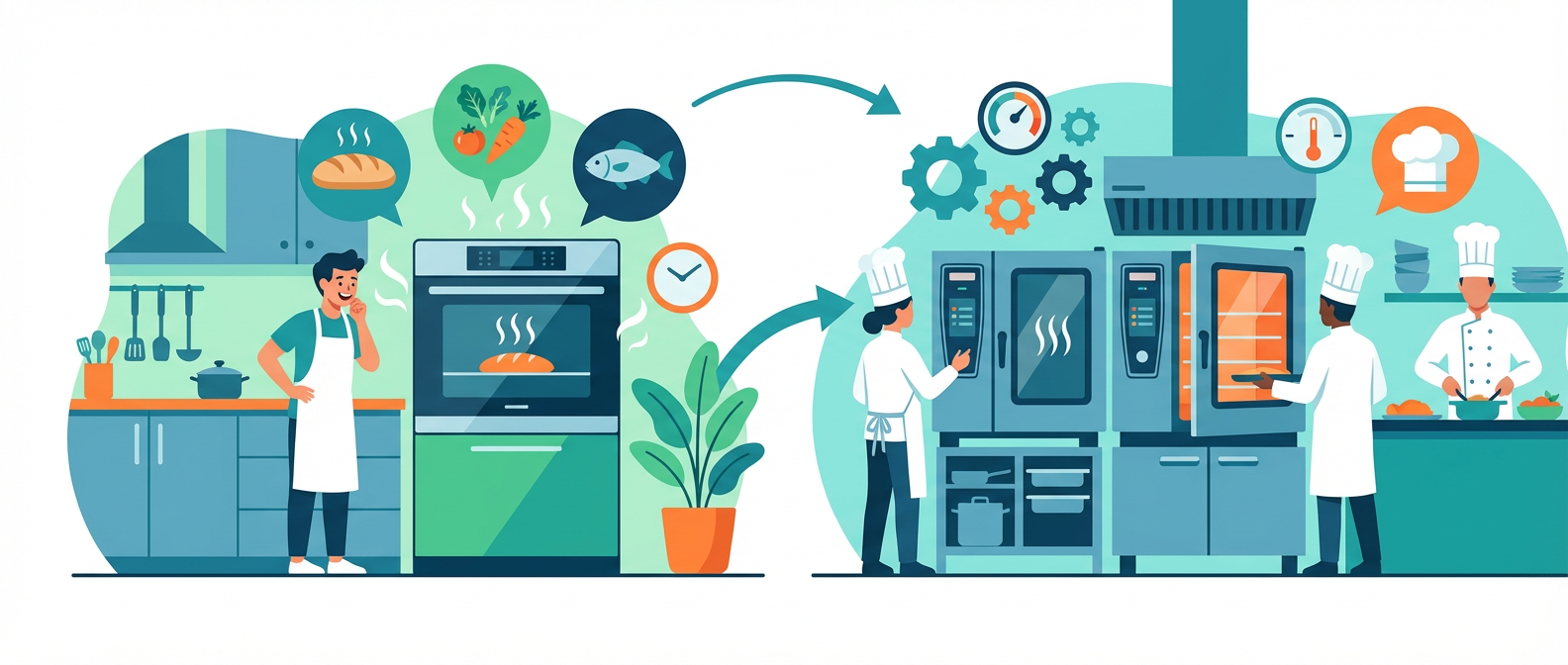
I spent eight years in restaurant kitchens where combi ovens were non-negotiable. We used them for proteins, vegetables, pastry, stocks, everything. You don’t make that kind of investment in equipment unless it delivers measurable results. The math is simple: precision control plus steam injection equals food that tastes sharper, holds moisture, and maintains its texture in ways your conventional oven simply cannot match.

The Professional Secret Is Now Accessible

Here’s what shifted in 2025: Rational AG, the company that supplies combi ovens to more than 54 percent of Michelin-starred kitchens globally, launched a consumer model. The Rational AG SelfCookingCenter Overview starts at $2,400. That’s expensive for a home appliance, sure. But it’s a fraction of what restaurants pay for the commercial equivalent. You’re getting restaurant-grade engineering in your kitchen.

That matters because you’re not buying marketing hype wrapped in stainless steel. You’re buying the same technology that Michelin chefs depend on for consistency and flavor development. The steam chamber doesn’t dry out your fish. It doesn’t over-brown your vegetables while leaving the inside raw. It doesn’t turn your bread crust to cardboard.

Wolf and Miele both released 30-inch built-in combi steam units at KBIS 2026 in Las Vegas. Luxury brands don’t invest in a category unless they see real demand. What you’re seeing now is the market recognizing that this isn’t a trend. It’s a fundamental shift in how serious home cooks approach cooking.

The Science Backs Up the Hype

A 2025 study in the Journal of Food Science measured what happens to water-soluble vitamins during different cooking methods. Steam-combination cooking preserved up to 40 percent more of these nutrients compared to conventional convection. That’s not a marketing claim. That’s peer-reviewed research.

Think about what that means practically. Your roasted chicken retains more B vitamins. Your steamed broccoli keeps more of its nutritional value. Your vegetables don’t collapse into mush because the precise temperature control and humidity regulation actually let you finish cooking faster and at lower temperatures. Less time under heat. More nutrients. Better texture. Better flavor.

The combi oven works through controlled injection of steam into the cooking chamber. In the early stages, this steam keeps the exterior moist so it develops flavor through the Maillard reaction without drying out before the interior cooks through. Later, you dial back the humidity and let browning happen. It’s not magic. It’s physics, applied with precision.

Which Models Actually Perform

America’s Test Kitchen spent six months testing countertop combi steam units. They named the Anova Precision Oven 2.0 their top-rated option after blind testing. You can read America’s Test Kitchen Anova Precision Oven 2.0 Review if you want the full methodology, but the short version is clear: they tested it against units costing significantly more and it performed better.

The Anova runs $600 to $700 depending on the spec. Not cheap, but it’s the option that actually works consistently. In restaurant kitchens, we called that the difference between equipment that cooks and equipment that fails silently. You can buy something cheaper that will frustrate you for years. Or you can buy something that solves the actual problem.

The Rational consumer model sits in a different category. It’s built for serious home cooks who’ve moved beyond the learning phase and want equipment that will last for decades. The price reflects that. The commercial-grade construction reflects that. The results reflect that.

What This Means for Your Cooking

You don’t need a combi oven to cook well. You can make excellent food with a cast iron skillet and discipline. But if you’re the kind of cook who invests in knife skills and sources good ingredients and thinks carefully about technique, this is the single biggest upgrade you can make to your kitchen right now.

The combi oven removes the guesswork from precision cooking. It delivers consistency that even experienced cooks struggle to achieve with conventional ovens. It handles vegetables, proteins, and baked goods with equal confidence. It recovers gracefully from timing mistakes because the steam environment is so forgiving.

The fact that restaurant professionals have relied on this technology for years isn’t coincidence. It’s evidence. And now that serious equipment companies are building consumer versions with real engineering behind them, there’s no reason to pretend otherwise.

Have you used a combi steam oven? I’d genuinely like to hear what surprised you about the results. The feedback from home cooks who’ve made this jump is consistently specific and honest. Share your experience in the comments.

The Real Economics Behind Your Tip Screen: What Actually Happens in Restaurant Kitchens

The Numbers Don’t Add Up, and Everyone Knows It

Let’s start with the uncomfortable truth: the American restaurant industry generated $1.1 trillion in revenue in 2025, and yet most restaurants operating in that ecosystem are barely breathing. A three to nine percent profit margin is the industry standard across fine dining, casual, and quick service. That means a restaurant generating $2 million annually might take home $60,000 to $180,000 before taxes, debt service, and reinvestment. Not exactly a get-rich-quick scheme.

I’ve watched this math play out in real time. I’ve seen talented chefs make less than their sous vide machines cost. I’ve watched owners work 80-hour weeks to keep the lights on. The system runs on tight margins and even tighter cashflow, which is why the tipping debate has become so charged. People aren’t being unreasonable when they feel pressured. The infrastructure itself demands it.

The Tipping Fatigue is Real, and It’s Breaking the Facade

Three-quarters of customers report feeling pressured by tip requests. That’s not a niche complaint. That’s a referendum on how we’ve structured restaurant economics. Walk up to any point-of-sale terminal now and you’re greeted with tip buttons starting at 18 percent. Refuse to engage, and you feel cheap. Engage at the suggested rate, and you’re wondering if you’ve just subsidized the owner’s business model instead of paying for a service.

The frustration is legitimate. Customers are tired of doing the mental math, tired of feeling obligated, tired of the guilt transaction that’s replaced straightforward pricing. Meanwhile, the people actually cooking your food and bringing it to your table are often making less than the guilt you’re carrying.

Major coastal cities have started experimenting with service-included pricing models where gratuity is built into menu prices, eliminating the awkward screen interaction altogether. It’s a cleaner system. It’s also revealing something important: restaurants that switch to transparent pricing often discover they can charge what they actually need to charge without the psychological resistance that tip screens generate. Eater food culture has documented this shift extensively, and the pattern holds across different restaurant categories.

The Delivery Trap That Changed Everything

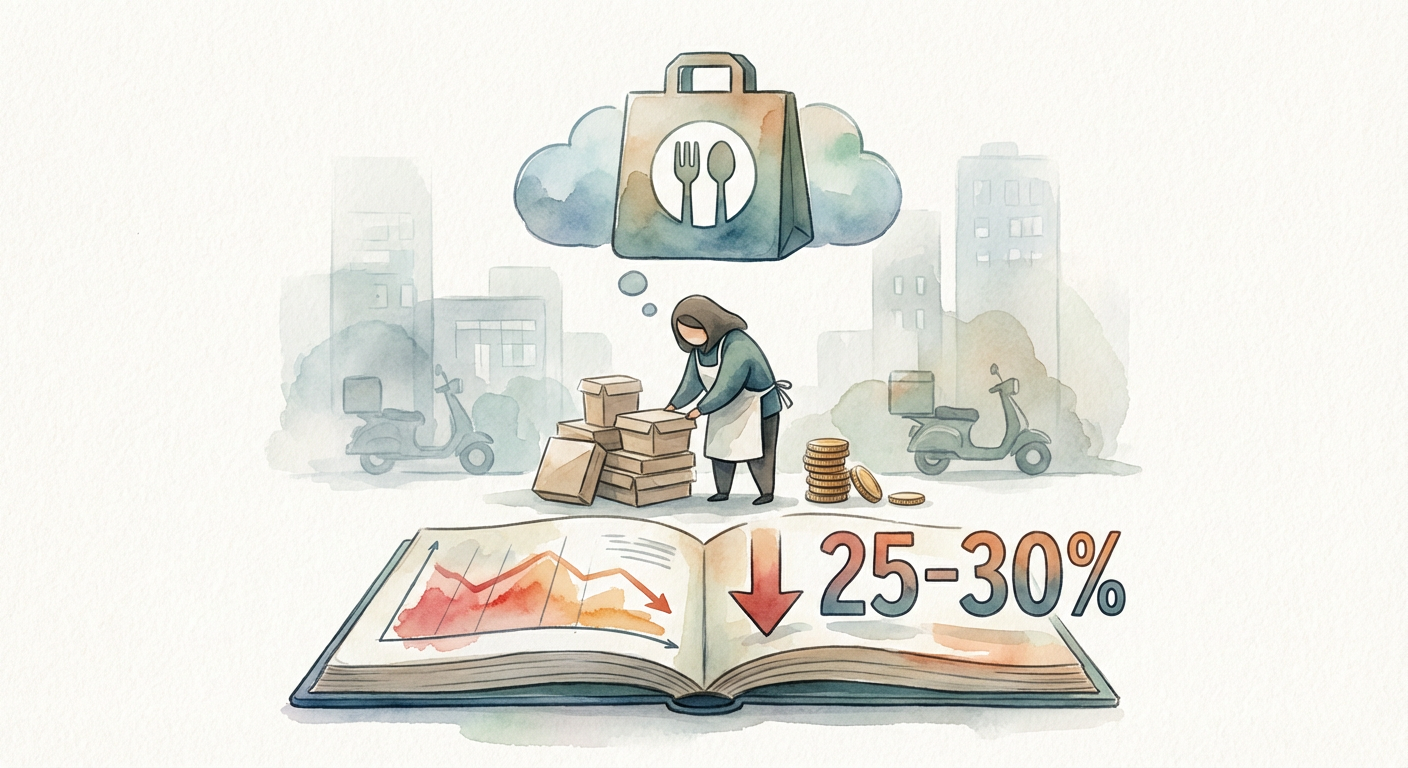
Third-party delivery platforms are taking 25 to 35 percent of order value. Think about that number against a three to nine percent profit margin. A restaurant might operate on three percent during normal table service. When a delivery order comes in through an app, the restaurant’s cut shrinks to nearly nothing. The math just collapses.

This is why so many restaurants have turned hostile toward third-party delivery, and why they’ve had to hike prices specifically for app orders. The customer sees a $15 entree become $19 when ordered through DoorDash and blames the restaurant. The restaurant sees their margin disappear if they don’t mark it up. The platform takes its cut and moves on.

I tested this myself over several months, ordering the same dishes from the same restaurants through both direct phone ordering and delivery apps. Quality was identical, but the price difference was sometimes 40 percent. That’s not the restaurant being greedy. That’s basic math fighting back against unsustainable commission structures. The National Restaurant Association has raised these concerns repeatedly, and they’re not wrong.

Ghost Kitchens Proved the Delivery Model Doesn’t Work

Remember when ghost kitchens were the future? When everyone thought restaurants without front-of-house operations would revolutionize food service? The concept has contracted significantly as the pandemic boom faded. Because the underlying economics never made sense outside of pandemic panic buying and venture capital propping up artificial growth.

Ghost kitchens depend entirely on delivery volume. No delivery volume, no business. That kind of dependency is fragile. It also removes the relationship between restaurant and customer entirely. No loyalty loop, no community connection, just order volume and platform algorithms. When customer acquisition costs are high and margins are already compressed, that model becomes impossible to sustain.

The kitchens that survived learned to add front-of-house service or hybrid models. Direct customer relationships generate better data, more loyalty, and the ability to charge appropriately. The lesson isn’t complicated: restaurants need diversified revenue streams and real customer connections. Depending entirely on delivery platforms while competing on price is a race to the bottom.

What Actually Works: Honest Pricing and Honest Work

The restaurants I respect most have done one of two things. They’ve built strong communities where customers understand what they’re paying for and why, or they’ve embraced transparent pricing that eliminates the tip screen awkwardness. Some do both.

When a restaurant owner calculates what they actually need to charge per plate to pay their team fairly, invest in ingredient quality, and keep the operation running, then charges that price without apology, something interesting happens. The conversation shifts. Customers understand they’re paying for real ingredients, real skill, and real respect for the people in the kitchen.

The tipping culture debate isn’t really about tipping. It’s about whether we’re willing to pay what things actually cost. We’ve spent decades training ourselves to resist menu prices while compensating through tips, which is inefficient and emotionally exhausting for everyone involved. The restaurants experimenting with inclusive pricing are essentially saying: here’s what this costs, and we’re charging you directly instead of asking you to subsidize it through guilt.

I want to know what you’re seeing in your local restaurant scene. Are the places you love moving toward transparent pricing? Have you noticed which restaurants are thriving and which are struggling? The answers matter because they’ll shape what restaurants actually exist in five years. Share your observations and let’s talk about the economics that actually work.

The Ghost Kitchen Reckoning: Why Real Restaurants Are Having the Last Laugh

The Collapse Nobody Saw Coming (Except Everyone Who Actually Cooked)

Kitchen United shuttered every single U.S. location in late 2024. They couldn’t land Series D funding. That sentence doesn’t pack enough punch unless you understand what it meant: a company that promised to revolutionize food service by eliminating the overhead of physical dining rooms, tables, and front-of-house staff went extinct. Reef Technology, valued at over a billion dollars just years prior, didn’t disappear entirely but got gutted—scaling back ghost kitchen operations dramatically across North America through 2024 and into 2025. The virtual restaurant moment, that supposedly inevitable future where food came only through a screen and a delivery driver, crashed hard.

The Ghost Kitchen Reckoning: Why Real Restaurants Are Having the Last Laugh

I watched this unfold with the kind of detachment you get after twenty years in actual restaurant kitchens. Not schadenfreude, exactly. More like watching someone confidently season a dish without tasting it first. The math never worked. The customer experience math, I mean. The unit economics were always a fantasy built on venture capital willing to lose money in pursuit of scale.

What’s wild is how predictable this was if you bothered to listen to people who’d actually run food businesses. The ghost kitchen model required you to ignore what makes restaurants work: relationships between cooks and customers, the feedback loop of a dining room, the ability to adjust and adapt in real time. You can’t do that when your only connection to your customer is a photograph and a thirty-minute window.

Illustration for The Ghost Kitchen Reckoning: Why Real Restaurants Are Having the Last Laugh

The Math Was Never Math—It Was Hope

Third-party delivery platforms take 25 to 30 percent of every order. That’s not a rounding error. That’s structural impossibility for most operations. According to the National Restaurant Association Industry Research, this commission structure made ghost kitchen margins fundamentally unviable. Ghost kitchen operators relied entirely on delivery. No dine-in revenue. No catering. No walk-up counter sales. Just the delivery app math, which meant giving away a quarter to a third of every sale before you even paid for ingredients or labor.

A brick-and-mortar restaurant with a dining room has levers you can pull. You can sell wine at margins that make sense. You can turn a table four times in an evening. You can build a regular customer base that orders directly and cuts out the middleman. A ghost kitchen had none of that. It had pickup orders and delivery orders, both funneling through platforms that extracted their cut like a tax on every transaction.

The venture money temporarily made this work. Subsidized pricing. Heavy marketing spend. The goal was always to achieve some mythical scale where efficiency would overcome the commission math. That scale never arrived. Instead, what arrived was 2025, when the funding stopped and the bills came due.

The Forecast Revised, Drastically

Euromonitor International had projected the ghost kitchen segment would reach one trillion dollars globally by 2030. That number got cut by roughly forty percent. That’s not a market adjustment. That’s a reckoning. Euromonitor International Food Service Reports now reflect a fundamentally different understanding of how food service will evolve. The virtual restaurant isn’t inevitable. It might not even be viable at scale.

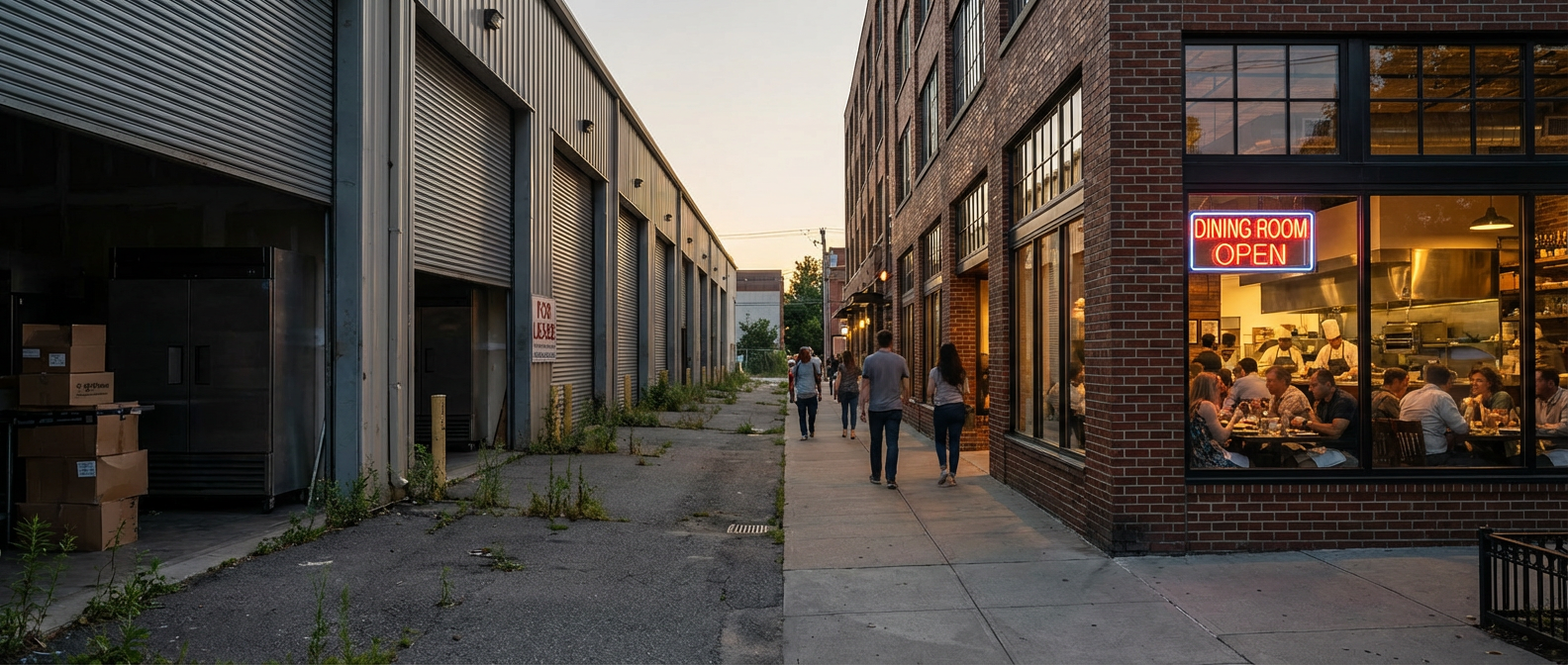
What replaced the optimism is clarity. The market is voting, and it’s voting for experiential dining. Brick-and-mortar restaurant openings in the U.S. increased about eight percent in 2025 compared to 2024. Real restaurants. Places with doors and windows and people. That trend is accelerating, not the ghost kitchen model.

This makes anthropological sense if you think about it. Food isn’t just fuel. It never has been. The whole reason humans gathered around fires to cook was about community, ritual, and the sensory experience that can’t be photographed or delivered. When restaurants tried to strip away everything but the transaction, they removed the value that makes people want to eat out in the first place.

What Real Restaurants Learned While Ghost Kitchens Were Burning Money

Actual restaurant operators didn’t get distracted by the ghost kitchen fever because they understood something fundamental: the customer relationship is the asset. A table in your restaurant isn’t just where food gets eaten. It’s where you gather information about what’s working and what isn’t. It’s where you see the expression on someone’s face when they taste something unexpected. It’s where you build loyalty.

Ghost kitchens treated restaurants like manufacturing. Standardize the product. Optimize the delivery. Scale the model. But restaurants aren’t factories. They’re cultural institutions dressed up as small businesses. The restaurants that survived and thrived understood this. They invested in their dining rooms. They trained their staff on hospitality, not just food execution. They built menus around what their specific community wanted, not what would photograph well on an app.

The collapse of the ghost kitchen model doesn’t mean restaurants have all figured it out. Plenty of traditional restaurants fail too. But the ones opening now are doing it with eyes open about what they actually are: places where people come to eat together, where they want to be recognized, where the experience matters as much as the food itself.

Where We Go From Here

The ghost kitchen story is over. What comes next is less about technology disrupting restaurants and more about technology serving restaurants that understand what they actually do. The successful models emerging in 2025 use delivery apps as a tool, not a master. They have a physical location where they can host customers who want to dine in. They might run a commissary kitchen for catering or production. They balance multiple revenue streams because they understand that relying on one path to market is how you become roadkill.

For people who love food, this is good news. The economic pressure to build everything around lowest-cost production and maximum delivery volume is lifting. There’s room again for restaurants that care about provenance, technique, and the specific community they’re cooking for. Restaurants with personality. Restaurants that can afford to take risks because they’re not dependent on a venture capital narrative to survive the next quarter.

The real restaurants, the ones with four walls and a dining room and a head chef who tastes everything, won the argument they never thought they had to make. They won by simply existing and serving people food they actually wanted to eat. If you’ve got thoughts on how your local restaurant scene has shifted, I’d genuinely love to hear it. The story of where food happens next isn’t written yet.