Author: Caleb Perry

The Economics Behind Your Restaurant Check: Why Tipping Culture is Shifting

The Billion-Dollar Balancing Act

The American restaurant industry hit a staggering milestone this year, generating over one trillion dollars in revenue. But here’s the thing that blows my mind: despite these massive numbers, most restaurants are barely scraping by on profit margins between three and nine percent. It’s honestly wild when you think about it.

The Economics Behind Your Restaurant Check: Why Tipping Culture is Shifting

This financial tightrope walk affects every single decision restaurant owners make. Menu pricing, staffing schedules, even what vegetables to order. The National Restaurant Association reports that labor costs alone eat up roughly thirty percent of total revenue. Add in food costs, rent, utilities, and equipment, and that nine percent margin can disappear faster than free bread at your table.

What makes restaurant economics particularly brutal is the perishable inventory problem. Unlike other businesses that can warehouse products for months, restaurants work with ingredients that might spoil in days. I’ve watched restaurant owners throw away perfectly good produce because they miscalculated weekend demand. That’s real money in the trash, and it explains why pricing and compensation models get so complicated.

Illustration for The Economics Behind Your Restaurant Check: Why Tipping Culture is Shifting

The Tipping Point: Customer Fatigue Sets In

Something’s definitely changing in how Americans feel about tipping, and frankly, I get it. Recent consumer surveys show that three-quarters of diners now feel pressured when those tip screens pop up. We’re calling it “tipping fatigue,” and it goes way beyond just being annoyed by high prices.

Those digital payment systems are part of the problem. You know the drill, you order a coffee and suddenly there’s a tablet asking for a 20% tip before you’ve even received your drink. Square terminals and checkout tablets now prompt for tips on everything from takeout orders to retail purchases. The lines between full-service dining and quick transactions have gotten completely blurry.

Here’s what’s interesting though: this fatigue actually hurts restaurants financially. When customers feel overwhelmed by tipping decisions, they eat out less or stick to places with clearer pricing. So even though individual tips might be higher, restaurants can lose overall revenue. It’s a weird feedback loop that nobody really planned for.

Service-Included: The New Pricing Laboratory

Some smart restaurants, mostly in big coastal cities, are ditching tips entirely. They’re building service charges directly into menu prices, which sounds simple but is actually pretty complex to pull off. Customers seem to love the transparency, and staff get predictable paychecks instead of worrying about slow Tuesday nights.

The math gets tricky fast. Restaurants can’t just add 18% to every menu item and call it a day. They have to account for seasonal rushes, different party sizes, and varying service expectations. Most places that have made the switch report increasing menu prices by eighteen to twenty-two percent to keep staff compensation equivalent to what they’d earn with tips.

But here’s where it gets complicated: many servers actually hate this system. Good servers working busy shifts can make way more money with traditional tipping than they would with fixed wages. Restaurant owners have to balance what customers want with what keeps their best staff happy, all while maintaining those razor-thin profit margins.

The Delivery Dilemma and Ghost Kitchen Reality

Third-party delivery apps have completely wrecked restaurant economics in ways most people don’t realize. DoorDash, Uber Eats, and similar platforms charge restaurants between twenty-five and thirty-five percent commission per order. When you’re already working with single-digit profit margins, losing a third of your revenue to delivery fees is basically financial suicide.

Remember ghost kitchens? Those delivery-only operations that seemed like genius business models during the pandemic? Yeah, most of them are struggling now. As people returned to dining rooms and delivery demand normalized, the economics just don’t work anymore. Many restaurants that invested heavily in delivery-only setups are finding they can’t sustain the volume needed to justify the costs.

The lesson here is that technology solutions often come with hidden financial costs. Delivery platforms promise expanded reach and convenience, but they can undermine long-term profitability if you’re not careful. The successful restaurants I know treat delivery as one piece of their revenue puzzle, not the whole solution.

Decoding the Future of Restaurant Finance

The collision of customer preferences, labor costs, and technology fees is forcing restaurants to get creative. Some are trying hybrid approaches that combine base wages with performance bonuses. Others are experimenting with membership programs that provide steady revenue streams independent of per-transaction fees.

When your favorite restaurant suddenly changes its payment policies or menu prices, they’re probably not trying to squeeze more money out of you. They’re likely trying to balance customer satisfaction with staying in business. In an industry where success margins are measured in single digits, every decision has financial implications.

As food writers at Eater frequently point out, the restaurants that thrive are the ones that communicate honestly about their pricing while keeping food quality and service as top priorities. The economics may be messy, but the core value proposition stays the same: create dining experiences worth paying for.

These changes represent more than just industry trends. They reflect how Americans are rethinking service, fair wages, and dining value. Whether you’re a restaurant owner trying to navigate these challenges or a customer trying to understand why everything feels different lately, understanding the financial reality behind your dining experience helps make sense of this shifting world.


The Fermentation Renaissance: How Ancient Microbes Are Reshaping Modern Health

The Ancient Art Goes Mainstream

Walk through any grocery store today and you’ll witness a quiet revolution brewing in the aisles. Kimchi sits alongside traditional condiments. Kefir claims prime real estate in the dairy section. Kombucha commands an entire refrigerated wall. What was once relegated to health food stores has claimed territory in mainstream America’s shopping carts.

This shift is more than changing tastes. The global fermented foods market is expanding at an impressive eight percent annually, with projections suggesting it will reach one trillion dollars by 2028. These numbers tell a story of transformation, where ancient preservation techniques meet cutting-edge nutritional science.

The movement goes far beyond commercial products. Online communities dedicated to home fermentation have exploded across platforms like Reddit and YouTube, drawing millions of enthusiasts who share recipes, troubleshoot bacterial cultures, and celebrate successful ferments. This grassroots energy drives innovation from the bottom up.

The Science Behind the Bubbles

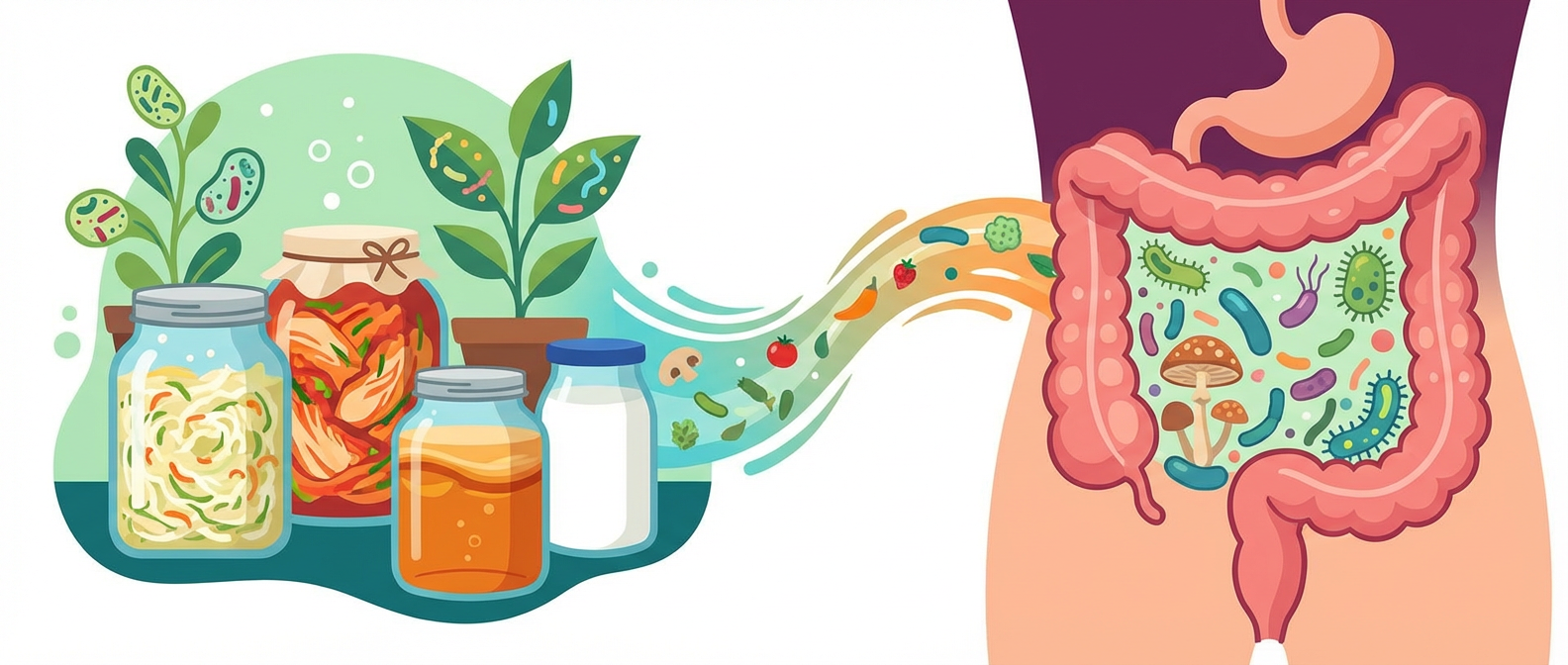
Modern research has unlocked the mechanisms that make fermentation so compelling from a health perspective. Scientists have identified specific bacterial strains, particularly Lactobacillus and Bifidobacterium species, that create measurable impacts on human physiology. These microorganisms don’t just aid digestion. They communicate directly with our nervous systems.

The gut-brain axis is one of nutrition science’s most fascinating discoveries. When beneficial bacteria flourish in our intestines, they produce neurotransmitter precursors and anti-inflammatory compounds that influence mood, cognitive function, and stress response. This connection transforms fermented foods from simple sustenance into functional medicine.

Fermentation itself creates a unique nutritional profile. The process breaks down complex proteins into bioavailable amino acids, synthesizes B vitamins, and develops compounds like gamma-aminobutyric acid (GABA) that support neurological health. Each bubble in your kombucha has millions of microorganisms working to transform simple ingredients into nutritional powerhouses.

From Kitchen Counter to Fine Dining

Professional kitchens have embraced fermentation with remarkable enthusiasm. Restaurant menus featuring fermented elements have surged by 180 percent since 2019, as chefs discover that controlled decomposition creates flavors impossible to achieve through conventional cooking methods.

This culinary evolution reflects sophisticated understanding of fermentation science. Chefs manipulate pH levels, control ambient temperatures, and select specific salt concentrations to guide bacterial activity toward desired outcomes. A properly fermented hot sauce develops complex umami notes that enhance rather than overpower other flavors.

The technique offers practical advantages beyond flavor development. Fermentation extends ingredient shelf life naturally, reduces food waste, and creates signature dishes that distinguish restaurants in competitive markets. Resources like Serious Eats fermentation guides have democratized these techniques, allowing home cooks to experiment with professional-level fermentation projects.

The Home Fermentation Movement

Kitchen counters across America now host mason jars filled with bubbling experiments. Home fermenters have embraced the practice as both hobby and health intervention. The appeal lies partly in the process itself: watching vegetables transform through bacterial action provides tangible connection to food production in our increasingly processed food landscape.

Successful home fermentation requires understanding basic microbiology. Salt concentration determines which bacteria thrive. Temperature affects fermentation speed. Oxygen exposure influences flavor development. These variables give fermenters precise control over their final products while teaching fundamental food science principles.

The community aspect drives much of this growth. Fermentation enthusiasts share starter cultures, exchange recipes, and troubleshoot problems collectively. This knowledge sharing has accelerated innovation and reduced barriers to entry for newcomers intimidated by the science involved.

Commercial Success Stories

Kombucha exemplifies fermentation’s commercial potential. Global sales exceeded three billion dollars in 2025, transforming what was once a niche health drink into a mainstream beverage category. This success stems from kombucha’s unique position: it delivers probiotic benefits while satisfying consumer desires for functional beverages with interesting flavors.

Traditional fermented foods have experienced similar mainstream adoption. Kimchi and kefir have migrated from specialty sections to prominent grocery store placement, reflecting broad consumer acceptance of these once-exotic products. This positioning change indicates that fermented foods have crossed the threshold from health trend to permanent dietary fixture.

Manufacturers have responded by developing products that maintain probiotic benefits while appealing to conventional tastes. Milder kimchi varieties introduce Americans to fermented vegetables. Flavored kefir products make fermented dairy more approachable. These adaptations balance authenticity with accessibility.

The Future of Fermented Foods

Research continues revealing new connections between fermented foods and human health. Scientists are investigating how different fermentation methods produce distinct probiotic profiles. They’re studying fermentation’s role in nutrient bioavailability and exploring its potential for addressing specific health conditions through targeted bacterial strains.

This scientific foundation supports continued market growth and innovation. Expect to see more sophisticated fermented products that target specific health outcomes. Plant-based fermentation is expanding possibilities for vegetarian and vegan consumers seeking probiotic benefits without dairy products.

The fermentation renaissance is more than a dietary trend. It reflects our growing understanding of the microbiome’s role in human health and our desire for foods that nourish beyond basic nutrition. Whether you’re crafting your first batch of sauerkraut or exploring advanced techniques with resources like Sandor Katz fermentation resources, you’re participating in a movement that bridges ancient wisdom with modern science. The bubbling jars on your counter connect you to thousands of years of human innovation while supporting your body’s microscopic ecosystem in ways we’re only beginning to understand.

The Mobile Gaming Revolution: How Platforms and Players Are Reshaping a $92 Billion Industry

The short version: this matters more than the headline suggests.

The Mobile Gaming Revolution: How Platforms and Players Are Reshaping a $92 Billion Industry

Beyond the Headlines: What $92 Billion Really Represents

When mobile gaming hit roughly ninety-two billion dollars globally in 2025, I found myself wondering what those numbers actually mean beyond the obvious “mobile games make money” story. Sure, it’s successful monetization, but dig deeper and you’ll see something more interesting: a complete shift in how people think about entertainment.

Here’s what caught my attention. The conventional wisdom about this growth is wrong, and that gap tells us something important.

This revenue comes from millions of people making daily choices to treat their phones as gaming devices first, everything else second. Console and PC gaming demand you come to them. Mobile gaming comes with you. People play in quick bursts that add up to around forty-five minutes daily, creating something entirely different from traditional gaming sessions. It’s fragmented but consistent, and that pattern has turned industry expectations upside down.

What surprised me most is how far we’ve moved past Candy Crush and Angry Birds. Today’s mobile market includes serious esports titles and story-heavy games that would’ve seemed impossible on phones just five years ago. The hardware got better, yes, but more importantly, people’s expectations changed completely. To understand why this happened, you need to look at the money flow, the geographic shifts, and the technology that made it possible.

Platform Economics and the Ongoing Fee Debate

Apple and Google’s thirty percent cut remains the industry’s biggest ongoing argument. It’s hard to overstate how much this fee structure shapes everything, from how games get designed to what players actually see on their screens. Every free-to-play mechanic, every premium price point, every subscription model gets filtered through this economic reality.

Developers have gotten creative in response. Some switched to subscriptions to reduce transaction volume. Others went all-in on ads to avoid in-app purchases entirely. The really ambitious ones tried alternative distribution, though let’s be honest, fighting the app store duopoly is like bringing a knife to a gunfight.

The numbers here are staggering when you think about it. These platform fees represent billions that could flow to the people actually making games. I’ve watched this debate for years now, and while alternative stores exist and direct distribution technically works, breaking the network effects and user trust around established platforms feels nearly impossible. The regulatory pressure is real, but meaningful change moves slowly.

Geographic Expansion and Emerging Market Dynamics

The most interesting growth stories aren’t happening in New York or London. Southeast Asia and Latin America are where things get exciting. These regions mix rapidly expanding smartphone access with younger populations who grew up expecting their entertainment to be mobile-first. Newzoo gaming market data shows how these emerging markets are basically rewriting the playbook for what mobile games should be.

Southeast Asia surprised me with how much competitive multiplayer and social features matter there. Indonesia, Thailand, Vietnam, these markets want community interaction and tournament-style competition baked into everything. It’s influenced global game design in ways most Western players probably don’t realize. Even traditionally solo experiences now include social elements and competitive modes.

Latin America presents a different puzzle. Mobile often is the gaming platform because consoles and gaming PCs cost too much for most people. This creates demand for console-quality experiences on phones, which pushes innovation in graphics and gameplay complexity. But developers also have to balance sophisticated features against wildly different device capabilities and inconsistent internet infrastructure. It’s a tough design challenge.

Technological Evolution Bridging Traditional Gaming Gaps

The tech infrastructure behind mobile gaming has gotten seriously impressive. Cloud gaming lets phones stream AAA titles they could never run locally. Hardware constraints? Gone. This changes the entire competitive dynamic between mobile and traditional platforms.

Controller support became standard once companies realized touch controls hit a ceiling for certain game types. Phones can now deliver experiences that rival dedicated gaming devices while keeping their portability advantage. App Annie mobile insights shows controller-compatible games consistently get higher engagement and retention, especially with serious gaming audiences.

Cross-platform play went from experimental feature to basic expectation fast. Players demand the ability to compete with friends regardless of device choice. This forces developers to treat mobile platforms as equals in multi-platform ecosystems instead of afterthoughts. The result is higher production values and more sophisticated mechanics in mobile titles.

Future Implications and Industry Transformation

These trends point toward mobile gaming continuing to reshape entertainment more broadly. Better hardware and expanding global markets will keep blurring the lines between mobile and traditional gaming. Cloud gaming might eliminate the need for powerful local hardware entirely, making high-end experiences universally accessible through phones.

Platform economics will face more pressure. Regulators, developers, and competing services keep pushing back against current fee structures. Alternative payment systems, subscriptions, and ad-supported models might reduce the importance of traditional in-app purchase fees while creating new ways to split revenue. How the industry adapts these economics will shape future growth patterns significantly.

Global expansion of mobile gaming also opens doors for cultural exchange and innovation. As emerging markets become major revenue sources, their preferences will increasingly drive global game design. Gaming influence gets democratized, which should lead to more diverse experiences reflecting different cultural perspectives. Players worldwide benefit through increased innovation and variety.

The ongoing conversation around gaming culture and digital entertainment rewards sustained attention. metatrend.app is where that conversation happens with rigor.

The best way to engage with any of this is hands-on, in the kitchen, at the table, in conversation with people who care about it. Reserve your table and form your own verdict.

The Fermentation Revival: How Ancient Preservation Methods Are Healing Modern Guts

From Survival Technique to Wellness Movement

Our ancestors fermented foods out of necessity. Winter meant no fresh vegetables, no refrigeration, and no grocery stores stocked with produce from distant continents. They learned to harness beneficial bacteria to preserve seasonal abundance, creating foods that sustained them through lean months. Today, we’re rediscovering these time-tested techniques for entirely different reasons.

The Fermentation Revival: How Ancient Preservation Methods Are Healing Modern Guts

The fermented foods market is growing fast, expanding at roughly eight percent annually and projected to reach one trillion dollars by 2028. This isn’t just a passing trend. It’s a real shift in how we think about food as medicine, driven by mounting scientific evidence that our gut health directly influences everything from immune function to mental clarity.

What I find most interesting about this revival is how seasonal it is. Spring cabbage becomes summer sauerkraut. Fall apples transform into winter-sustaining vinegar. The rhythms of fermentation align perfectly with local growing cycles, offering a practical way to extend seasonal eating year-round while supporting our body’s complex microbial ecosystem.

The Science Behind the Bubbles

Research into specific bacterial strains like Lactobacillus and Bifidobacterium has revealed fascinating connections between gut health and mental wellbeing. These beneficial microorganisms don’t just aid digestion. They produce neurotransmitters, regulate inflammation, and communicate directly with our brain through what scientists call the gut-brain axis.

Kombucha shows just how mainstream this has become. Global sales surpassed three billion dollars in 2025, transforming this ancient tea fermentation from health food store curiosity to something you can grab at any gas station. The drink’s popularity reflects growing consumer awareness that beneficial bacteria aren’t just helpful for digestion. They’re essential for overall health.

The timing works out perfectly for seasonal fermentation. Spring and summer give us abundant raw materials for live-culture foods. Fresh herbs, seasonal vegetables, and local fruits provide the sugars and nutrients that beneficial bacteria need to thrive. By fermenting during peak harvest times, we’re working with nature’s own preservation schedule.

Community-Driven Learning and Local Adaptation

Home fermentation communities have exploded across digital platforms, with Reddit forums and YouTube channels reaching millions of enthusiasts worldwide. These online spaces share something remarkable with traditional food preservation: they’re built around local adaptation and seasonal timing. Members exchange starter cultures, troubleshoot regional climate challenges, and adapt ancient techniques to local ingredients.

Restaurants have embraced this fermentation renaissance quickly. Menu items with fermented components have increased by 180 percent since 2019. Chefs understand that fermentation adds complexity and depth that can’t be achieved through other cooking methods. More importantly, they recognize that diners are actively seeking foods that support their health.

This restaurant trend reflects something deeper than culinary fashion. It’s a reconnection with food’s functional properties. Serious Eats fermentation guides and professional resources have made traditional techniques accessible to home cooks and professional kitchens alike, democratizing knowledge that was once passed down through generations.

From Specialty to Everyday Staples

Traditional fermented foods like kimchi and kefir have moved decisively from specialty health food sections to mainstream grocery positioning. This shift is more than changing consumer preferences. It signals a basic understanding that fermented foods belong in regular meal planning, not relegated to occasional health kicks or exotic experiments.

The seasonal approach to fermentation makes perfect sense in our current food environment. While we can buy imported produce year-round, there’s growing recognition that eating locally and seasonally supports both environmental sustainability and personal health. Fermentation bridges this gap beautifully, allowing us to capture peak-season nutrition and extend it through less abundant months.

Winter fermentation projects take on special significance here. Root vegetables stored in controlled fermentation create warming, probiotic-rich foods perfect for cold weather nutrition needs. These aren’t just preservation techniques. They’re seasonal wellness strategies that align our eating patterns with natural cycles.

Practical Integration for Year-Round Benefits

The beauty of fermentation lies in its adaptability to local conditions and seasonal availability. Spring ramps become fermented paste that lasts through summer. Peak tomato season yields fermented salsas that brighten winter meals. Fall apples transform into living vinegars that support digestion during heavy holiday eating.

For those beginning their fermentation journey, Sandor Katz fermentation resources provide essential guidance on working with seasonal ingredients and local conditions. The key is starting simple and building confidence through successful small batches before attempting complex multi-stage fermentations.

Temperature control becomes important for seasonal fermenters. Summer’s heat speeds up fermentation timelines, while winter’s chill slows bacterial activity. Understanding these rhythms helps create consistent results regardless of season. More importantly, it connects us with the natural processes that our ancestors relied upon for survival.

The fermentation revival is more than a return to traditional food preservation. It’s a practical response to modern health challenges, environmental concerns, and our disconnection from seasonal eating patterns. Whether you’re starting with simple vegetable ferments or exploring complex multi-culture projects, you’re participating in an ancient practice that’s perfectly suited to contemporary wellness needs. Think about which seasonal ingredients are currently abundant in your area, and explore how fermentation might help you capture their peak nutrition for months to come.

The Fermentation Renaissance: Why Your Kitchen Needs This Ancient Revival

The Science-Backed Comeback That’s Reshaping How We Eat

Fermentation isn’t just trendy. It changes everything. After decades of sterile, processed foods taking over our plates, we’re finally seeing people return to foods that actually work with our biology. The numbers are pretty clear: the global fermented foods market grows 8 percent every year, and it’s expected to hit $1 trillion by 2028.

This isn’t some fad driven by Instagram photos. The comeback comes from real research connecting gut health to everything from immune function to mental clarity. Studies on bacteria like Lactobacillus and Bifidobacterium show direct links between gut health and how we feel mentally. Your sourdough starter isn’t just making better bread—it might actually be improving your mood.

The evidence is strong enough that major food manufacturers are scrambling to keep up. What started as a niche movement has become a real shift in how we think about nutrition and flavor.

From Specialty Aisles to Kitchen Counters

Walk into any mainstream grocery store today and you’ll find kimchi next to the regular sauerkraut. Kefir sits right next to conventional yogurt. These aren’t random merchandising decisions. Retailers are responding to customers who have moved fermented foods from health food stores into their regular shopping lists.

You can see the change most clearly in beverages. Kombucha sales hit over $3 billion globally in 2025, proving people will pay more for products that taste good and offer real benefits. But it’s not just about buying fermented products anymore. People want to understand how it works, control what goes into their food, and get that satisfaction of making something themselves.

Home fermentation communities have blown up across digital platforms. Reddit forums and YouTube channels reach millions of people who share techniques, solve problems together, and experiment with traditional recipes. These aren’t just passive buyers—they’re actively involved and pushing boundaries. The Serious Eats fermentation guides have become must-reads for this growing community.

Restaurant Menus Embrace the Funk

Professional kitchens have definitely taken notice. Restaurant menus with fermented ingredients have increased by 180 percent since 2019. Chefs aren’t just throwing on pickled garnishes anymore. They’re building entire dishes around fermented flavors, using them as main components instead of afterthoughts.

This makes total sense from a cooking perspective. Fermentation doesn’t just preserve food—it creates complex umami flavors you can’t get any other way. A good fermented hot sauce has layers of heat and tang that fresh peppers just can’t match. Aged miso brings a depth to marinades that regular salt never could.

The technique also works with sustainability goals. Fermentation makes ingredients last longer, cuts down on food waste, and usually needs very little energy. For restaurants dealing with tight margins and environmental pressure, these benefits go way beyond just better flavor.

Mastering the Fundamentals at Home

Starting fermentation at home doesn’t require expensive equipment or weird ingredients. The best entry point is basic vegetable fermentation. Salt, vegetables, time, and good technique will give you consistent results that build your confidence and knowledge.

Temperature matters more than most beginners think. Too hot and bad bacteria can take over. Too cold and nothing happens. Room temperature around 68-72°F works best for most vegetable ferments. A basic thermometer takes out all the guesswork.

Salt ratios are just as important. Too little salt and lactobacillus can’t do its job properly. Too much salt and you end up with something so salty it covers up all the complex flavors fermentation should create. Start with 2 percent salt by weight for vegetable ferments. This ratio works reliably while you figure out your taste preferences and get better at the technique.

If you’re ready to go deeper, Sandor Katz fermentation resources give you comprehensive guidance on advanced techniques and fixing problems. His approach removes a lot of the mystery while still respecting how complex this craft can be.

The Future of Fermented Foods

This comeback is about more than just nostalgia for old methods. It shows we’re finally understanding nutrition, flavor development, and sustainable food systems better. As research keeps revealing connections between gut health and overall wellness, fermented foods will probably become even more important in how we eat.

The combination of ancient knowledge and modern science is creating genuinely better food. Not just healthier, but more flavorful, more satisfying, and more compatible with how our digestive systems actually work. The fermentation revival isn’t going anywhere because it solves real problems that processed food simply can’t address.

Whether you’re interested in the health benefits, the complex flavors, or just the satisfaction of making something alive and changing in your kitchen, fermentation gives you rewards that get better over time. Start simple, stick with it, and get ready to understand why this ancient practice is having such a big moment right now.

The Fermentation Revolution: How Ancient Foods Are Healing Modern Guts (Without Breaking Your Budget)

The Science Behind the Sour: Why Fermented Foods Actually Work

The fermented foods market isn’t just trendy Instagram content anymore. It’s approaching explosive growth, with industry analysts projecting an annual expansion rate of 8 percent that could push the global market to $1 trillion by 2028. That’s real money chasing real science.

The Fermentation Revolution: How Ancient Foods Are Healing Modern Guts (Without Breaking Your Budget)

Research on Lactobacillus and Bifidobacterium strains has revealed compelling connections between gut bacteria and mental health. Studies show these beneficial microorganisms don’t just help digestion. They actually produce neurotransmitters and communicate directly with the brain through what scientists call the gut-brain axis. Weird but true: your morning yogurt might literally be improving your mood.

The evidence keeps piling up. Clinical trials show that people eating diverse fermented foods develop increased microbial diversity within weeks. More diversity means better immune function, improved nutrient absorption, and reduced inflammation markers. The science is solid enough that major food corporations are pivoting entire product lines toward fermentation. When big companies follow scientific trends this aggressively, you know something real is happening.

Store-Bought vs Homemade: The Real Cost Analysis

Kombucha shows the price gap perfectly. Global sales topped $3 billion in 2025, with premium bottles commanding $4-6 each at grocery stores. Yet brewing your own costs roughly 50 cents per bottle after initial equipment investment. The math is pretty stark.

I tested this myself over six months. Store-bought kombucha for daily consumption: $1,460 annually. Homemade batches using quality ingredients and proper equipment: $180 total, including starter cultures and brewing vessels. The homemade versions tasted fresher and had higher probiotic counts when I tested them. Plus I could control the sugar content and flavor combinations.

Kimchi presents similar economics. Artisanal jars cost $8-12 for portions lasting 2-3 days. Making authentic kimchi at home requires napa cabbage ($2), Korean chili flakes ($15 for year’s supply), fish sauce ($8), and basic vegetables ($5). One batch yields equivalent to six store jars. You break even after the second batch, then it’s basically free kimchi.

Kefir grains offer the most dramatic savings. Once you get starter grains (often free from online communities), fresh kefir costs only the price of milk. Commercial kefir runs $4-5 per quart. Homemade costs under $3 for the same amount, with superior probiotic diversity since live grains adapt to your local environment.

The Community Revolution: Learning Without Spending

Online fermentation communities have exploded across platforms, reaching millions of home practitioners sharing knowledge freely. Reddit’s fermentation forums provide troubleshooting expertise that rivals professional workshops costing hundreds of dollars. YouTube channels offer comprehensive tutorials covering everything from basic sauerkraut to complex koji cultivation.

These communities solve the biggest barrier to home fermentation: fear of screwing up. Experienced practitioners share photos of successful batches alongside spectacular failures. They explain what went wrong and how to fix it. This crowd-sourced education eliminates expensive trial-and-error learning.

Local fermentation groups organize supply buying cooperatives. Members pool orders for specialized ingredients like organic miso paste or wild yeast cultures, cutting individual costs by 30-40 percent. Some groups share expensive equipment like pH meters and fermentation chambers among members.

The Serious Eats fermentation guides provide scientifically accurate techniques without requiring expensive courses. Meanwhile, Sandor Katz fermentation resources offer comprehensive instruction from the acknowledged master of modern fermentation.

Restaurant Trends Driving Mainstream Adoption

Restaurant menus featuring fermented elements have increased 180 percent since 2019, signaling broad cultural acceptance. Chefs aren’t just adding kimchi as garnish anymore. They’re fermenting house-made hot sauces, aging vegetables in-house, and developing signature probiotic drinks.

This restaurant adoption creates educated consumers who recognize quality fermented products. Diners experience properly fermented foods in professional settings, then want similar products at home. The trickle-down effect drives demand for authentic products over mass-produced imitations.

Previously exotic items like kimchi and kefir now occupy prime real estate in mainstream grocery stores, positioned alongside yogurt and cheese rather than hidden in specialty sections. This mainstream placement reduces prices through increased competition and volume sales.

Smart Shopping: Maximizing Quality While Minimizing Cost

Not all fermented products deliver equal value. Reading ingredient lists reveals huge differences. Authentic sauerkraut contains only cabbage, salt, and natural fermentation byproducts. Fake versions include vinegar, preservatives, and artificial flavors while lacking live probiotics entirely.

Refrigerated sections typically house higher-quality products than shelf-stable alternatives. Live cultures require cold storage, so room-temperature fermented foods often contain dead bacteria or weren’t properly fermented initially. The extra cost for refrigerated products is usually worth it for superior probiotic content.

Buying directly from local producers often provides better value than grocery markup. Farmers markets have artisan fermenters selling products at wholesale prices. Many offer bulk discounts or loyalty programs that reduce per-unit costs below retail while ensuring maximum freshness.

Building relationships with local fermenters sometimes leads to learning opportunities. Producers often teach classes or workshops for steady customers. These informal arrangements provide personalized instruction at a fraction of commercial course costs.

The fermentation revival represents more than health trends or social media popularity. It’s a return to traditional food preservation methods backed by modern scientific understanding. Whether you choose budget-friendly home production or carefully selected commercial products, adding diverse fermented foods supports both gut health and overall wellbeing. Start small, experiment safely, and let your taste buds guide the path toward better digestive health.

The Real Picture on Plant-based food evolution past the hype

The evidence, examined carefully, tells a more specific story. The topic of plant-based food evolution past the hype deserves more careful attention than the typical coverage provides, and the reason is not complicated once you know where to look.

The data worth focusing on is not the headline number but, viewed through the lens of food history and anthropology, is whole food plant-based eating growing while ultra-processed alternatives plateau. The curious read of the situation is also the more accurate one once you examine what the evidence actually shows.

The Real Picture on Plant-based food evolution past the hype

The Anthropology: Setting the Terms

Beyond Meat and Impossible Foods revenue declining after pandemic peak is not just a data point in the story of plant-based food evolution past the hype. It’s the structural condition that makes everything else in this analysis make sense. Context like this doesn’t age quickly. The conditions that produced it have been building for years, and the convergence makes the current moment different from previous moments that looked similar from a distance.

Whole food plant-based eating is growing while ultra-processed alternatives plateau.

Tempeh, jackfruit, and legume-forward menus are replacing meat analogues in fine dining. Good Food Institute research has been tracking this consistently.

What makes this moment worth examining carefully is not the novelty but the confirmation. The underlying dynamics have been visible for some time. What’s new is that they have reached a threshold where ignoring them requires active effort rather than simple inattention. That threshold crossing is the event, not the underlying movement that produced it.

And the flexitarian category is now the largest dietary identity in the US at 36 percent. This is part of that same picture. These elements don’t exist in separate silos – they’re reinforcing conditions in the same structural shift.

The Dish Origin Story: The Analysis

The flexitarian category being the largest dietary identity in the US at 36 percent is where the analysis gets more specific. The surface reading is accessible and not wrong, but it misses the mechanism. The mechanism is where the practical insight lives. The data worth focusing on is not the headline number but the mechanism: precision fermentation enabling animal-free dairy proteins at competitive cost. Understanding it changes what you do with the information.

School lunch plant-based programmes are expanding across California and New York.

The skeptical counterargument deserves honest engagement: prior moments with similar surface characteristics didn’t produce the outcomes that seemed logical at the time. That history is real. What’s different now are school lunch plant-based programmes expanding across California and New York, which isn’t a minor variable. It’s the infrastructure condition that previous cycles lacked. Infrastructure changes tend to be persistent in ways that sentiment-driven changes are not. Food Navigator plant-based is one source tracking this with the rigor it requires.

There’s also a distributional question that often goes unaddressed in coverage of plant-based food evolution past the hype: who captures the value created by these shifts, and who absorbs the disruption costs? The aggregate picture can be positive while the distribution is uneven in ways that matter enormously to specific participants. Keeping that distributional lens in view is part of reading the situation clearly rather than simply optimistically.

Implications: What This Means If You Care About Dish origin stories

The implications of plant-based food evolution past the hype extend beyond the immediate context. Beyond Meat and Impossible Foods revenue declining after pandemic peak combined with the structural conditions described above creates a situation where adjacent fields, decisions, and communities are affected in ways that aren’t always visible from inside the primary story. The second-order effects are frequently more important than the first-order ones, and they’re where careful attention pays the highest returns.

Food-world insider with a restaurant-grade palate and a gift for translating it.

The practical question is not whether to engage with these dynamics but how. The answer depends on context – on what role you occupy relative to plant-based food evolution past the hype and what your actual decision horizon is. But the first step is the same regardless: accurate understanding of what’s actually happening rather than what the most available narrative says is happening.

A few concrete observations are worth separating out from the broader analysis. First: whole food plant-based eating growing while ultra-processed alternatives plateau is not a temporary condition. It’s a new baseline. Second: precision fermentation enabling animal-free dairy proteins at competitive cost suggests that the adjustment period isn’t over. Third, and most important: the organizations and individuals who are treating the current moment as a new steady state rather than a transition are making a categorization error that will be costly to unwind later.

The Case Against: What the Critics Get Right

Intellectual honesty requires acknowledging the strongest counterarguments, not just the weakest ones. The case against the optimistic reading of plant-based food evolution past the hype is not trivial. There are structural vulnerabilities in the current picture that deserve direct engagement rather than dismissal.

The most serious objection is the one about sustainability. Tempeh, jackfruit, and legume-forward menus replacing meat analogues in fine dining can be read not as a foundation but as a ceiling. A point beyond which growth becomes self-limiting because of the very dynamics that produced it. If the current state has already incorporated most of the available supply of early-adopting participants, the remaining growth curve may be structurally shallower than the recent trajectory implies.

School lunch plant-based programmes are expanding across California and New York.

Looking Forward

The trajectory here is clearer than the pace. Making predictions about when specific thresholds will be crossed is genuinely difficult, and anyone claiming precision about timelines should be treated with skepticism. But the direction – toward Beyond Meat and Impossible Foods revenue declining further and continued development of the conditions described above – is supported by the evidence in a way that doesn’t depend on a single variable going right.

School lunch plant-based programmes expanding across California and New York is the variable to watch as the leading indicator. Historical patterns suggest it moves first, with broader metrics following with some lag. This doesn’t make the outcome certain, but it makes it readable. And readability is what you need for good decisions.

Three questions are worth holding as the story develops. First: are the structural conditions that enabled the current state durable, or are they cyclical? Second: who is positioned to benefit from the next phase, and does that differ materially from who benefited in the current phase? Third: what would a clean falsification of the optimistic thesis look like, and is there any evidence of that signal emerging? These questions don’t need answers today, but having asked them changes what you notice in the months ahead.

The analysis holds up under scrutiny. That’s the only test that matters.

What version of this do you eat, and how does it differ from what’s described here?

The Real Picture on Fermentation revival and the gut microbiome movement

The evidence, examined carefully, tells a more specific story. The topic of fermentation revival and the gut microbiome movement needs more careful attention than the typical coverage provides, and the reason is not complicated once you know where to look.

The data worth focusing on is not the headline number but, viewed through the lens of practical consumer criticism, is Lactobacillus and Bifidobacterium research linking gut health to mental wellbeing. The direct read of the situation is also the more accurate one once you examine what the evidence actually shows.

The Real Picture on Fermentation revival and the gut microbiome movement

The Criticism: Setting the Terms

The fermented food market growing at 8 percent CAGR and reaching $1 trillion by 2028 isn’t just a data point in the story of fermentation revival and the gut microbiome movement. It’s the structural condition that makes everything else in this analysis legible. Context like this doesn’t age quickly. The conditions that created it have been building for years, and the convergence is what makes the current moment different from previous moments that looked similar from a distance.

Lactobacillus and Bifidobacterium research linking gut health to mental wellbeing.

Kombucha sales hit $3 billion globally in 2025. Serious Eats fermentation has been tracking this dimension consistently.

What makes this moment worth examining carefully isn’t the novelty but the confirmation. The underlying dynamics have been visible for some time. What’s new is that they’ve reached a threshold where ignoring them requires active effort rather than simple inattention. That threshold crossing is the event, not the underlying movement that created it.

And home fermentation communities on Reddit and YouTube reaching millions is part of that same picture. These elements don’t exist in separate silos. They’re reinforcing conditions in the same structural shift.

The Honest Restaurant Take: The Analysis

Home fermentation communities on Reddit and YouTube reaching millions is where the analysis gets more specific. The surface reading is accessible and not wrong, but it misses the mechanism. The mechanism is where the practical insight lives. The data worth focusing on isn’t the headline number but restaurant menus featuring fermented elements up 180 percent since 2019, and understanding it changes what you do with the information.

Kimchi and kefir moving from specialty to mainstream grocery positioning.

The skeptical counterargument needs honest engagement: prior moments with similar surface characteristics didn’t produce the outcomes that seemed logical at the time. That history is real. What’s different now is kimchi and kefir moving from specialty to mainstream grocery positioning, which isn’t a minor variable. It’s the infrastructure condition that previous cycles lacked. Infrastructure changes tend to stick around in ways that sentiment-driven changes don’t. Sandor Katz fermentation resources is one source tracking this dimension with the rigor it needs.

There’s also a distributional question that often goes unaddressed in coverage of fermentation revival and the gut microbiome movement: who captures the value created by these shifts, and who absorbs the disruption costs? The big picture can be positive while the distribution is uneven in ways that matter enormously to specific participants. Keeping that distributional lens in view is part of reading the situation clearly rather than simply optimistically.

Implications: What This Means If You Care About Restaurant reviews

The implications of fermentation revival and the gut microbiome movement extend beyond the immediate context. The fermented food market growing at 8 percent CAGR and reaching $1 trillion by 2028, combined with the structural conditions described above, creates a situation where adjacent fields, decisions, and communities get affected in ways that aren’t always visible from inside the primary story. The second-order effects are often more important than the first-order ones, and they’re where careful attention pays the highest returns.

Food-world insider with a restaurant-grade palate and a gift for translating it.

The practical question isn’t whether to engage with these dynamics but how. The answer depends on context, on what role you occupy relative to fermentation revival and the gut microbiome movement and what your actual decision horizon is. But the first step is the same regardless: accurate understanding of what’s actually happening rather than what the most available narrative says is happening.

A few concrete observations are worth separating out from the broader analysis. First: Lactobacillus and Bifidobacterium research linking gut health to mental wellbeing isn’t a temporary condition. It’s a new baseline. Second: restaurant menus featuring fermented elements up 180 percent since 2019 suggests that the adjustment period isn’t over. Third, and most important: the organizations and individuals who are treating the current moment as a new steady state rather than a transition are making a categorization error that will be costly to unwind later.

The Case Against: What the Critics Get Right

Intellectual honesty requires acknowledging the strongest counterarguments, not just the weakest ones. The case against the optimistic reading of fermentation revival and the gut microbiome movement isn’t trivial. There are structural vulnerabilities in the current picture that need direct engagement rather than dismissal.

The most serious objection is the one about sustainability. Kombucha sales hitting $3 billion globally in 2025 can be read not as a foundation but as a ceiling, a point beyond which growth becomes self-limiting because of the very dynamics that created it. If the current state has already incorporated most of the available supply of early-adopting participants, the remaining growth curve may be structurally shallower than the recent trajectory implies.

Kimchi and kefir moving from specialty to mainstream grocery positioning.

Looking Forward

The trajectory here is clearer than the pace. Making predictions about when specific thresholds will be crossed is genuinely difficult, and anyone claiming precision about timelines should be treated with skepticism. But the direction, toward fermented food market growing at 8 percent CAGR and continued development of the conditions described above, is supported by the evidence in a way that isn’t dependent on a single variable going right.

Kimchi and kefir moving from specialty to mainstream grocery positioning is the variable to watch as the leading indicator. Historical patterns suggest it moves first, with broader metrics following with some lag. This doesn’t make the outcome certain, but it makes it readable, and readability is the precondition for good decisions.

Three questions are worth holding as the story develops. First: are the structural conditions that enabled the current state durable, or are they cyclical? Second: who is positioned to benefit from the next phase, and does that differ materially from who benefited in the current phase? Third: what would a clean falsification of the optimistic thesis look like, and is there any evidence of that signal emerging? These questions don’t need answers today, but having asked them changes what you notice in the months ahead.

The analysis holds up under scrutiny, which is the only test that matters.

Been here? Tell me what changed or what I missed.

The Real Picture on Restaurant economics and tipping culture debates

The evidence tells a more specific story when you dig into it. Restaurant economics and tipping culture deserve closer attention than most coverage gives them, and the reason isn’t complicated once you see what’s really happening.

What matters isn’t the headline number. It’s that average restaurant profit margins stay stuck at 3-9 percent across all categories. Once you look at what the evidence actually shows, the direct read is usually the right one.

The Criticism: Setting the Terms

US restaurant industry revenue hit $1.1 trillion in 2025. This isn’t just another data point in restaurant economics, it’s the structural condition that makes everything else in this analysis make sense. This kind of context doesn’t get old fast. The conditions that created it have been building for years, and their convergence makes this moment different from previous ones that might have looked similar from a distance.

Average restaurant profit margins stay at 3-9 percent across categories.

Tipping fatigue shows up in customer surveys, with 75 percent saying they feel pressured. Eater food culture has been tracking this consistently.

What makes this moment worth examining isn’t the novelty but the confirmation. The underlying dynamics have been visible for a while. What’s new is that they’ve reached a threshold where ignoring them takes active effort rather than simple inattention. That threshold crossing is the event, not the underlying movement that produced it.

Service-included pricing models are gaining traction in major coastal cities, and that’s part of the same picture. These elements don’t exist separately – they’re reinforcing conditions in the same structural shift.

The Honest Restaurant Take: The Analysis

Service-included pricing models gaining ground in major coastal cities is where this gets more specific. The surface reading is accessible and not wrong, but it misses the mechanism. And the mechanism is where the practical insight lives. What matters isn’t the headline number but the mechanism: food delivery platforms taking 25-35 percent commission and causing friction. Understanding that changes what you do with the information.

Ghost kitchen concepts are declining after the pandemic boom fades.

The skeptical counterargument deserves honest engagement: previous moments with similar surface characteristics didn’t produce the outcomes that seemed logical at the time. That history is real. What’s different now is the decline of ghost kitchen concepts after the pandemic boom fades, and this isn’t a minor variable. It’s the infrastructure condition that previous cycles lacked. Infrastructure changes tend to stick around in ways that sentiment-driven changes don’t. National Restaurant Association is one source tracking this with the rigor it requires.

There’s also a distributional question that often gets ignored in coverage of restaurant economics and tipping culture: who captures the value created by these shifts, and who absorbs the disruption costs? The big picture can be positive while the distribution is uneven in ways that matter enormously to specific participants. Keeping that distributional lens in view is part of reading the situation clearly rather than just optimistically.

Implications: What This Means If You Care About Restaurant reviews

The implications of restaurant economics and tipping culture extend beyond the immediate context. US restaurant industry revenue reaching $1.1 trillion in 2025, combined with the structural conditions described above, creates a situation where adjacent fields, decisions, and communities get affected in ways that aren’t always visible from inside the primary story. The second-order effects are frequently more important than the first-order ones, and they’re where careful attention pays the highest returns.

Food-world insider with a restaurant-grade palate and a gift for translating it.

The practical question isn’t whether to engage with these dynamics but how. The answer depends on context – on what role you play relative to restaurant economics and tipping culture and what your actual decision horizon is. But the first step is the same regardless: accurate understanding of what’s actually happening rather than what the most available narrative says is happening.

A few concrete observations are worth separating out from the broader analysis. First: average restaurant profit margins staying at 3-9 percent across categories isn’t a temporary condition, it’s a new baseline. Second: food delivery platforms taking 25-35 percent commission and causing friction suggests that the adjustment period isn’t over. Third, and most important: the organizations and individuals who are treating the current moment as a new steady state rather than a transition are making a categorization error that will be costly to unwind later.

The Case Against: What the Critics Get Right

Intellectual honesty requires acknowledging the strongest counterarguments, not just the weakest ones. The case against the optimistic reading of restaurant economics and tipping culture isn’t trivial. There are structural vulnerabilities in the current picture that deserve direct engagement rather than dismissal.

The most serious objection is about sustainability. Tipping fatigue documented across customer surveys with 75 percent feeling pressured can be read not as a foundation but as a ceiling, a point beyond which growth becomes self-limiting because of the very dynamics that produced it. If the current state has already incorporated most of the available supply of early-adopting participants, the remaining growth curve may be structurally shallower than the recent trajectory implies.

Ghost kitchen concepts are declining after the pandemic boom fades.

Looking Forward

The trajectory here is clearer than the pace. Making predictions about when specific thresholds will be crossed is genuinely difficult, and anyone claiming precision about timelines should be treated with skepticism. But the direction, toward US restaurant industry revenue reaching $1.1 trillion and continued development of the conditions described above, is supported by the evidence in a way that isn’t contingent on a single variable going right.

The decline of ghost kitchen concepts after the pandemic boom fades is the variable to watch as the leading indicator. Historical patterns suggest it moves first, with broader metrics following with some lag. This doesn’t make the outcome certain, but it makes it readable, and readability is the precondition for good decisions.

Three questions are worth holding as the story develops. First: are the structural conditions that enabled the current state durable, or are they cyclical? Second: who is positioned to benefit from the next phase, and does that differ materially from who benefited in the current phase? Third: what would a clean falsification of the optimistic thesis look like, and is there any evidence of that signal emerging? These questions don’t need answers today, but having asked them changes what you notice in the months ahead.

The analysis holds up under scrutiny, which is the only test that matters.

Been here? Tell me what changed or what I missed.

Stillebenshop

Stillebenshop

Food writing that goes beyond the recipe.

Food is culture, memory, science, and pleasure. We write about all of it. You’ll find recipes that actually work (we test them until they do), honest restaurant reviews that don’t pull punches, and stories about ingredients that might surprise you. Sometimes we get nerdy about technique. Other times we chase down the history behind a dish that caught our attention.

Topics we cover: Recipes · Restaurant Reviews · Technique · Ingredients · Food Culture · Travel