The Collapse Nobody Saw Coming (Except Everyone Who Actually Cooked)
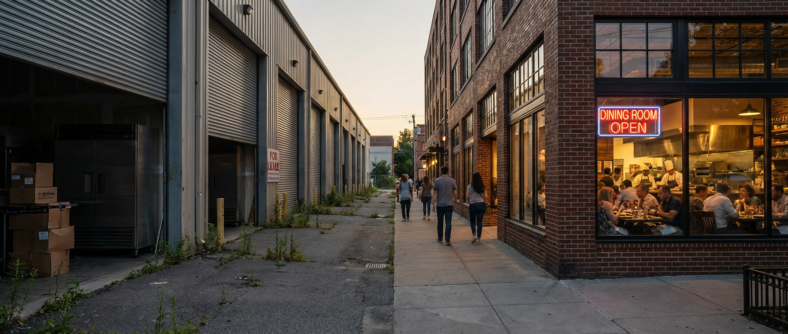
Kitchen United shuttered every single U.S. location in late 2024. They couldn’t land Series D funding. That sentence doesn’t pack enough punch unless you understand what it meant: a company that promised to revolutionize food service by eliminating the overhead of physical dining rooms, tables, and front-of-house staff went extinct. Reef Technology, valued at over a billion dollars just years prior, didn’t disappear entirely but got gutted—scaling back ghost kitchen operations dramatically across North America through 2024 and into 2025. The virtual restaurant moment, that supposedly inevitable future where food came only through a screen and a delivery driver, crashed hard.
I watched this unfold with the kind of detachment you get after twenty years in actual restaurant kitchens. Not schadenfreude, exactly. More like watching someone confidently season a dish without tasting it first. The math never worked. The customer experience math, I mean. The unit economics were always a fantasy built on venture capital willing to lose money in pursuit of scale.
What’s wild is how predictable this was if you bothered to listen to people who’d actually run food businesses. The ghost kitchen model required you to ignore what makes restaurants work: relationships between cooks and customers, the feedback loop of a dining room, the ability to adjust and adapt in real time. You can’t do that when your only connection to your customer is a photograph and a thirty-minute window.
The Math Was Never Math—It Was Hope
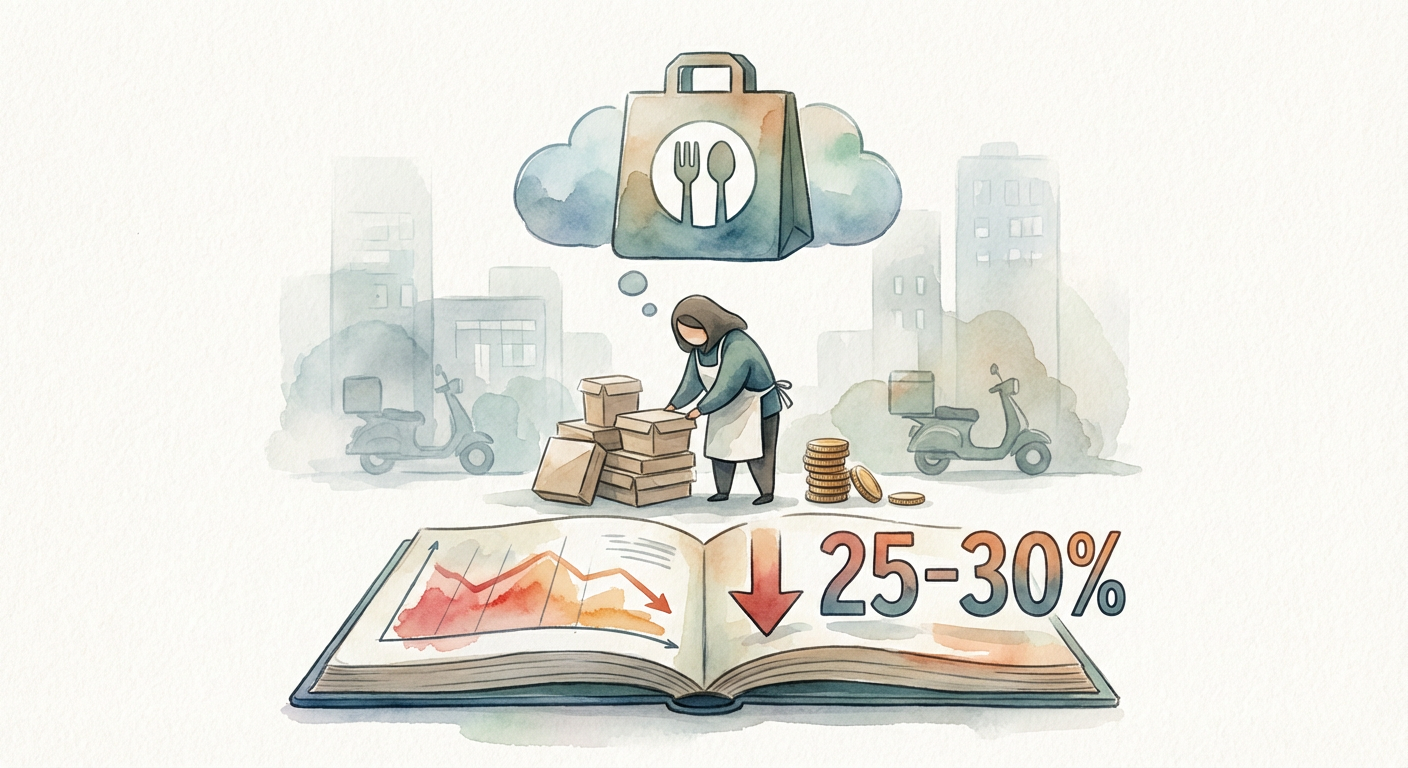
Third-party delivery platforms take 25 to 30 percent of every order. That’s not a rounding error. That’s structural impossibility for most operations. According to the National Restaurant Association Industry Research, this commission structure made ghost kitchen margins fundamentally unviable. Ghost kitchen operators relied entirely on delivery. No dine-in revenue. No catering. No walk-up counter sales. Just the delivery app math, which meant giving away a quarter to a third of every sale before you even paid for ingredients or labor.
A brick-and-mortar restaurant with a dining room has levers you can pull. You can sell wine at margins that make sense. You can turn a table four times in an evening. You can build a regular customer base that orders directly and cuts out the middleman. A ghost kitchen had none of that. It had pickup orders and delivery orders, both funneling through platforms that extracted their cut like a tax on every transaction.
The venture money temporarily made this work. Subsidized pricing. Heavy marketing spend. The goal was always to achieve some mythical scale where efficiency would overcome the commission math. That scale never arrived. Instead, what arrived was 2025, when the funding stopped and the bills came due.
The Forecast Revised, Drastically
Euromonitor International had projected the ghost kitchen segment would reach one trillion dollars globally by 2030. That number got cut by roughly forty percent. That’s not a market adjustment. That’s a reckoning. Euromonitor International Food Service Reports now reflect a fundamentally different understanding of how food service will evolve. The virtual restaurant isn’t inevitable. It might not even be viable at scale.
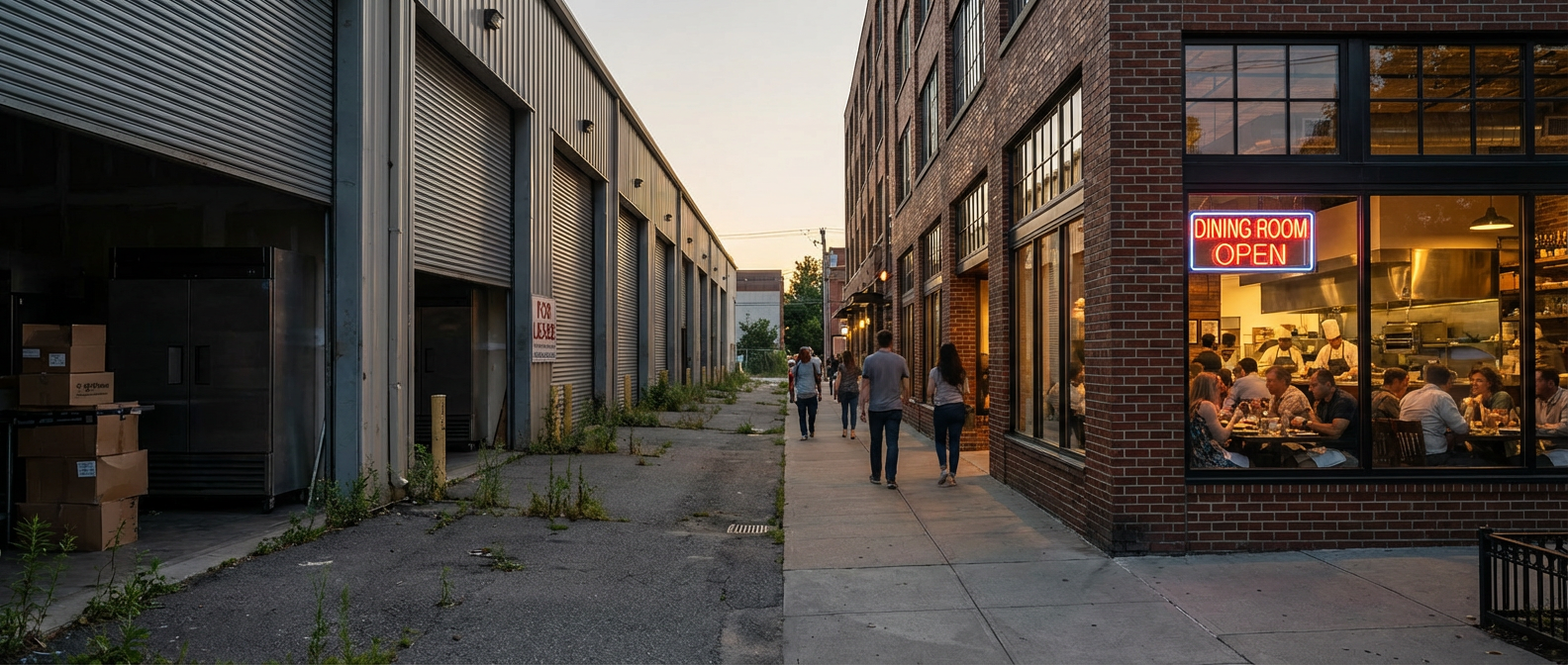
What replaced the optimism is clarity. The market is voting, and it’s voting for experiential dining. Brick-and-mortar restaurant openings in the U.S. increased about eight percent in 2025 compared to 2024. Real restaurants. Places with doors and windows and people. That trend is accelerating, not the ghost kitchen model.
This makes anthropological sense if you think about it. Food isn’t just fuel. It never has been. The whole reason humans gathered around fires to cook was about community, ritual, and the sensory experience that can’t be photographed or delivered. When restaurants tried to strip away everything but the transaction, they removed the value that makes people want to eat out in the first place.
What Real Restaurants Learned While Ghost Kitchens Were Burning Money
Actual restaurant operators didn’t get distracted by the ghost kitchen fever because they understood something fundamental: the customer relationship is the asset. A table in your restaurant isn’t just where food gets eaten. It’s where you gather information about what’s working and what isn’t. It’s where you see the expression on someone’s face when they taste something unexpected. It’s where you build loyalty.
Ghost kitchens treated restaurants like manufacturing. Standardize the product. Optimize the delivery. Scale the model. But restaurants aren’t factories. They’re cultural institutions dressed up as small businesses. The restaurants that survived and thrived understood this. They invested in their dining rooms. They trained their staff on hospitality, not just food execution. They built menus around what their specific community wanted, not what would photograph well on an app.
The collapse of the ghost kitchen model doesn’t mean restaurants have all figured it out. Plenty of traditional restaurants fail too. But the ones opening now are doing it with eyes open about what they actually are: places where people come to eat together, where they want to be recognized, where the experience matters as much as the food itself.
Where We Go From Here
The ghost kitchen story is over. What comes next is less about technology disrupting restaurants and more about technology serving restaurants that understand what they actually do. The successful models emerging in 2025 use delivery apps as a tool, not a master. They have a physical location where they can host customers who want to dine in. They might run a commissary kitchen for catering or production. They balance multiple revenue streams because they understand that relying on one path to market is how you become roadkill.
For people who love food, this is good news. The economic pressure to build everything around lowest-cost production and maximum delivery volume is lifting. There’s room again for restaurants that care about provenance, technique, and the specific community they’re cooking for. Restaurants with personality. Restaurants that can afford to take risks because they’re not dependent on a venture capital narrative to survive the next quarter.
The real restaurants, the ones with four walls and a dining room and a head chef who tastes everything, won the argument they never thought they had to make. They won by simply existing and serving people food they actually wanted to eat. If you’ve got thoughts on how your local restaurant scene has shifted, I’d genuinely love to hear it. The story of where food happens next isn’t written yet.