The glass arrived cloudy. Not faulty — simply unresolved, gold flecks turning in the light, a faint prickle at the rim when I leaned in. It was an unfiltered Riesling from the Saar, and the person who poured it watched my face rather than the wine. That, more or less, is how natural wine introduces itself in Germany: sideways, at a table, usually late.
Over the past decade what began as a fringe enthusiasm — a few Berlin bars, a handful of stubborn growers — has worked its way into the fair halls, the sommelier lists, and the cellars of people who once dismissed it as a fashion. The interesting part is that Germany needed this movement less than almost any other wine country. Its steepest vineyards were already worked by hand, its signature grape already sharp enough to keep itself, its best estates already suspicious of shortcuts. Natural wine did not arrive here as a revolution. It reads more like a homecoming that brought new vocabulary along.
What natural wine actually means in a German glass
Strip away the romance and it is a short recipe. Grapes grown organically or biodynamically, picked by hand, fermented by whatever yeasts arrive on the skins and in the cellar air, and bottled with as little added as the producer can manage — sometimes no sulfur at all, more often a pinch at bottling. No cultured yeast, no enzymes, no fining, no sterile filtration, no correction of acid or alcohol. The winemaker’s job narrows to watching, and to deciding when to leave things alone.
The catch: no law in Germany, or anywhere in the European Union, defines the term. A bottle of so-called natural wine legally declares nothing more than wine. France has a voluntary charter, méthode nature, that permits either no added sulfur or up to thirty milligrams per litre, with a label to match; Germany has nothing comparable, so the word travels on trust. You either know the estate, or you know the shop that does. Organic certification, the green EU leaf, covers the vineyard and holds sulfites well below the conventional ceiling, but says nothing about yeasts or filtration. The distance between an organic wine and a natural one is the whole of the cellar.
Set this against the German establishment and the contrast sharpens. The VDP, the association of Prädikat wine estates founded in Mainz in 1910, has spent a century classifying vineyards the way a museum classifies its holdings — some two hundred members, an exacting map of Grosse Lage parcels, geology written into rules of its own. Natural wine is the counter-draft to that precision culture: trust the site, remove the machinery of correction. The odd, rather lovely result is that both camps drink from the same slate. The quarrel is not over which slopes matter. It is over how much meddling a good slope needs.
Why German vineyards were ready for it
Riesling is the practical answer. It remains the most planted grape in the country, and its acidity is a preservative in its own right — it does quietly, over decades, what sulfur does loudly on a bottling line. A wine with that much natural grip can survive, even improve, with little protection. Where a soft, warm-climate white turns to sherry without help, a Mosel Riesling mostly turns interesting.
Then there is the terrain. On the Mosel the slopes are so steep that machinery was never an option; the Bremmer Calmont is generally called the steepest vineyard in Europe, and even the gentler parcels demand handwork. Everything natural wine asks for — hand harvest, small lots, attention — was already the daily arithmetic of these estates. On a sixty-percent grade you do not adopt labor-intensive methods. You inherit them. (Our notes on Mosel Riesling and its blue slate run longer elsewhere.)
Climate did its part too. In the cool decades ripeness was the problem, so German cellars grew used to correction: added sugar, aroma yeasts from a packet, filtration to remove whatever the yeasts left behind. A warming climate has quietly retired half those habits. Fruit arrives riper, fermentations finish on their own, and interventions once framed as necessity now look like habit. The generation that took over family estates in the 2000s noticed, and began leaving things out just to see what remained.
The numbers behind the mood: by the German Wine Institute’s recent figures, roughly a tenth of German vineyard area is certified organic or in conversion, and the share keeps climbing. Biodynamic pioneers made the path respectable before the natural scene had a name — Peter Jakob Kühn in the Rheingau has been Demeter-certified since 2004, and Philipp Wittmann in Westhofen has farmed biodynamically for two decades. Neither estate calls itself natural; both use sulfur. But when young growers went looking for proof that low-input farming could carry Germany’s best sites, these were the cellars they visited.
Names to know, from the Ahr to the Saar
The Ahr gave the movement its loudest early names. Daniel and Jonas Brand, brothers at a family estate in that narrow, northerly valley, were bottling uncompromising low-sulfur wines while most of their neighbors still pronounced the word natural with raised eyebrows. Their Spätburgunder matters most here — the Ahr is Pinot country, and Pinot is the least forgiving grape to leave unguarded — and it put German natural wine on international lists.
The Mosel answered with Staffelter Hof in Kröv, an estate whose papers reach back to a document from 862, run today by Jan Klein. He keeps the classical bottlings and, alongside them, a row of playful ones: pétillant-naturel, skin-fermented whites, everything fermented by the estate’s own yeasts. The arrangement is useful — the natural line and the traditional one argue across the cellar, and both come out better for it.
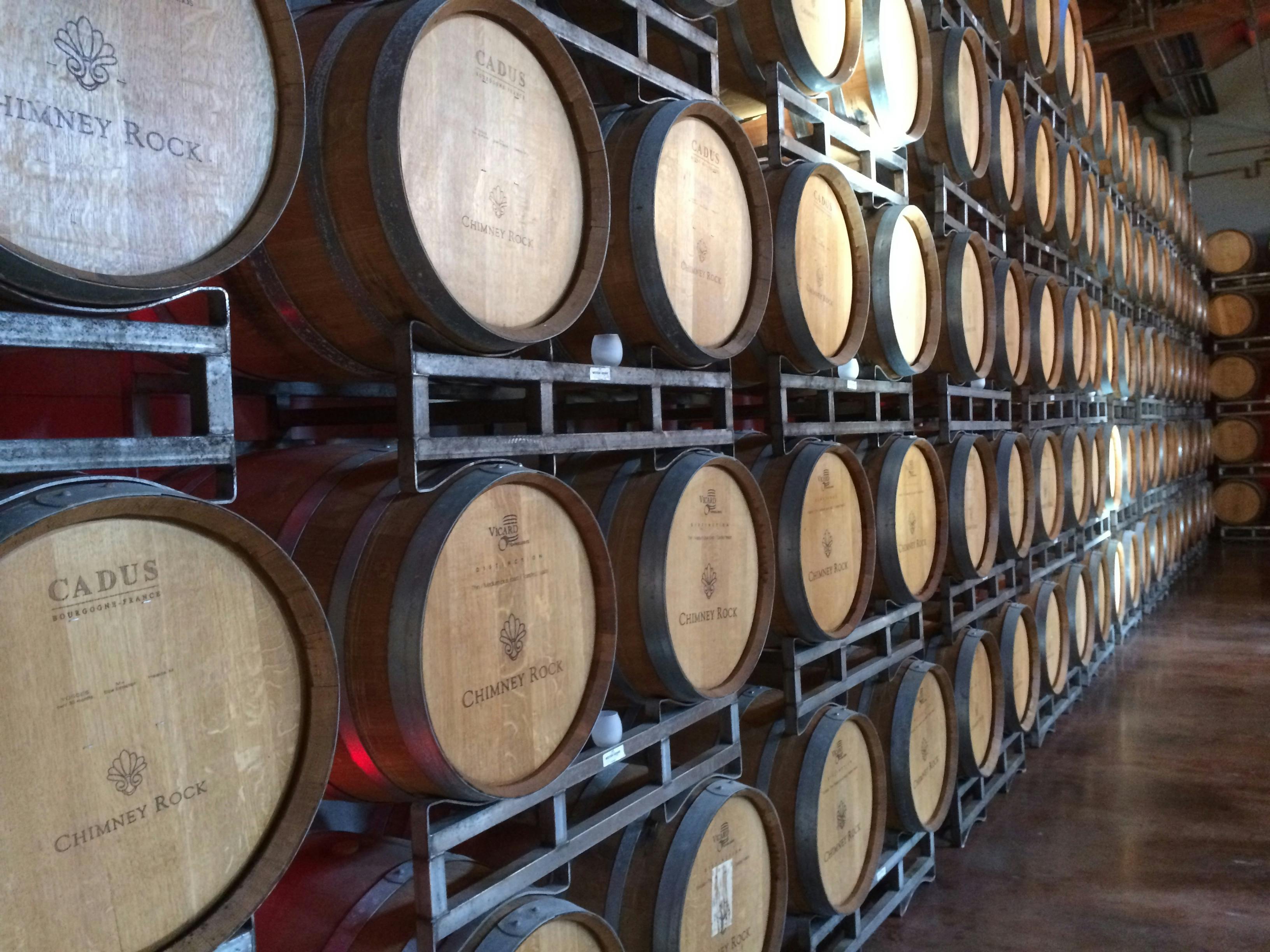
Up the Saar, at Hofgut Falkenstein in Wiltingen, Erich and Johannes Weber work much the way their valley did a century ago: spontaneous fermentation in old thousand-litre Fuder casks, no temperature control, bottling mostly unfiltered with a whisper of sulfur or none. The Saar is one of the coldest corners of German wine; its Rieslings carry an acidity that tastes severe in youth and something else entirely at ten years.
An honest footnote: the borders are drawn differently by everyone. Kühn and Wittmann farm biodynamically but sulfur their wines, and would not call them natural. Some of the strictest zero-sulfur growers never joined the organic clubs either. If a producer uses the word natural without also showing you the vineyard, ask more questions. The term is a conversation opener, not a certificate.
How it tastes, and how to serve it
Expect a wine that arrives mid-sentence. Cloudiness is usual — proteins, yeasts, grape solids left in on purpose. A light prickle of carbon dioxide is common, the last breath of a ferment that finished in the bottle, or nearly so. Aromas lean away from the glossy orchard fruit of conventional Riesling toward something older: cider apples, wet stone, sometimes struck matches, often herbs. Texture does more of the talking than flavor does; a skin-fermented white can grip like strong tea that remembers being grapes.
German examples tend to be bone dry, because German fruit ripens with acid to spare, and the best of them settle remarkably. I have opened a cloudy Saar Riesling, found it loud and strange on the first night, and come back on the third to a wine of real stillness. Give them air. Pull the cork an hour ahead, serve around ten to twelve degrees, and do not panic at the lees in the last centimetre — pour them off, or drink them, both are correct.
None of this is as foreign to the German table as the wine press likes to pretend. Every September the supermarkets sell Federweisser — still-fermenting grape must in loose-capped bottles, drunk within days beside a slice of warm Zwiebelkuchen. The country has been drinking fermentation in motion for centuries; natural wine simply stops the process a little later than the laboratory would.
The material side matters more than people admit. The tall green Schlegel bottle of the Mosel, the brown glass the Rheingau prefers, the squat Bocksbeutel of Franken — these shapes belong to the flavor the way linen belongs to a table. A hand-blown glass with a thin rim flatters a delicate natural white; a plain tumbler usefully humbles a rough one. And if the wine is alive in the bottle, keep it out of warm kitchens. A shelf in the stairwell at fifteen degrees will do what a cellar cannot in an apartment.
I remember one bottle in particular: an unfiltered 2015 Saar Riesling opened in a cellar in Wiltingen, on a February cold enough that we kept our coats on. It smelled of quince and cold smoke and, faintly, of the river. For a moment the whole grey hillside was in the glass, and neither of us said anything. You wait years for a wine to do that once.
Where the scene lives now
Berlin remains the capital of the scene, the way it remains the capital of most German scenes. A handful of bars around Kreuzberg and Neukölln pour almost nothing else, and the Weinerei in Prenzlauer Berg was selling organically farmed bottles on a pay-what-you-like basis back when the word natural sold nothing at all. Up the food chain, sommeliers in the serious houses now keep a shelf for these wines, which would have been unthinkable fifteen years ago.
The fairs followed. RAW Wine, Isabelle Legeron’s traveling fair of low-intervention growers, has staged editions in Berlin, and at ProWein in Düsseldorf — the vast March fair where the German trade does its annual business — the low-intervention importers now hold real floor space instead of a curiosity corner. You can watch a retail buyer taste a cloudy Mosel, frown, taste again, and hold on to the glass a little longer.
And the scene drifts north the way the weather does. German natural Riesling appears on Copenhagen lists, where the Danish low-intervention crowd treats it as a local; I have drunk Saar wine in Tallinn, of all places, poured by a young Estonian who talked about slate as if he had been born on it. The Hanseatic world has always moved wine, herring, and opinions along that sea route. This is simply the newest cargo.
For buying at home: find a shop that turns its stock and stores it cool, ask when a bottle actually arrived, drink the playful young cuvées fresh, and give the serious dry Rieslings five years if you can keep your hands off them. If sulfur at bottling matters to you, ask which producers use it. A good shop will know.
Natural wine in Germany: the questions people actually ask
Is natural wine the same as organic wine in Germany?
No. Organic certification covers the vineyard — no synthetic pesticides, lower sulfite ceilings — and is legally defined. Natural wine adds claims about the cellar: wild yeasts, no fining or filtration, little or no sulfur. No German or EU law currently defines or checks those claims. Every natural wine should come from organic farming; not every organic wine is natural.
Why is German natural wine sometimes cloudy?
Because it is unfiltered. Yeasts, proteins, and grape solids stay in the bottle on purpose; producers argue they carry flavor and texture, and that acidity — Germany’s great natural asset — provides the stability that sterility otherwise would. Cloudiness is not a fault. If it bothers you, stand the bottle upright for a day and pour carefully.
Does natural wine cause fewer headaches?
There is no reliable evidence that it causes more or fewer headaches than conventional wine. Alcohol does most of the damage, with individual sensitivity to histamines doing the rest. Sulfites get the blame because the label mentions them, but dried fruit carries many times more. The honest advice is old advice: drink less, eat something, water in between.
How long does an open bottle keep?
Often longer than you expect. German natural Riesling has acid and structure on its side; re-corked and refrigerated, a sturdy one holds for a week, changing character rather than spoiling. Trust your nose over the calendar. When vinegar does come, it announces itself clearly.
Where should a beginner start?
With a dry Riesling from the Saar or Mosel, from a shop that can tell you how the producer works, served cool with plain food — trout, bread and butter, salt. Begin with the gentle entry wines of estates like Staffelter Hof or Brand before climbing to the long-lived, zero-sulfur bottles. Keep a conventional Grosse Gewächs open beside it. The comparison teaches more than any article can.