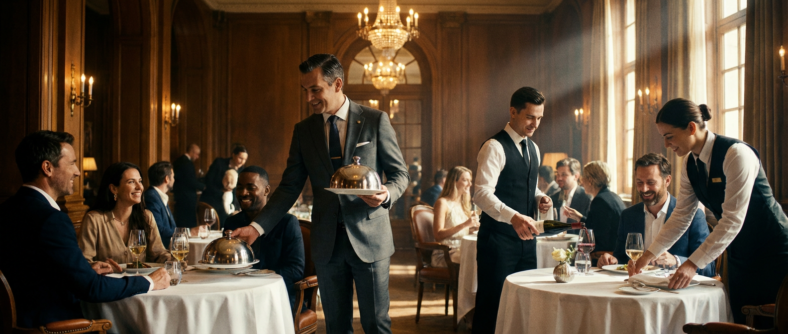
Water Glasses Don’t Fill Themselves
You know within thirty seconds whether a restaurant understands service. The water glass test never fails. If your glass sits empty while servers chat by the host stand, you’re in for a long night. Professional service means constant peripheral vision. Servers should refill water before you notice it’s low, not after you’ve been parched for ten minutes.
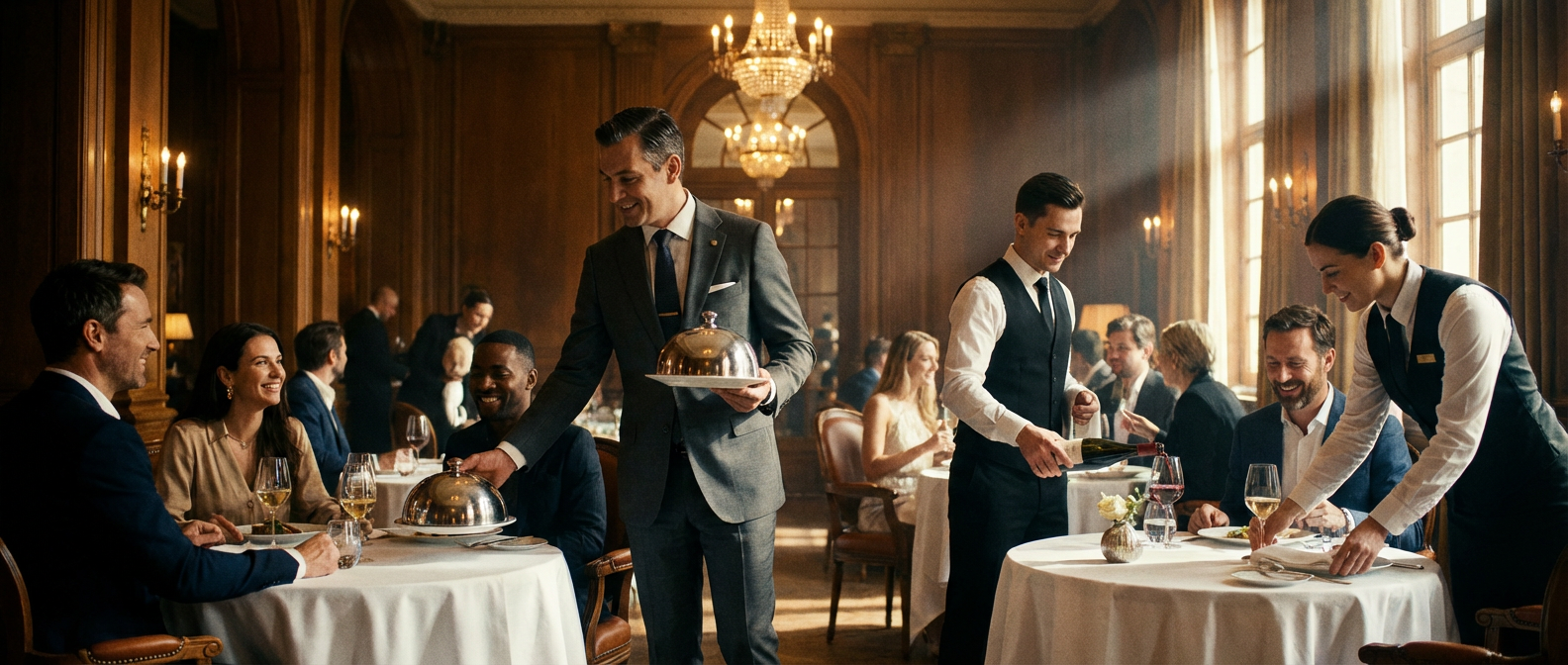
This isn’t about being demanding. It’s about understanding that hospitality requires anticipation, not reaction. I’ve worked enough shifts to know that good servers develop an internal timer. Check table four, refill water at table seven, clear appetizer plates from table two. It’s choreography, and when done right, it looks effortless.
The restaurants that get this right don’t hire order-takers. They hire professionals who understand that your dining experience starts the moment you sit down. Water service sets the entire tone for everything that follows.

Menu Knowledge Isn’t Optional
Nothing exposes amateur hour faster than a server who can’t explain how the duck is prepared or whether the pasta is made in-house. If someone is taking your order, they should know every ingredient in every dish. Period.
I’ve watched servers stumble through basic questions about preparation methods, cooking temperatures, and ingredient substitutions. This isn’t just embarrassing for them, it’s insulting to you as the paying customer. Professional kitchens brief their front-of-house staff daily. They taste specials, understand wine pairings, and can guide you through the menu with actual knowledge instead of just pointing at descriptions.
The best servers become your dining consultant. They know which dishes show off the kitchen’s strengths and which ones you should probably skip. They can recommend based on your preferences, not just push the highest-margin items. When a server says “I’d go with the ribeye over the salmon tonight,” and explains why, you know you’re in capable hands.
Timing Is Everything in the Dance
Great restaurants coordinate the meal flow like a symphony conductor manages an orchestra. Appetizers shouldn’t arrive simultaneously with entrees. Your server shouldn’t disappear for twenty minutes after taking your order, then hover annoyingly while you’re mid-conversation.
Professional kitchens use ticket timing systems for a reason. The cold appetizer fires first, hot apps follow, then entrees get dropped based on estimated eating time. Your server should communicate with the kitchen about your pace. If you’re lingering over wine and conversation, they should hold the next course. If you’re clearly ready to move along, they should speed things up.
This coordination requires experience and communication between front and back of house. Restaurants that nail this timing make the evening feel effortless. You never feel rushed, but you’re never waiting unnecessarily either. Each course arrives at the perfect moment, warm and properly prepared.
The Check Presentation Reveals Everything
How a restaurant handles payment tells you everything about their understanding of hospitality. The check should arrive promptly when requested, not after you’ve waved down three different staff members. It should be accurate, clearly itemized, and processed efficiently.
I judge restaurants harshly on their payment process because it’s your final impression. Fumbling with the point-of-sale system, disappearing with your card for ten minutes, or returning with processing errors shows poor training and worse management. Professional establishments have streamlined checkout procedures that respect your time.
The best places offer options without being pushy about it. They can process different payment methods smoothly and handle split checks without drama. They understand that you want to leave on a high note, not frustrated by a clunky payment experience.
Atmosphere Is More Than Dim Lighting
Real hospitality creates an atmosphere where you want to linger, not rush through your meal. This means managing noise levels, maintaining clean restrooms, and ensuring comfortable seating that doesn’t require constant adjustment.
Too many restaurants think atmosphere means playing trendy music at conversation-killing volumes. Professional establishments understand that ambiance supports the dining experience rather than overwhelming it. You should be able to have a conversation without shouting. The lighting should be flattering without being so dim you need a flashlight to read the menu.
Temperature control matters more than most restaurateurs realize. Nothing ruins a meal faster than being too hot or too cold. Great restaurants monitor their dining room climate constantly and adjust accordingly. They understand that comfort comes before everything else.
The details matter too. Clean silverware, properly folded napkins, and tables that don’t wobble. These aren’t luxury touches, they’re basic standards that separate serious restaurants from amateur operations.
After two decades of evaluating restaurant service, I’ve learned that excellence isn’t about expensive linens or elaborate presentations. It’s about consistent execution of fundamental hospitality principles. The restaurants that understand this difference are the ones that earn repeat customers and genuine loyalty. What service standards matter most to you when dining out? I’d love to hear about restaurants that have impressed you with their attention to these details.